
AFCI for Solar DC Circuits: What Does Arc-Fault Protection Actually Catch?
Published by Quinn Lai | By InverPower Technical Team
Published 22 August 2026 · Last updated 22 August 2026
DIRECT ANSWER
An arc-fault circuit interrupter listens for the electrical signature of an arc on the DC side and shuts the circuit down when it hears one. It catches a failure that fuses and breakers cannot see, because a series arc carries no more current than the string was already carrying. It is a different protection from rapid shutdown and from string fusing.
Most DC-side fires start at a joint that was never quite tight, or at insulation that was nicked during installation and took three years to fail. The current does not rise, so nothing trips. What changes is the character of the current, and that is what an arc-fault device is built to notice.
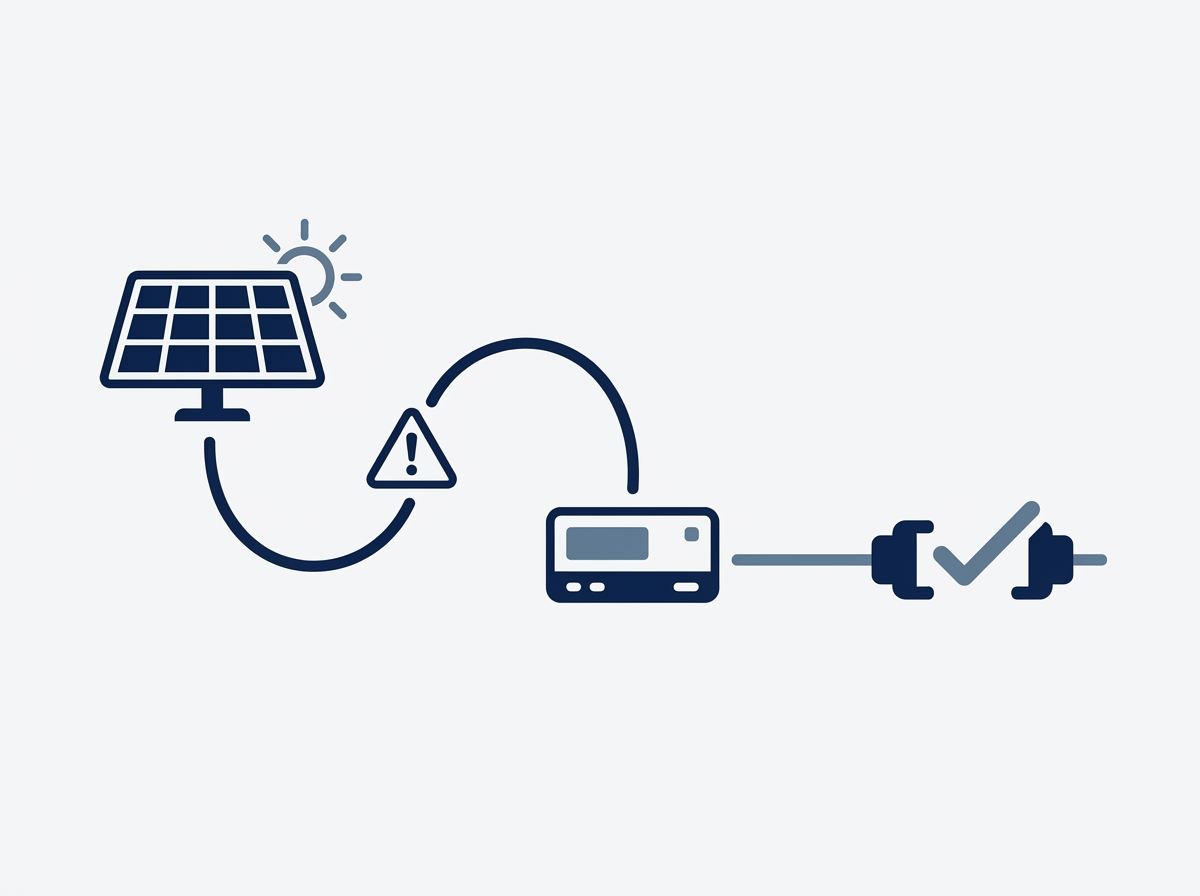
What is an arc fault, and why is it invisible to a fuse?
Two kinds matter. A series arc appears where a conductor is nearly broken — a loose terminal, a poorly crimped connector, a corroded joint — and the current keeps flowing across a small gap. Because it is in series with the load, the current does not increase at all; if anything it falls slightly. A parallel arc appears where insulation breaks down between conductors or to earth, and while that can raise current, on a PV array the source is current-limited, so the rise may still be too small and too brief to operate a fuse.
In both cases an overcurrent device is being asked to detect something that is not an overcurrent. Meanwhile the arc itself sits at thousands of degrees, in a rooftop enclosure, next to polymer insulation and often a membrane roof.
Listening for the signature of an arc
An arc is electrically noisy. It superimposes broadband high-frequency content on the DC current that a healthy circuit does not produce, and the detector watches for that signature rather than for a magnitude. Because inverters, converters and nearby equipment also generate noise, the discrimination between a genuine arc and ordinary switching noise is the whole engineering problem, which is why arc-fault detection is a tested, certified function rather than a filter someone can build into a combiner.
On detection the circuit is interrupted — in most modern string inverters by shutting the input down internally — and the fault is latched so it cannot silently restart. That latch matters: an arc that clears itself and returns is a fault that has not been fixed, and a device that resets automatically hides it.
Certification is the part to check on a datasheet. Detection performance is tested against a defined standard rather than claimed, so the useful line is which standard the function is certified to and whether the certificate covers the model being supplied. A specification that says only arc-fault protection, with no standard named beside it, is not a specification.
Three protections, three different failure modes
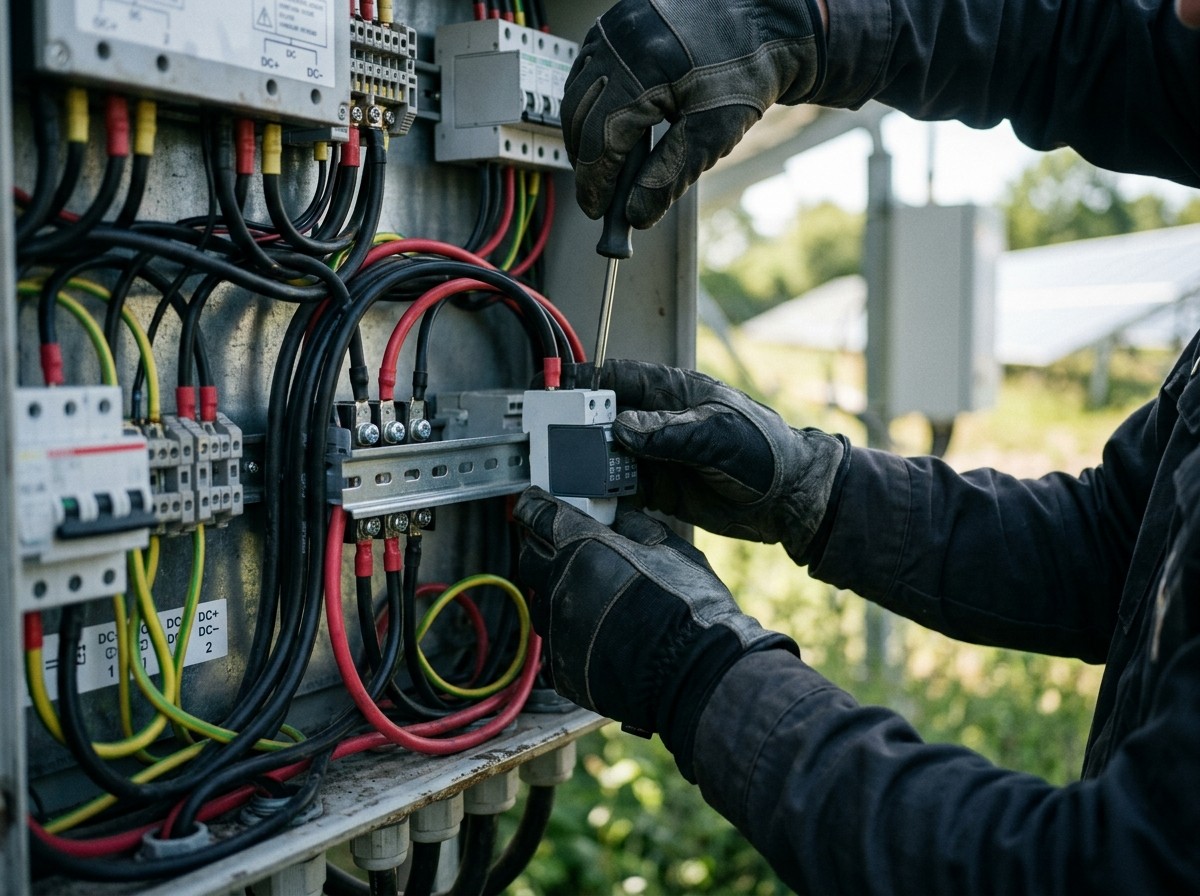
These three get conflated in specifications and they do not substitute for one another. Fusing protects conductors and modules against fault current from the rest of the array. Rapid shutdown de-energises the DC conductors on the roof on command, for the benefit of anyone who has to be up there. Arc-fault detection catches a developing arc in normal operation, before there is a fire to shut down.
| Protection | The failure it addresses | What it does not do |
|---|---|---|
| String fuse | Reverse fault current into a string | Cannot see a series arc |
| DC isolator | Isolating a circuit for work | Does not detect anything |
| Arc-fault detection | A developing arc at a joint or in damaged insulation | Does not de-energise the array |
| Rapid shutdown | Live DC conductors during an emergency or maintenance | Does not detect a fault |
| Surge protection | Transients induced by lightning | No role in arc or overcurrent faults |
| Insulation monitoring | Deteriorating insulation resistance to earth | Warns rather than interrupts |
Specifying it in Malaysia
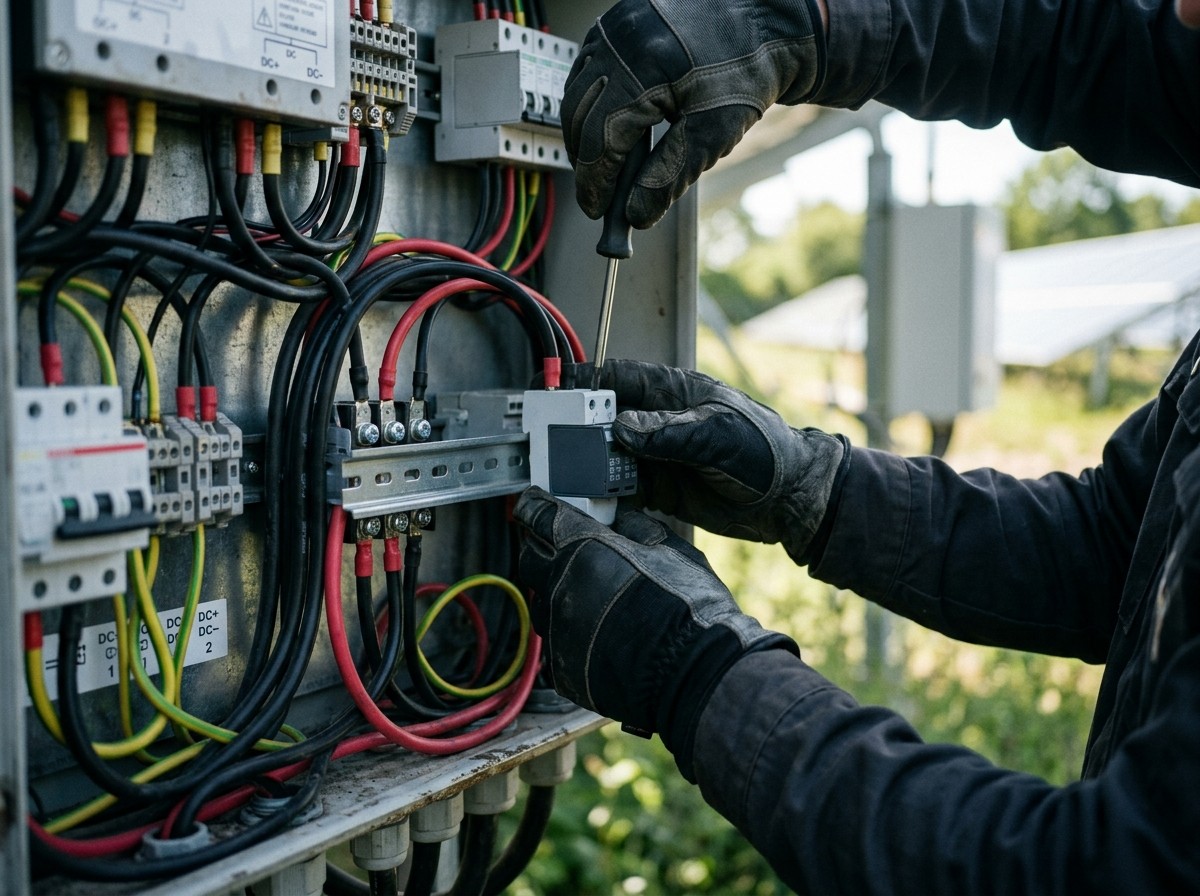
Arc-fault detection is not a universal statutory requirement here in the way it is in some markets, and requirements move — check the current position for the installation type before writing it into a tender as either mandatory or unnecessary. What has changed in practice is that the function is now built into many string inverters, so on a large part of the market the decision is made when the inverter is chosen rather than as a separate line item.
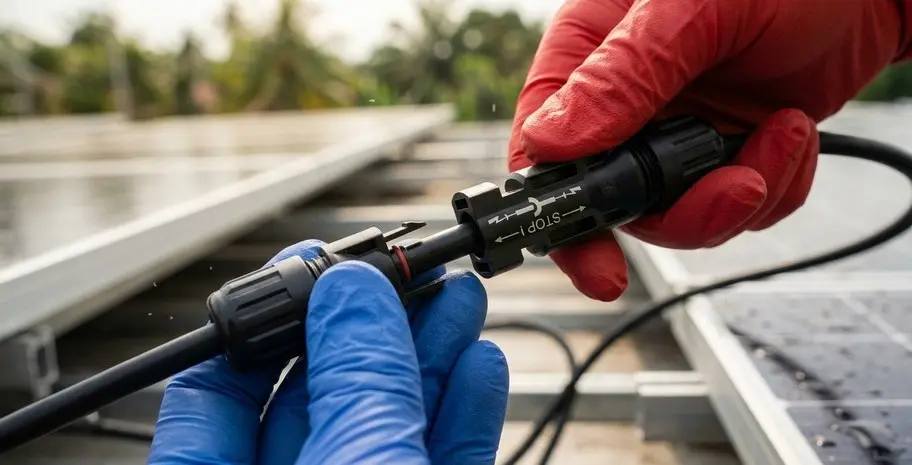
Where it earns its place regardless of the letter of the code: rooftops with occupancy underneath, warehouses with high-value or combustible contents, buildings where roof access is difficult, and any installation where a fire would stop production. Those are the same buildings where an EPCC is already specifying good connectors and disciplined crimping, and arc-fault detection is the backstop for the joint that was still wrong.
The maintenance side
A detector that trips is telling you something. The response is to find the joint, not to reset the inverter and move on — repeated trips at the same string almost always end at a connector, a junction box or a cable that has been chafing on a rail. Log the trips with dates and string numbers so a pattern is visible, because the same fault reported three times by three different technicians looks like three nuisance trips.
InverPower stocks Sungrow string and hybrid inverters with integrated DC arc-fault detection, along with the connectors, cable and combiner components that decide whether it ever has to operate. Send the string design and the bill of materials and we will tell you what is on the shelf.
Frequently Asked Questions
Is AFCI mandatory for rooftop solar in Malaysia?
It is not a blanket statutory requirement in the way it is in some other markets, and the position varies by installation type. Confirm the current requirement for the specific project before treating it as either compulsory or optional — and note that many inverters now include the function whether or not it is demanded.
Does arc-fault detection replace rapid shutdown?
No. They address different problems. Arc-fault detection notices a developing arc during normal operation; rapid shutdown de-energises rooftop DC conductors on command so people can work on or around the array. A building that needs one may well need the other.
Why can a fuse not detect an arc fault?
Because a series arc carries the same current the string was already carrying. A fuse responds to magnitude, and the magnitude has not changed. What changes is the high-frequency character of the current, which is what an arc-fault detector is built to recognise.
What should be done after an arc-fault trip?
Treat it as a real fault until proven otherwise. Inspect the string's connectors, junction boxes and cable runs for heat damage, poor crimps and chafing before restoring. Record the string number and the date, because repeat trips on one string are the clearest diagnostic you will get.
Sources
- IEC — IEC 63027, Photovoltaic power systems: DC arc detection and interruption — https://webstore.iec.ch
- IEC — IEC 62109-1 and IEC 62109-2, Safety of power converters for use in photovoltaic power systems — https://webstore.iec.ch
- IEC — IEC 62548, Photovoltaic (PV) arrays: design requirements — https://webstore.iec.ch
- Department of Standards Malaysia — MS 1837:2018, Installation of grid-connected photovoltaic (PV) system — https://www.jsm.gov.my
- Sungrow — string and hybrid inverter datasheets and manuals (integrated DC arc-fault detection, fault codes and reset behaviour) — https://www.sungrowpower.com
About InverPower
InverPower is Malaysia's A–Z solar component distributor — Sungrow Preferred Distributor and Sunkean Sole Distributor — supplying EPCCs, installers, and government projects nationwide.
Explore the InverPower resource hub at inverpower.com.my
Related InverPower posts:
- MC4 vs "MC4-Compatible": Why Is Cross-Mating a Fire Risk?
- DC Isolators and Disconnect Switches: What Does Malaysian Code Require?
- Cable Fire Ratings Decoded: Why Isn't 'Eca' the Standard to Specify?