Cable Fire Ratings Decoded: Why Isn’t ‘Eca’ the Standard to Specify?
Published by Quinn Lai | By InverPower Technical Team
Published 30 July 2026 · Last updated 30 July 2026
DIRECT ANSWER No — ‘Eca’ is not proof a solar cable can handle a real fire. It's the lowest CPR fire class, based on a single-wire flame test only. ‘Dca’ and ‘Cca’ mean the cable was tested as a bundle, which is how cable actually sits in a tray or conduit — that's the standard to ask for on a Malaysian solar DC run, alongside EN 50618 / IEC 62930 certification and MS IEC 60332 / SIRIM evidence for local compliance. |
Every EPCC has seen the pitch: a low-cost cable, a datasheet full of impressive-looking standard numbers, and a claim that it “passes fire-retardant testing.” On a Malaysian rooftop or ground-mount that will run for 25 years, the fire performance of your DC cabling is not a line item to take on trust. This is a short guide to reading a cable fire rating properly — and specifying what actually protects your project.
What does IEC 60332 actually test?
IEC 60332 is the international series for how a cable behaves when exposed to flame. It is adopted in Malaysia as MS IEC 60332 and is what SIRIM- and BOMBA-referenced testing draws on. The series has parts that are worlds apart in difficulty, and this is where most confusion (accidental or otherwise) begins.
IEC 60332-1-2 tests a single insulated wire held vertically against a defined flame. It checks that flame doesn't travel too far up one isolated cable. It is the entry-level, baseline flame test — a cable that only meets this has cleared the lowest bar.
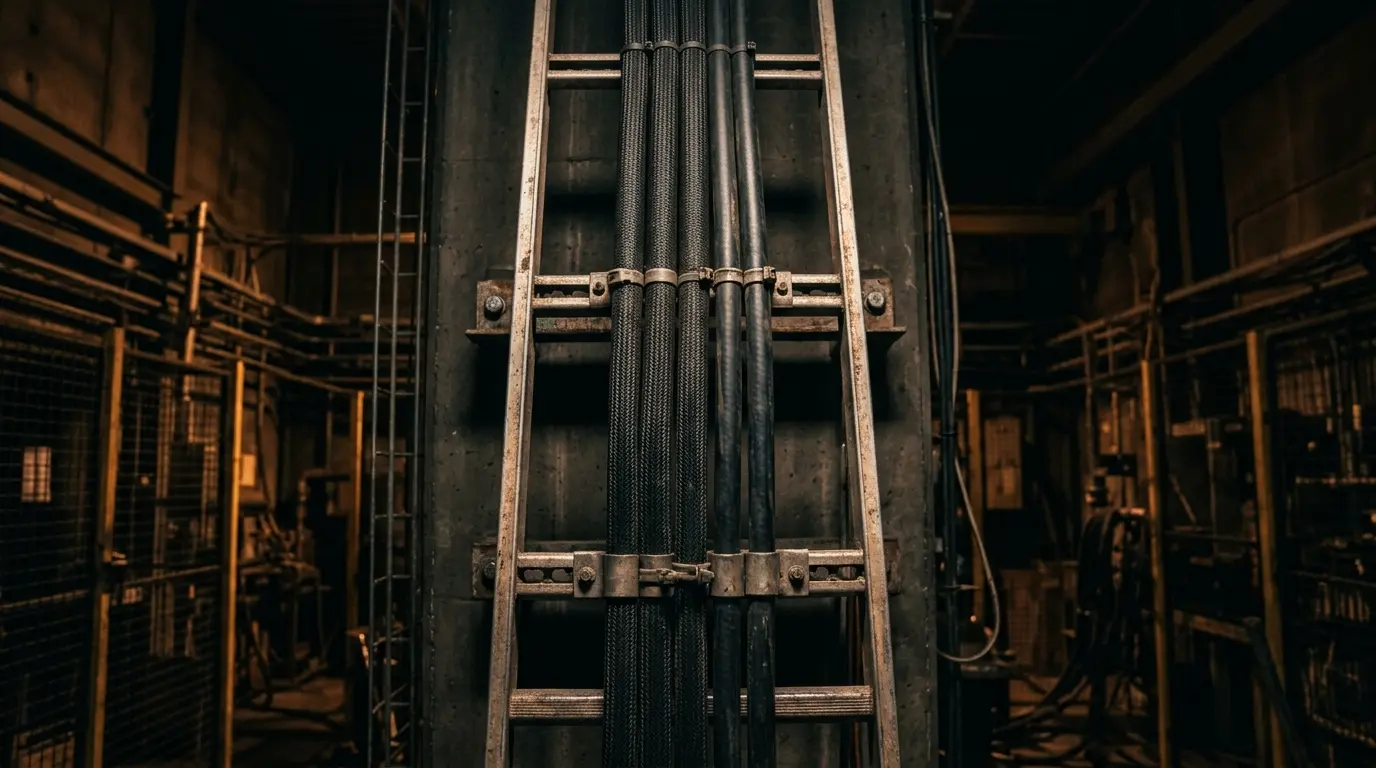
IEC 60332-3 is a different animal entirely. It tests bunched cables mounted vertically on a 3.5-metre ladder, exposed to a burner for a sustained period with forced air, and measures how far fire spreads across the whole bundle. It comes in categories (A, B, C, D) by volume of cable. Because bunched cables feed each other's flames, this test is much harder to pass and reflects how cables actually sit in a real tray or conduit.
The one-line takeaway: passing 60332-1-2 (single wire) tells you almost nothing about how a bundle behaves in a fire. Passing 60332-3 (bunched) is the meaningful claim.
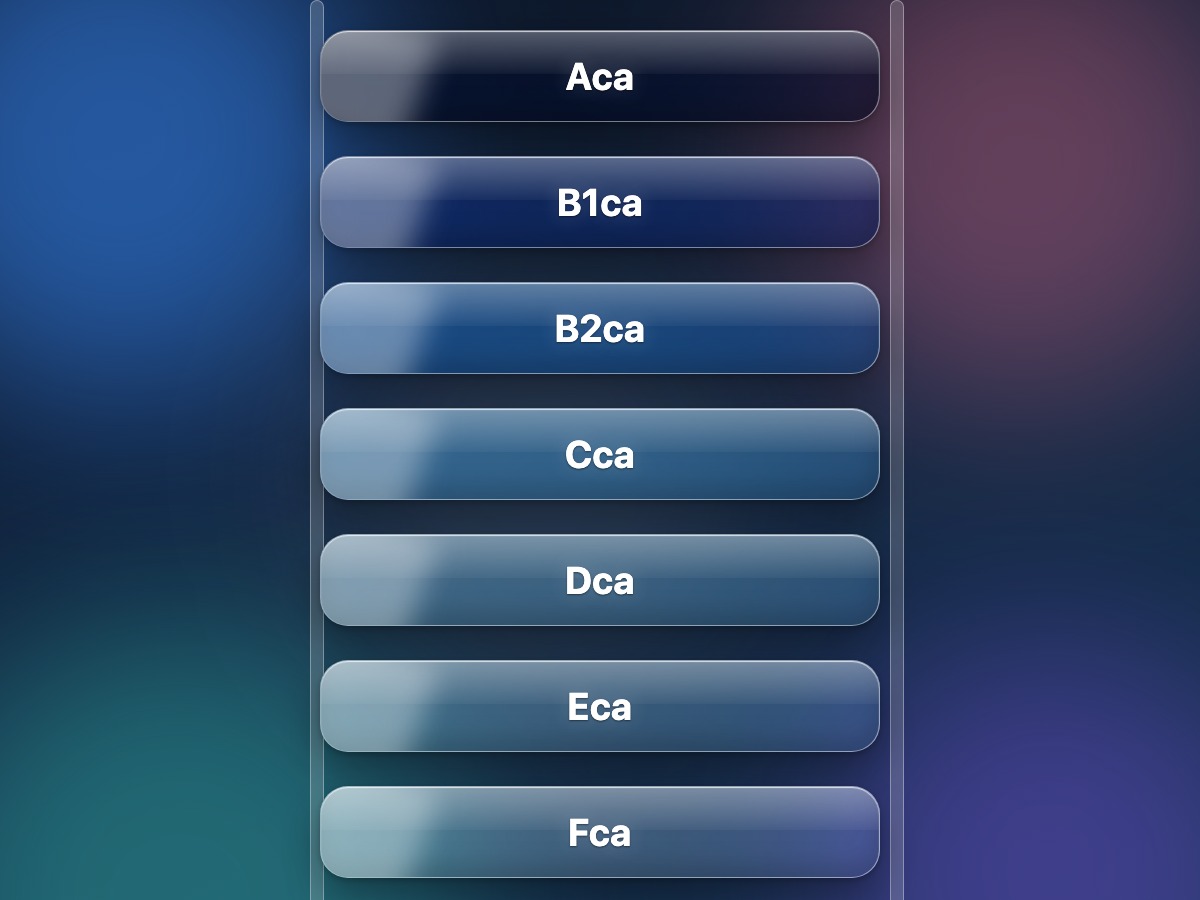
CPR Euroclass fire-rating ladder illustration, from Aca at the top down to Fca at the bottom
The Euroclass ladder — where do ‘Eca’, ‘Dca’ and ‘Cca’ really sit?
Eca, Dca, Cca are not cable types and not Malaysian standards. They are fire-performance classes under the European Construction Products Regulation (CPR), classified to EN 13501-6 and tested under EN 50575 / EN 50399. The ladder, best to worst:
Class | Fire test it is based on | What it means |
Aca | Non-combustibility (EN ISO 1716) | Effectively non-combustible — rare in normal cables |
B1ca / B2ca | EN 50399 bunched + extras | High performance, limited flame spread, low heat release |
Cca | EN 50399 bunched + extras | Strong performance |
Dca | EN 50399 bunched | Meaningful bunched-fire performance |
Eca | EN/IEC 60332-1-2 single wire only | The floor — single-wire flame test, nothing more |
Fca | No performance determined | Undetermined / fail |
Note the hard line in that table: Class Dca and above require the bunched-cable test (EN 50399, the CPR relative of IEC 60332-3). Class Eca is defined by the single-wire test only — it's the minimum a cable can hold and still be classified at all.
Why is ‘Eca’ the floor, not the standard to spec?
A datasheet listing ‘Eca’ is telling you the cable cleared the easy, single-wire test — nothing more. It is not evidence the cable was tested, or would perform, as a bundle. If a project needs cable that's actually proven to resist fire spread in the way it will sit in service — in a tray, conduit, or bundled run — the classification to ask for is Dca or higher, because that's the class that requires the bunched test.
There's a second red flag worth training your procurement eye on. In cable language, “CCA” also means Copper-Clad Aluminium — an aluminium conductor with a thin copper skin, cheaper and electrically inferior to solid copper. If a fire-class ‘Cca’ claim appears next to a suspiciously low price, confirm whether you're being sold the Cca fire class or a copper-clad-aluminium conductor. They are completely different things, and only one of them is good news.
What matters for Malaysian solar projects?
A European CPR class, on its own, is not proof of Malaysian compliance. CPR is an EU market-access framework. It's useful shorthand for fire performance, but ‘Eca’ printed on a reel does not by itself demonstrate MS IEC 60332 conformity, SIRIM certification, or BOMBA acceptance for a Malaysian installation. Ask for the certificate that applies to this market, not just an EU class letter.
For solar DC runs, the fire class is only part of the spec. A proper PV wire is built and certified to the photovoltaic cable standards — EN 50618 and IEC 62930 (type H1Z2Z2-K), typically with TÜV 2 PfG 1169 approval — which bundle flame retardance with the things a general building cable never has to survive: 1.5 kV DC rating, UV and weather resistance, ozone, and a 120°C conductor rating for hot rooftop cavities. As a reference point, reputable PV cables to EN 50618 are commonly classified CPR Dca — again, not Eca.
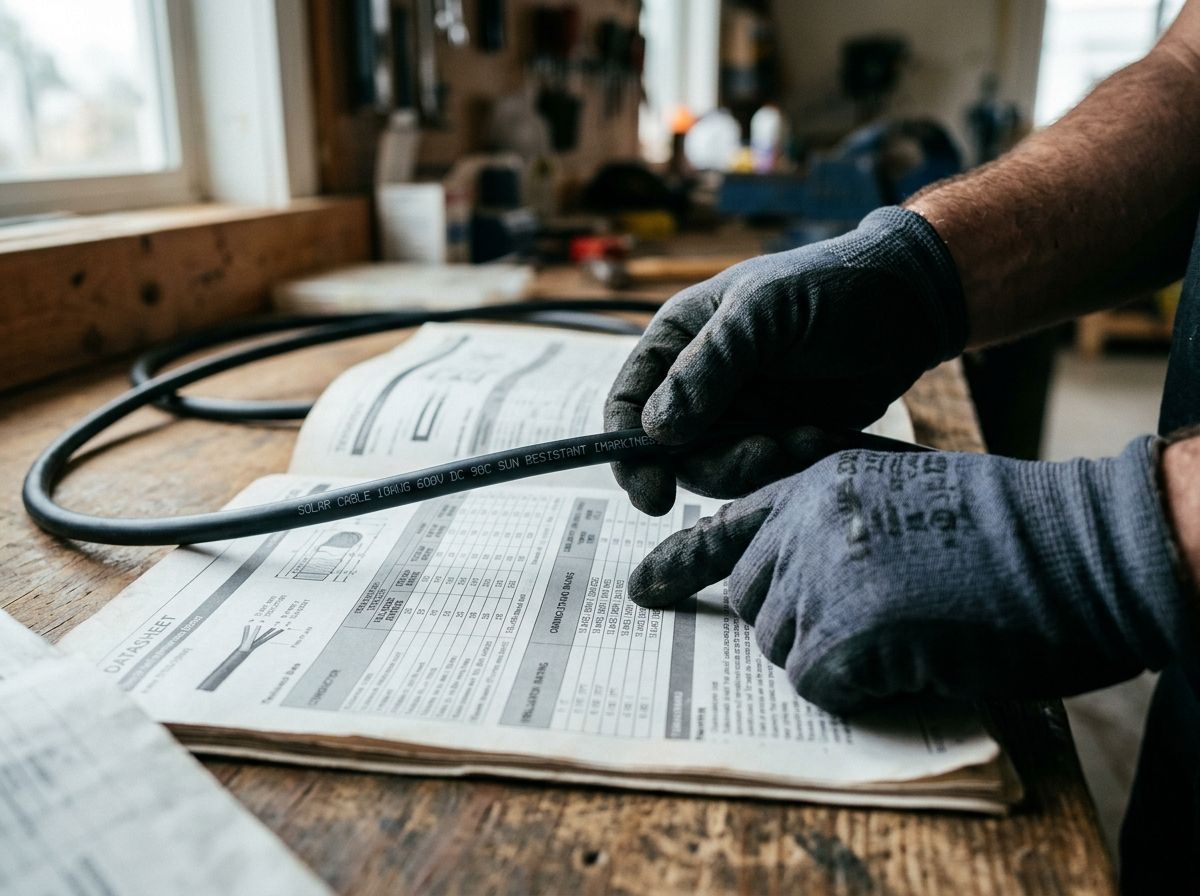
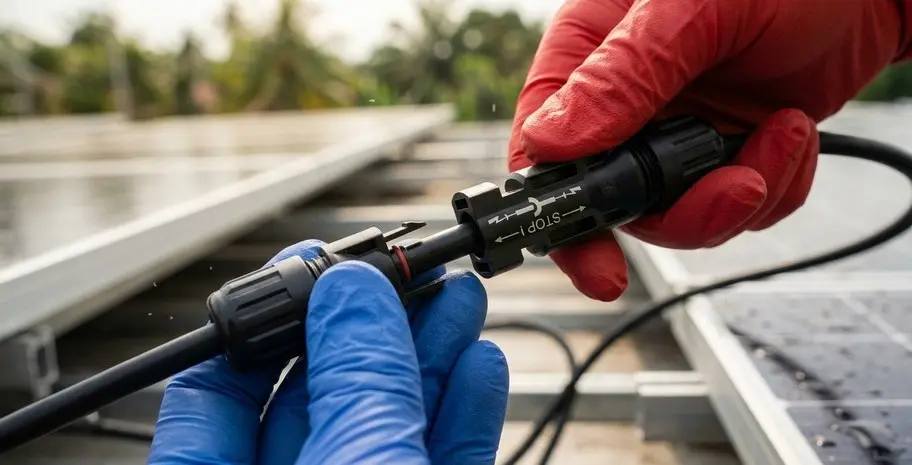
Gloved hands checking a solar cable's printed jacket rating against its datasheet
What should you ask for before you spec?
Skip the marketing line and ask for the paperwork. A cable that earns its fire claim can produce all of this on request:
• The full classification / test report from an accredited lab — not a summary table, the actual report.
• The exact standard and category, spelled out — e.g. IEC 60332-3-24 (Category C), not just “passes 60332-3.”
• MS IEC 60332 / SIRIM evidence for Malaysian use, where the project or authority requires it.
• Conductor material stated plainly — solid copper (Class 5 stranded for PV), confirmed not copper-clad-aluminium.
• For DC PV runs: EN 50618 / IEC 62930 (H1Z2Z2-K) with TÜV approval, 1.5 kV DC rating, UV/weather rating, 120°C conductor rating.
• Voltage, temperature and current ratings that match your string design and Malaysian ambient conditions.
If a supplier can't put the report in your hands, the claim isn't a spec — it's a slogan.
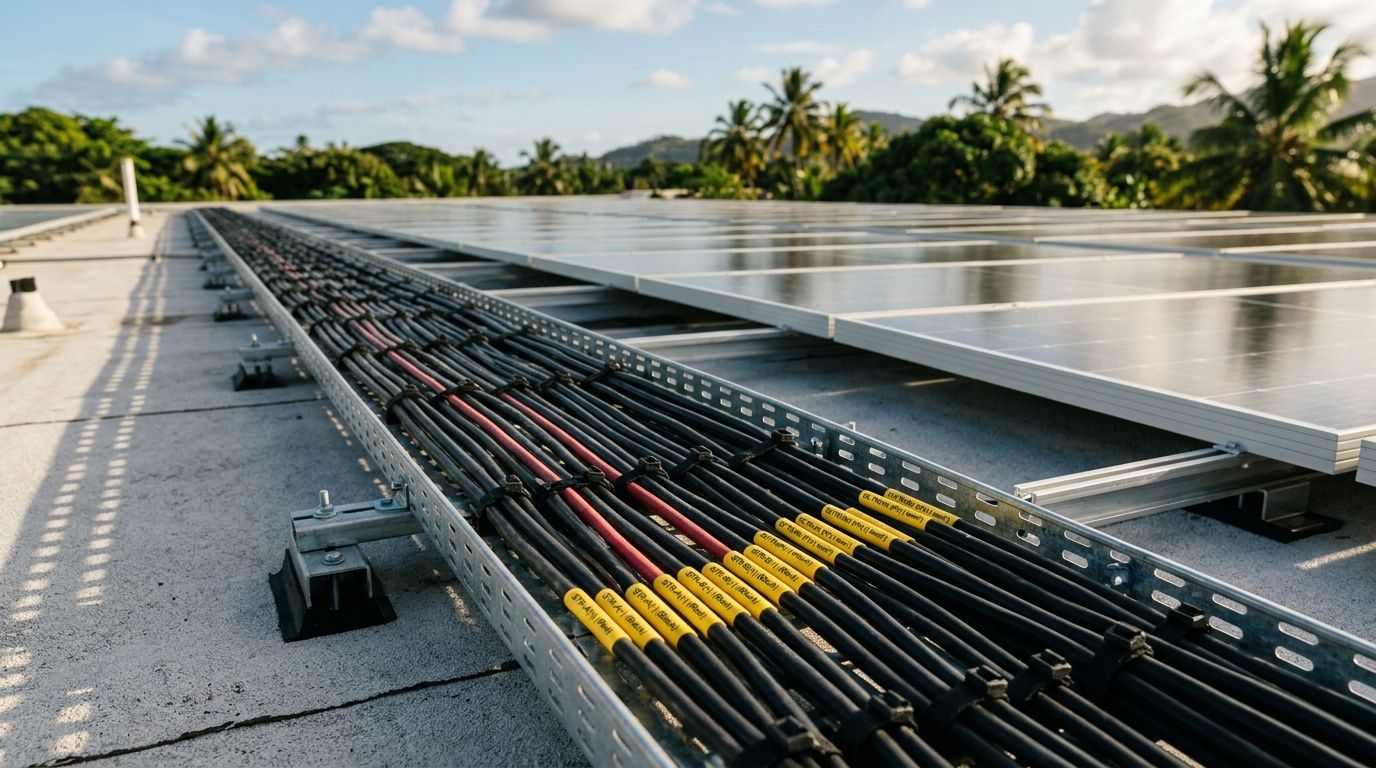
Neatly labelled solar DC cables in a cable tray on a Malaysian rooftop solar installation
How does InverPower support your cable spec?
As Sunkean's sole distributor in Malaysia, InverPower stocks PV cable with the certification package documented and available — the standard, the class, and the test report, not just a class letter on a reel. We hold stock so your project isn't waiting on a shipment, and our technical team can walk your design engineers through the exact ratings a job needs, from DC string cable to AC and earthing. When a tender or a fussy consultant asks for the fire classification report, you should be able to produce it the same day — that's the position we aim to keep our EPCC partners in.
Frequently Asked Questions
Is ‘Eca’ cable safe to use for solar?
It clears the minimum fire test required to be classified at all — a single isolated wire against a flame. It has not been proven to resist fire spread as a bundle, which is how solar DC cable actually runs in service. For a proper solar installation, ask for Dca or higher, plus EN 50618 / IEC 62930 certification.
What's the actual difference between Eca and Dca fire ratings?
Eca is based on IEC 60332-1-2, a single-wire flame test. Dca (and Cca, B1ca, B2ca above it) require EN 50399, a bunched-cable test that measures flame spread across a stack of cables — a much harder, more realistic test.
Does a European CPR fire class prove a cable is certified for use in Malaysia?
No. CPR (Eca/Dca/Cca/etc.) is a European market-access framework. Malaysian compliance runs through MS IEC 60332 and SIRIM/BOMBA-referenced testing — ask for that evidence separately.
What should I actually specify for solar DC cable in Malaysia?
EN 50618 / IEC 62930 (type H1Z2Z2-K) PV cable, ideally TÜV 2 PfG 1169 approved, with a Dca or higher fire class, solid copper conductor, and MS IEC 60332 / SIRIM evidence for local compliance — backed by the actual test report, not just a datasheet line.
Sources
• KV Cable — IEC 60332 flame test series (single-wire vs bunched) — https://kvcable.com/cable-specifications-and-standards/iec-60332-cable/
• FS Cables — Construction Products Regulation (CPR) Euroclass cable classifications — https://www.fscables.com/other/construction-products-regulation-cpr-for-cables.html
• Elandcables — EN 50618 / IEC 62930 H1Z2Z2-K photovoltaic cable specification — https://www.elandcables.com/cables/photovoltaic-solar-h1z2z2-k-cable
About InverPower InverPower is Malaysia's A–Z solar component distributor — Sungrow Preferred Distributor and Sunkean Sole Distributor — supplying EPCCs, installers, and government projects nationwide. Explore the InverPower resource hub at inverpower.com.my |
Related InverPower posts:
• Solar DC Cables in Malaysia: What Specs and Certs Do EPCCs Need?
• MC4 vs “MC4-Compatible” Connectors: Why Cross-Mating Is a Fire Risk?
Tags: Sunkean | DC Cable | Safety |