
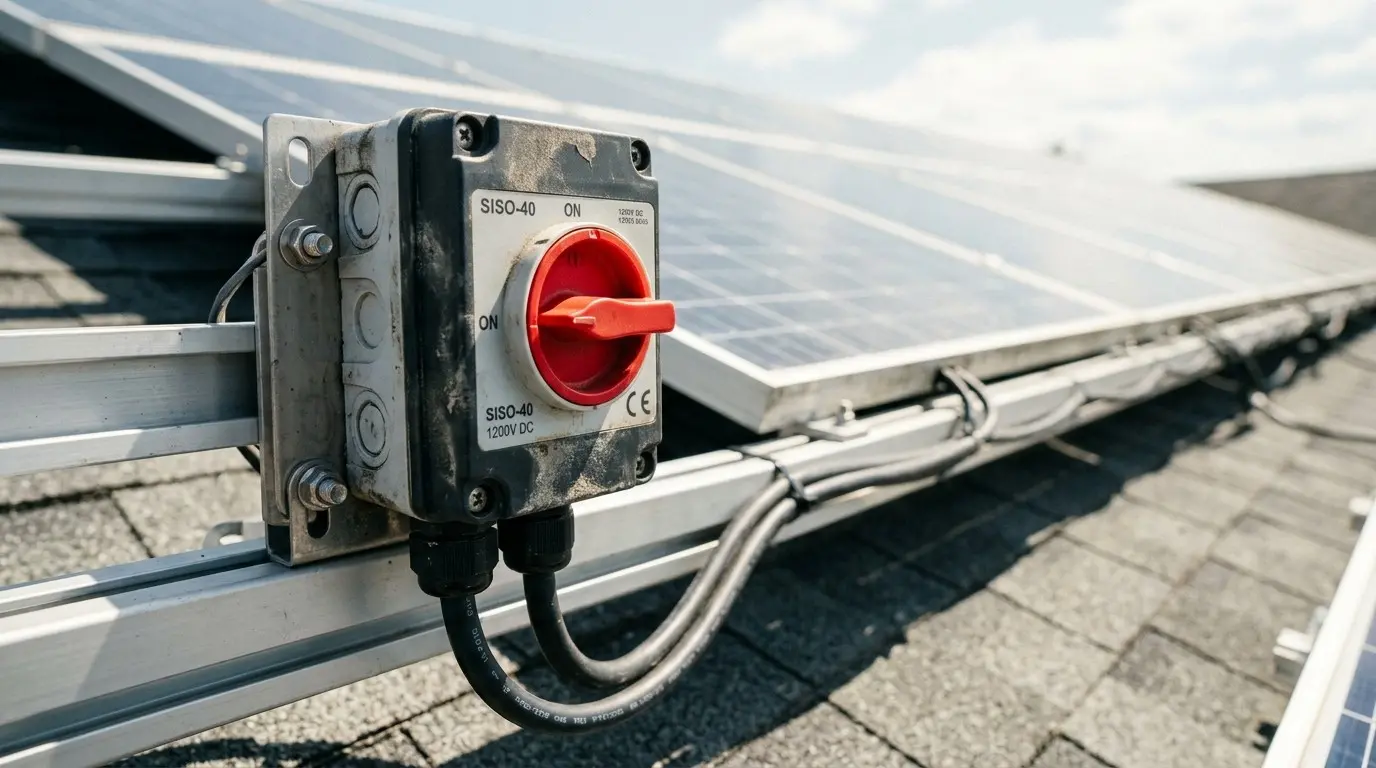
DC Isolators and Disconnect Switches: What Does Malaysian Code Require?
Published by Quinn Lai | By InverPower Technical Team
Published 22 August 2026 · Last updated 22 August 2026
DIRECT ANSWER
A grid-connected installation needs the array able to be isolated at the array and the inverter able to be isolated on its DC side, using switch-disconnectors rated for the full array voltage and current and capable of breaking that current under load. MS 1837 is the governing installation standard here, and isolation is one of the first things an inspector looks at.
An isolator is a small part of the bill of materials and a large share of the remedial work. It is cheap to specify correctly, expensive to argue about after an inspection, and the failure modes are consistent enough that most of them can be designed out on paper.
Why two isolation points?
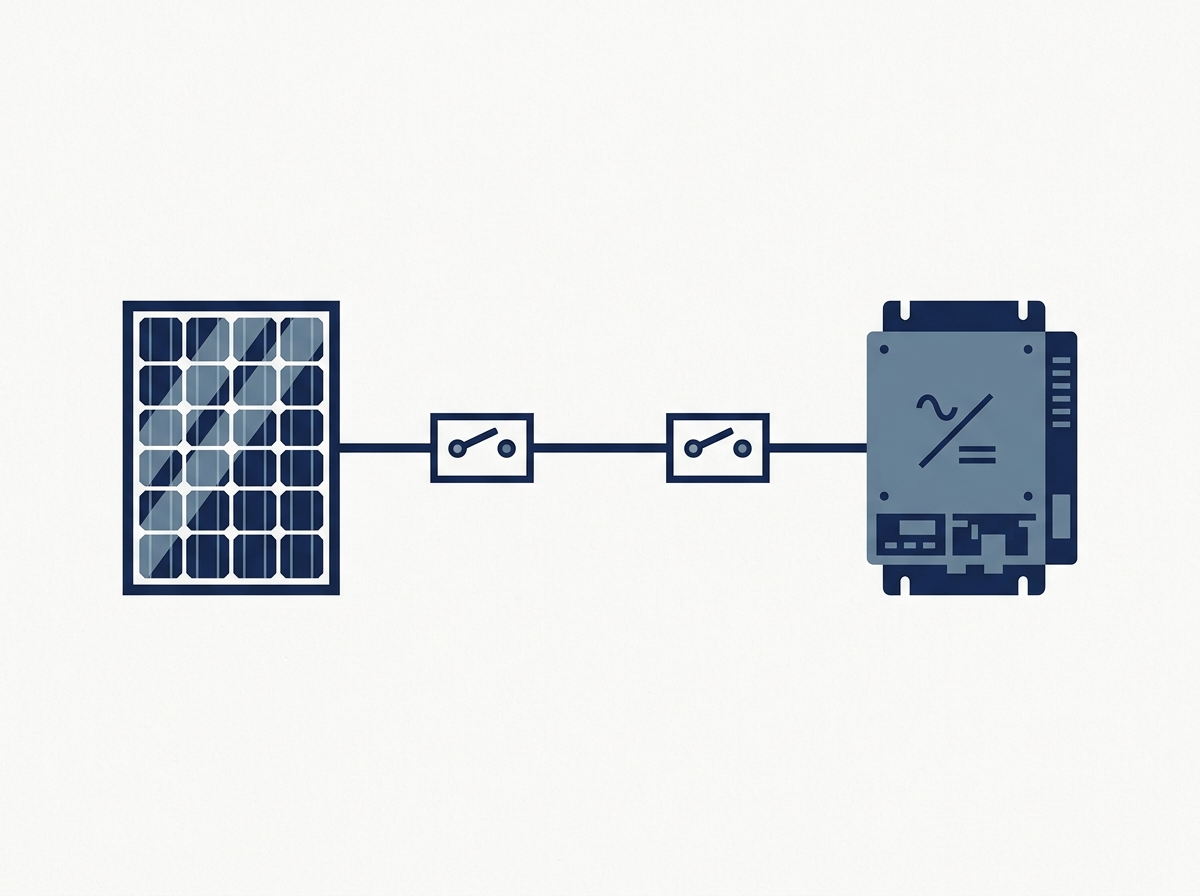
The two points do different jobs. Isolation at the array lets the DC circuit be opened close to the source, so the run down to the inverter can be worked on without live conductors in it. Isolation at the inverter lets the inverter be worked on or replaced without the array being disturbed, which is the case that actually comes up over a twenty-year system life.
Neither of them makes the array dead. Modules generate whenever there is light on them, so opening an isolator makes the circuit downstream of it safe and leaves everything upstream live. That is worth saying out loud to the customer's maintenance staff, because a switch marked OFF reads as safe to most people.
Load-break rating is not optional
This is the specification most often got wrong. An alternating current crosses zero a hundred times a second, and an arc drawn between opening contacts extinguishes itself at one of those crossings. Direct current never crosses zero, so the arc keeps burning until the contacts are far enough apart to stretch it out. A device built for AC will draw an arc it cannot clear, weld its contacts, and in the worst case set fire to its own enclosure.
So the device has to be a DC-rated switch-disconnector to IEC 60947-3, with a utilisation category appropriate to switching a PV array under load, and rated for the array's maximum voltage and current, not for the operating point on a good day. Take the voltage from the string's open-circuit voltage at the lowest ambient the site sees, and the current from short-circuit current with the standard margin applied. Devices marked for both AC and DC carry separate ratings for each — read the DC column.
The faults inspections keep finding
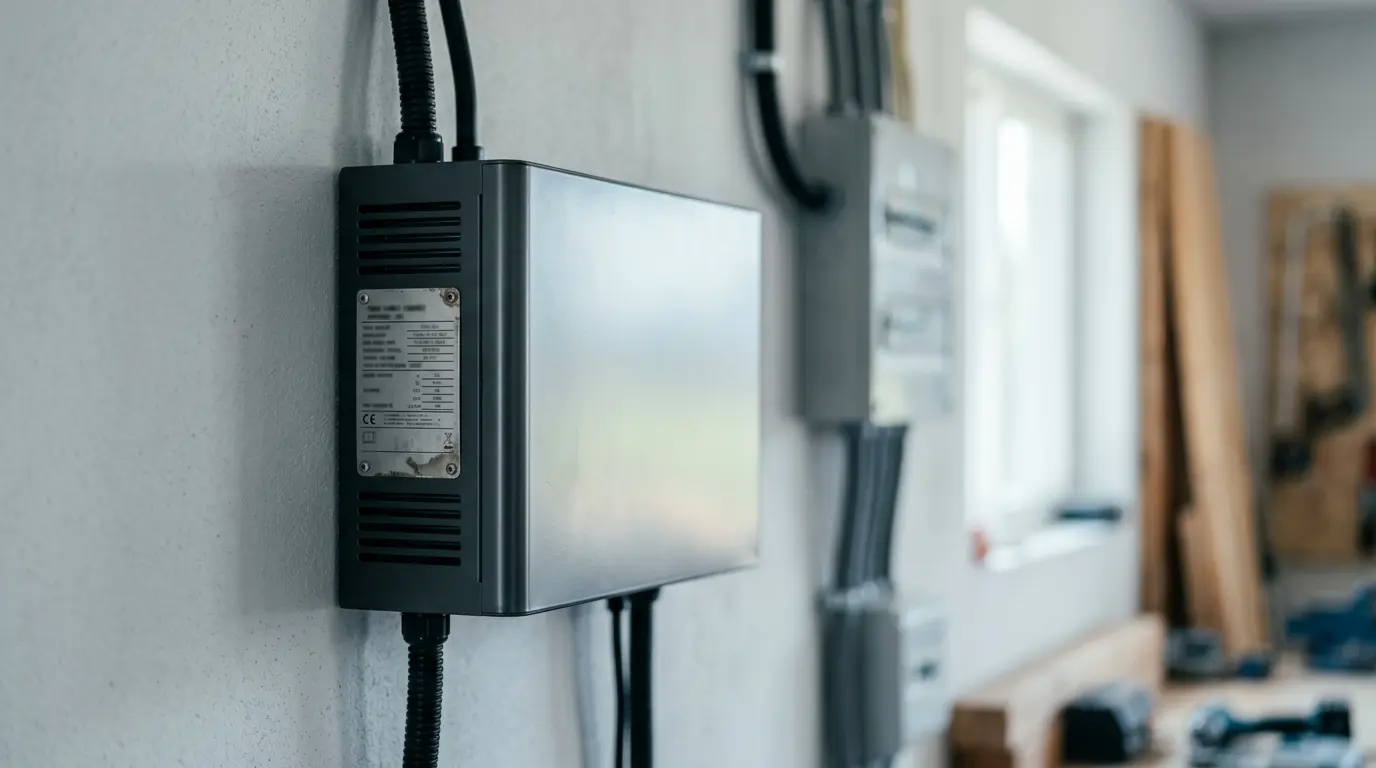
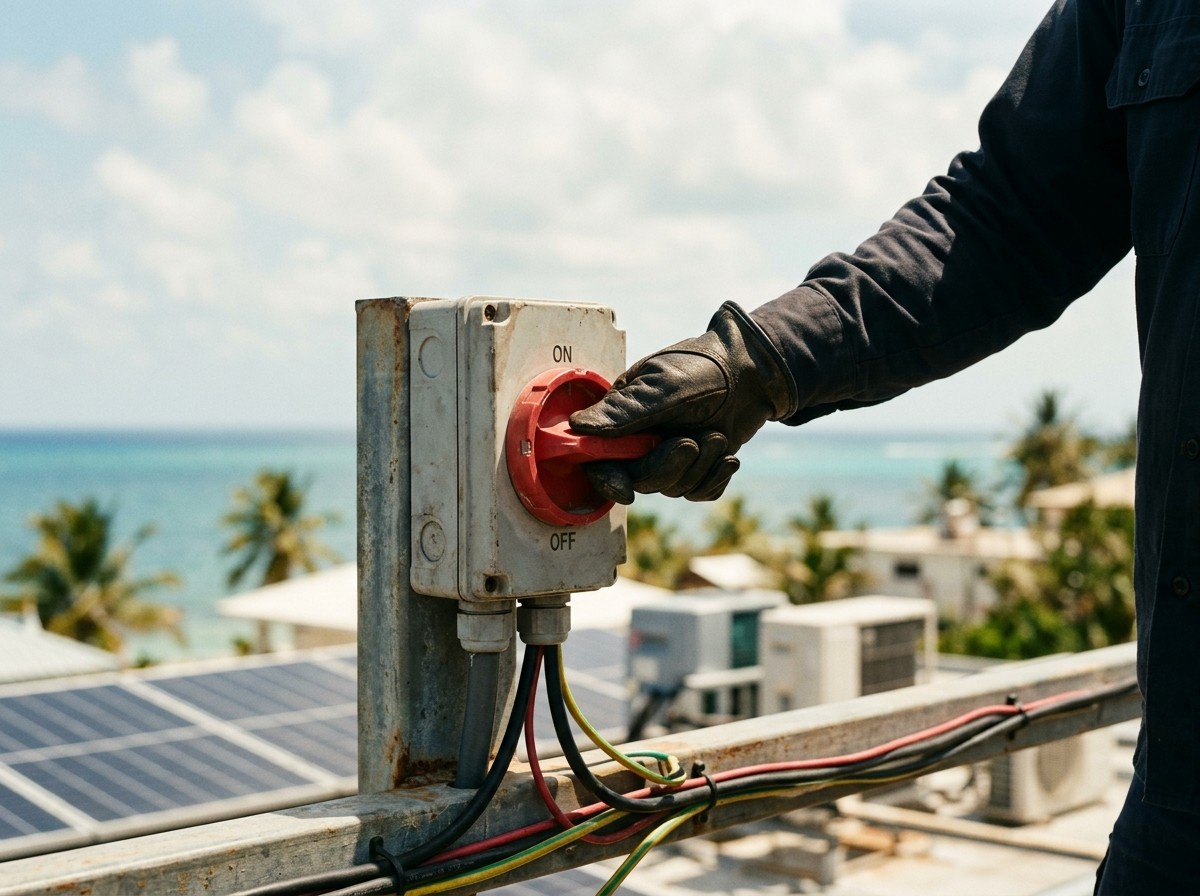
Water ingress is the most common one, and it is nearly always the same cause: cable entries made in the top or the sides of the enclosure instead of the bottom. Rain runs down the cable, sits in the gland, and finds its way in. The second is corrosion — coastal and industrial air in Malaysia works on brackets, fixings and enclosure hinges faster than a temperate specification allows for, and an isolator that cannot be operated is not an isolator.
Then labelling. Every isolator needs a durable label saying what it isolates, and the labels need to survive years of sun rather than being a printed sticker that curls off in the first monsoon. Placement matters too: accessible, within sight of what it isolates where practicable, and mounted so it can be operated without standing on the array.
Two more turn up often enough to be worth a line each. Isolators wired backwards, with the array on the load terminals, which some devices tolerate and others do not — check the manufacturer's marking rather than assuming a switch is symmetrical. And enclosures mounted flat on a roof surface where water pools around the base, instead of on a rail or a bracket that lets it drain.
The checks before sign-off
| Check | What good looks like | Common failure |
|---|---|---|
| Device type | DC switch-disconnector to IEC 60947-3 | AC-rated switch reused on the DC side |
| Voltage rating | Above array open-circuit voltage at lowest ambient | Rated on operating voltage, not Voc |
| Current rating | Above short-circuit current with margin | Rated at nominal string current |
| Enclosure | Weatherproof, UV-stable, bottom cable entry | Top or side entry, water tracks in |
| Mounting | Accessible, operable, corrosion-resistant fixings | Seized handle, rusted bracket |
| Labelling | Durable label naming what it isolates | Faded sticker or nothing at all |
| Documentation | Isolators on the single-line, ratings recorded | Drawing does not match what is installed |
Specifying it once, properly
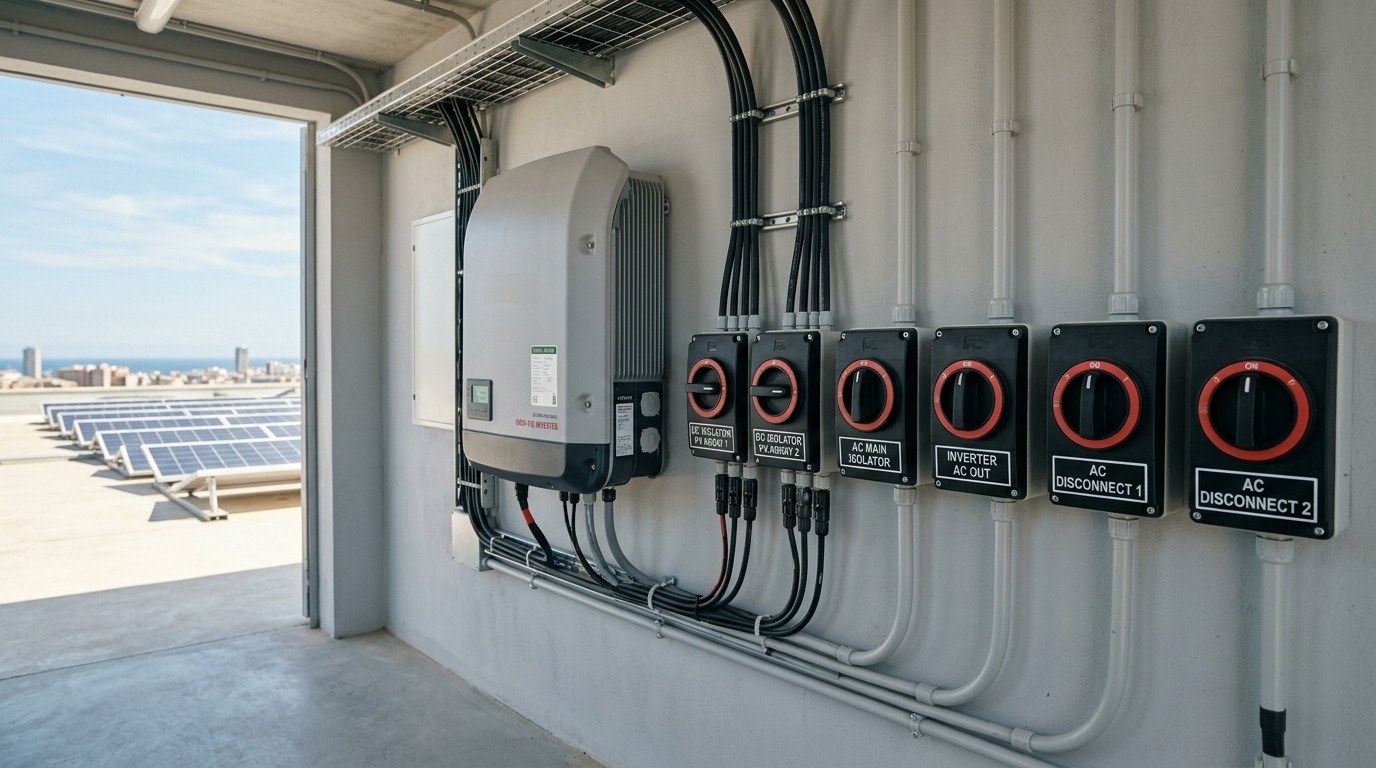
The pattern that survives inspection is dull: one DC switch-disconnector per array circuit at the array, one on the inverter's DC input, both DC-rated for the real voltage and current, in weatherproof enclosures with bottom entry, labelled and drawn on the single-line. Where the inverter has an integrated DC switch, it counts as the inverter-side isolation — but check the datasheet says so rather than assuming, and check the rating covers the array as designed.
Record the ratings while the job is fresh. The single-line should name the device, its DC voltage and current rating and where it sits, because at handover the customer's records are what the next contractor works from, and an isolator with no rating written down anywhere gets replaced with whatever is in the van.
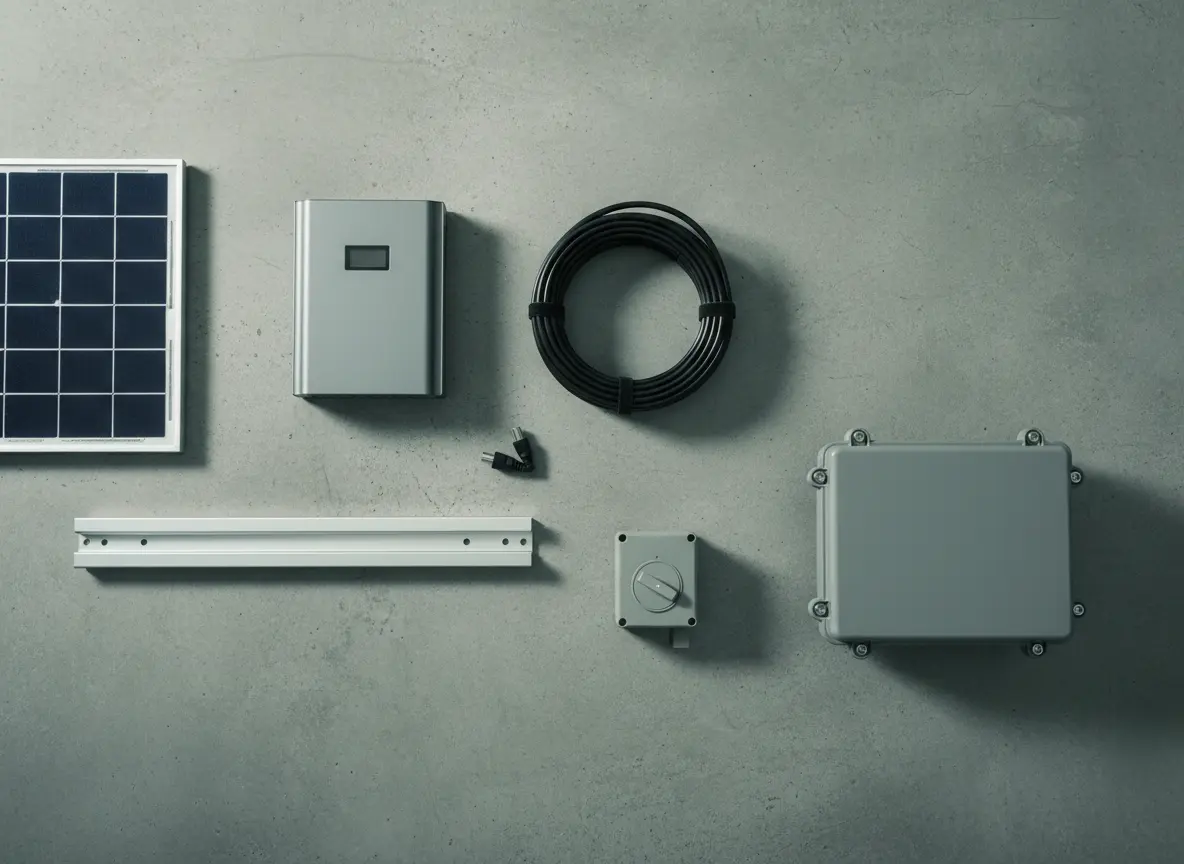
InverPower supplies DC isolators, combiner protection and the connectors and cable that go with them, held in Malaysia alongside the inverters. Send the string design and we will tell you what rating you need and what is on the shelf.
Frequently Asked Questions
Can one isolator serve both the array side and the inverter side?
Only on a short, simple installation where a single device genuinely sits at both points, which is rare. The two isolation points exist so that either the run or the inverter can be worked on independently. Where the inverter has an integrated DC switch, that covers the inverter side, and the array still needs its own.
What happens if the isolator rating is undersized?
It fails when it matters — opening a circuit under fault or full sun draws an arc the device cannot clear, which welds contacts and can ignite the enclosure. An undersized rating also fails inspection on paper, before it has the chance to fail on the roof.
Does opening the DC isolator make the array safe to work on?
No. It makes the circuit downstream of it dead. The modules and the cabling up to the isolator stay live whenever there is light on the array, which is why work on the array itself is planned around that rather than around the switch position.
Is an AC-rated switch ever acceptable on a DC circuit?
No. The arc behaviour is different, and an AC rating says nothing about the device's ability to break direct current. Devices that carry both ratings state them separately, and the DC rating is the one that applies.
Sources
- Department of Standards Malaysia — MS 1837:2018, Installation of grid-connected photovoltaic (PV) system (second revision) — https://www.jsm.gov.my
- IEC — IEC 62548, Photovoltaic (PV) arrays: design requirements, including disconnection and isolation — https://webstore.iec.ch
- IEC — IEC 60947-3, Low-voltage switchgear and controlgear: switches, disconnectors, switch-disconnectors and fuse-combination units — https://webstore.iec.ch
- IEC — IEC 60364-7-712, Requirements for special installations: photovoltaic power supply systems — https://webstore.iec.ch
- Electricity Supply Act 1990 (Act 447) and the Electricity Regulations 1994 — competent person and registered electrical contractor requirements — https://lom.agc.gov.my
About InverPower
InverPower is Malaysia's A–Z solar component distributor — Sungrow Preferred Distributor and Sunkean Sole Distributor — supplying EPCCs, installers, and government projects nationwide.
Explore the InverPower resource hub at inverpower.com.my
Related InverPower posts:
- Solar DC Cables in Malaysia: What Specs & Certs Do EPCCs Need?
- Why Do Solar Projects Get Rejected at TNB Interconnection Review?
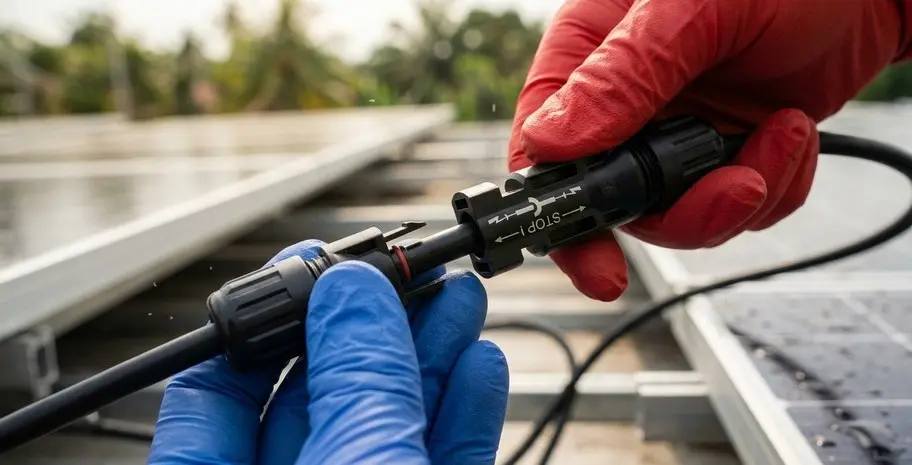
- MC4 vs "MC4-Compatible": Why Is Cross-Mating a Fire Risk?