Published by Quinn Lai | By InverPower Technical Team
Published 29 October 2026 · Last updated 29 October 2026
DIRECT ANSWER
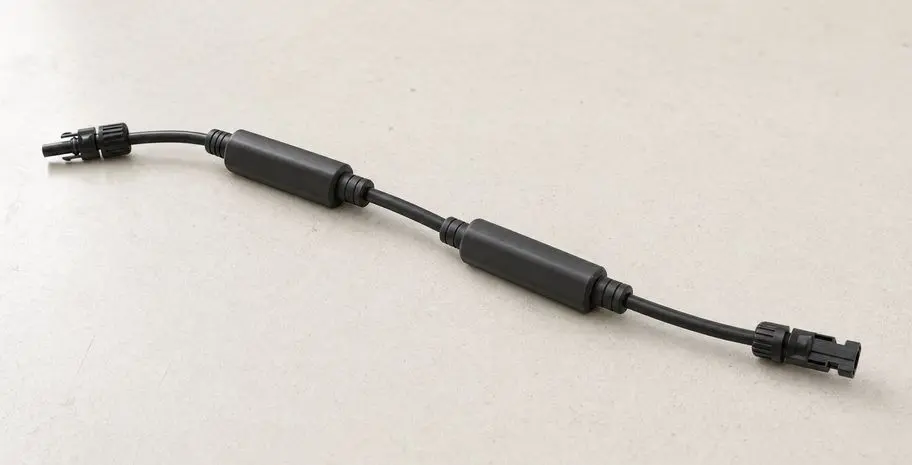
Sunkean's SK-TC copper-to-aluminium transition harness lets an EPCC on a C&I, LSS or solar farm project run aluminium cable on the long DC sections while the module, combiner and inverter connections stay copper. The Cu-Al joint is friction-welded and coated at the factory, and the harness is rated to 1500V DC and 46 A to 95 A, made to length per order.
Copper set a record on the London Metal Exchange on 10 September 2026, at about US$14,800 a tonne. The copper-to-aluminium price ratio hit a record 4.3 in January, and industry buyers start weighing a switch to aluminium once the ratio passes 3.5 to 4.0. On a ground-mounted plant, the DC side carries thousands of metres of string and home-run cable, which is why aluminium keeps coming up when the cable schedule is priced.
The catch is the joint. Somewhere the aluminium conductor has to meet copper: at the module leads, the combiner or the inverter input. The Sunkean SK-TC copper-to-aluminium transition harness is built for exactly that point, and InverPower is Sunkean's sole distributor in Malaysia.
Copper-to-aluminium joints made on site corrode and run hot
Copper and aluminium sit far apart electrochemically. Put them in contact with moisture present and the aluminium corrodes. Its oxide layer forms quickly and conducts poorly, so resistance at the joint climbs, the joint runs hot, and the heat speeds up the corrosion. On humid Malaysian sites that happens fast.
Two more things work against a joint made in the field. The metals expand at different rates as the joint heats and cools every day, and aluminium creeps under the pressure of a crimp or a bolt, so a connection that was tight at commissioning can loosen over the years. Malaysia adds year-round humidity, plus salt air on coastal sites. On a plant with hundreds of strings, that means hundreds of joints whose quality depends on the person who stripped, brushed and crimped each one.
Sunkean friction-welds the joint at the factory
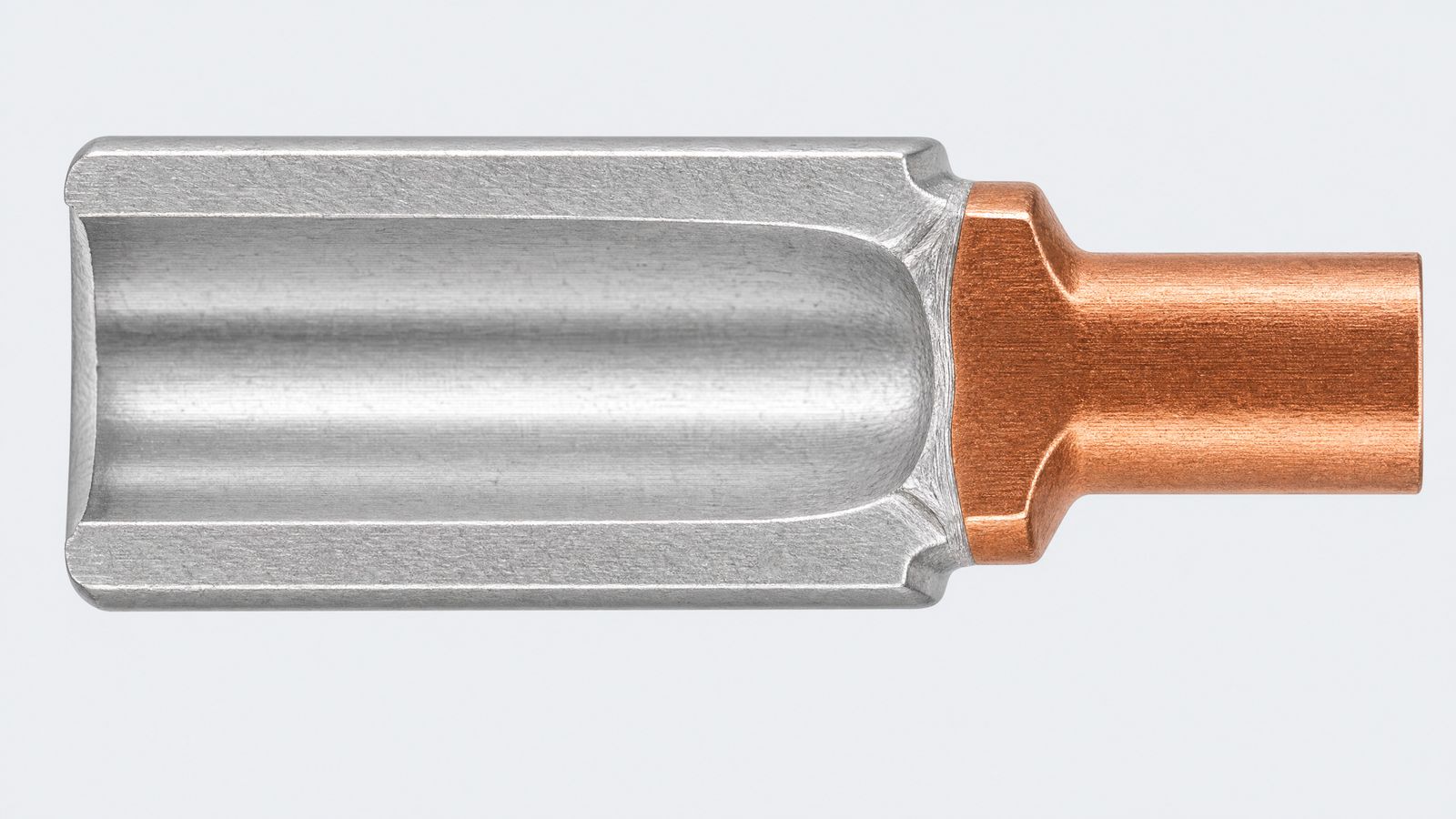
Sunkean bonds the copper to the aluminium by solid-state friction welding. One part spins against the other at high speed, the friction heats the interface, and pressure forges the two metals together without either one melting. Fusion welding has to manage two metals that melt at different temperatures and expand at different rates. Friction welding never takes them to melting point, so that problem doesn't arise.
The bonded joint is then sealed under a four-layer anti-corrosion coating against moisture, salt and UV, and Sunkean rates the harness for 25 years of operation. Sunkean pre-assembles the copper side before the harness leaves the factory, with the copper cable crimped into the copper end of the transition tube and fitted into its housing.
On site, the crew crimps aluminium onto the aluminium tube
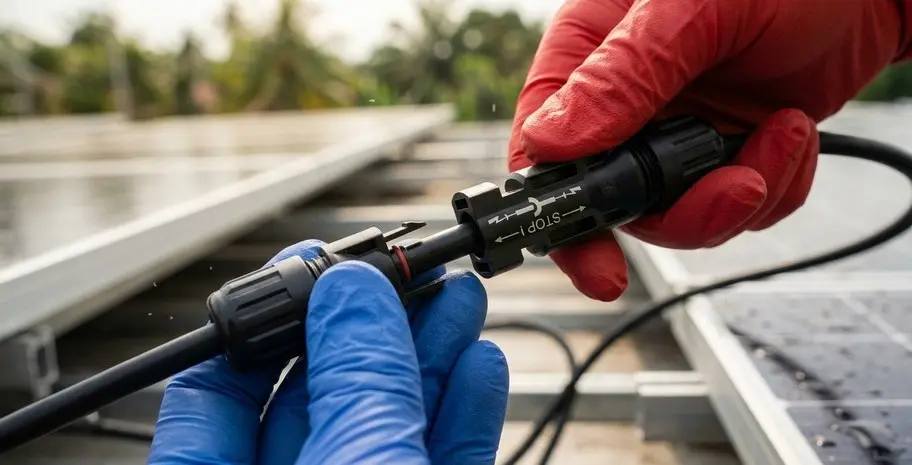
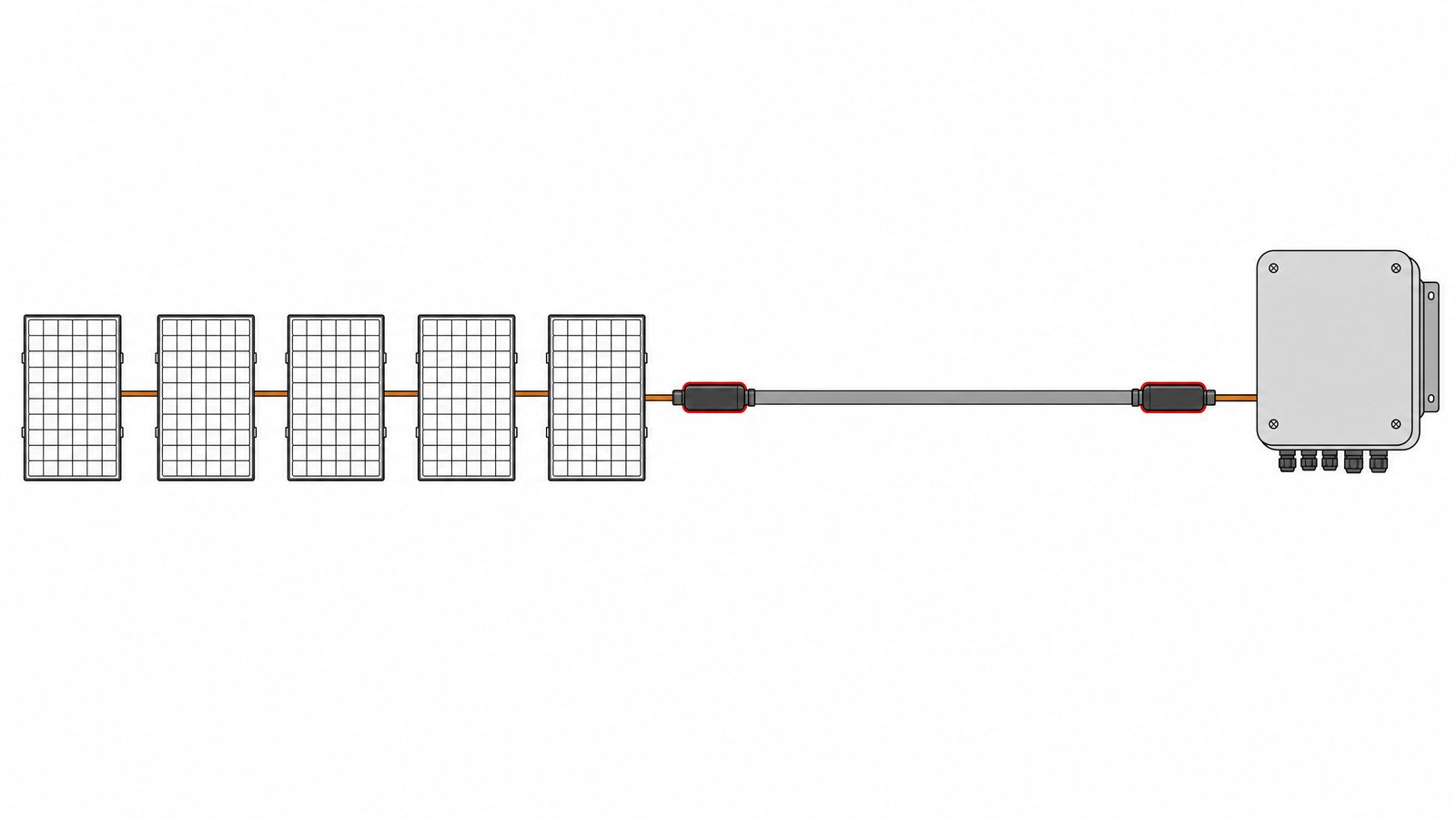
The crew has three steps on site. Strip the aluminium cable and brush off the oxide layer, crimp the aluminium end of the transition tube onto it at the two marked 10 mm sections, then tighten the nuts to close the housing. Nobody makes a copper-to-aluminium contact in the field, because that joint is the friction weld inside the tube. The only crimp on site is aluminium cable into an aluminium tube built for it.
Harnesses are made to length per order, so the run lengths come off your DC layout and need to be fixed before the order goes in. The copper-side connector is compatible with MC4, and MC4-EVO2, PV4S, H4 Pro and TS4 versions are available to match the modules and inverter on the project. Site work needs a crimping tool and an SK-TC wrench.
The SK-TC is rated to 1500V DC and up to 95 A
SK-TC specifications:
| Parameter | Sunkean SK-TC Cu-Al connector |
|---|---|
| Rated voltage | 1500V DC |
| Rated current at 85°C | 46 A, 55 A, 70 A or 95 A, depending on cable size (pairs below) |
| Contact resistance | ≤0.3 mΩ |
| Protection rating | IP68 (1 m, 1 h) when mated, IP2X unmated |
| Cable outside diameter | 5.35–9 mm copper, 6–12 mm aluminium |
| Operating temperature | −40°C to +85°C |
| Contact material | Copper-aluminium alloy, tin-plated |
| Insulation and flammability | PA66, UL94V-0 |
| Connection method | Crimping |
| Certification | IEC 62852, TÜV 2PfG 2915 |
Each current rating covers a copper size and the aluminium sizes it pairs with: 46 A for 4 mm² copper with 6 or 10 mm² aluminium, 55 A for 6 mm² copper with 10 or 16 mm² aluminium, 70 A for 10 mm² copper with 16 or 25 mm² aluminium, and 95 A for 16 mm² copper with 25 mm² aluminium. Aluminium conducts about 61% as well as copper, so it runs at least one size up for close to the same DC resistance: 6 mm² aluminium against 4 mm² copper, 10 against 6, and 16 against 10. IEC 62852 is the safety standard for DC connectors in photovoltaic systems.
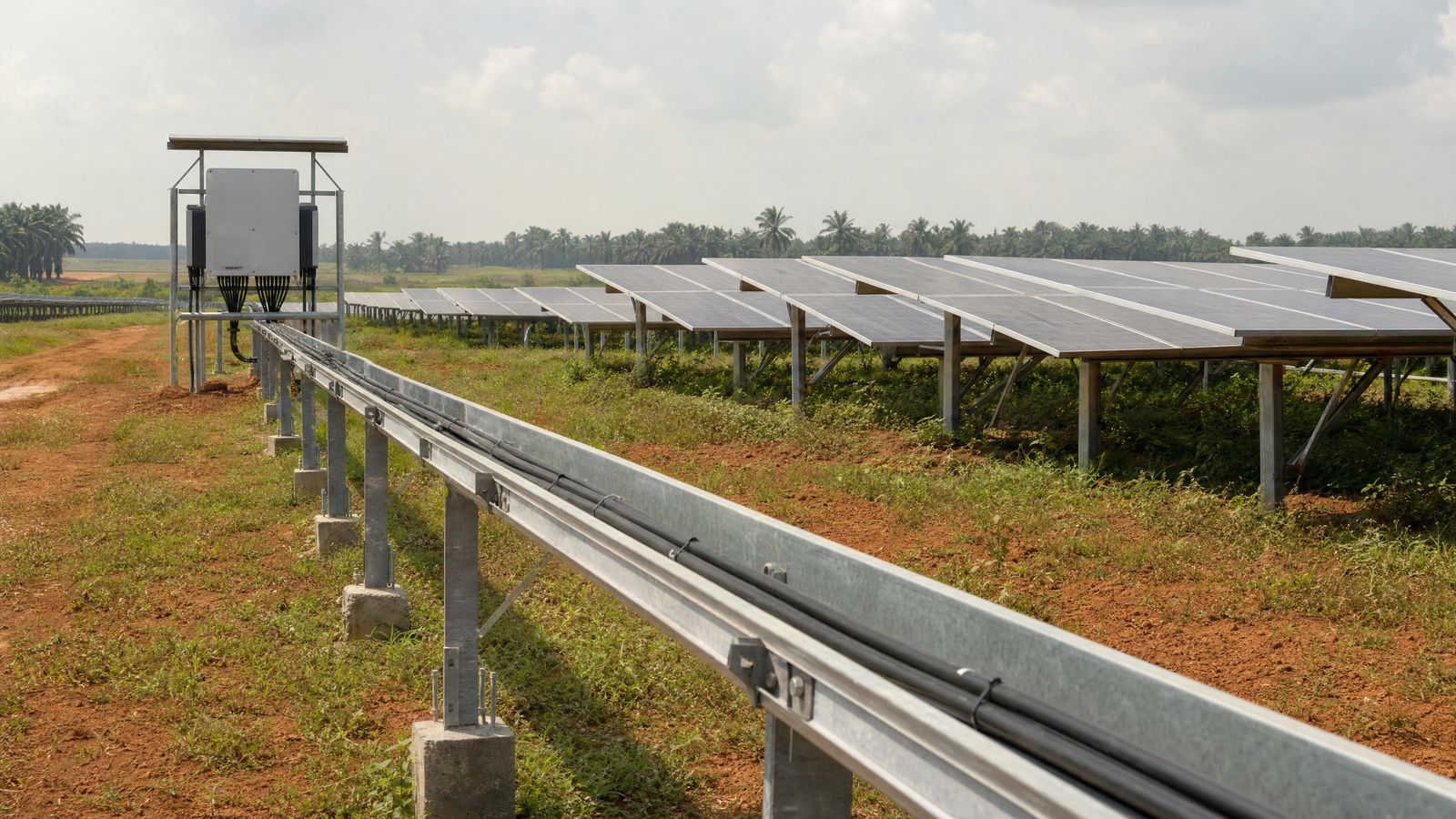
The SK-TC is built for C&I, LSS and solar farm projects
It is made for big projects: C&I plants, LSS and solar farms, where the DC side runs to thousands of metres and the strings sit a long way from the combiner or inverter. The longer the run, the more copper the aluminium section replaces, so the cable schedule shows quickly where it pays.
LSS6, announced on 16 July 2026, offers 2,500 MW of solar paired with 1,250 MW of BESS, plus a further 150 MW of solar for Bumiputera companies, with full commercial operation due by 31 December 2029. Most of that cable gets bought in 2027 and 2028, so the DC schedule for an LSS6 bid is being priced against the copper market as it stands now.
Three things change on the drawings when aluminium goes in. The conductor is a size larger: Sunkean's 10 mm² aluminium cable is about 7.6 mm across, against 6.2 mm for the 6 mm² copper it replaces, so check glands and tray fill. The aluminium cable has to be rated for PV: Sunkean's PV1500DC-AL-K is built to TÜV 2PfG 2642 for 1500V DC. And it only goes into terminals made for aluminium conductors, because a copper terminal on aluminium overheats. Whether aluminium is allowed at all depends on the site, which the next paragraph covers.
For the PV array, C&I, LSS and solar farm plants are designed to MS 1837 and IEC 60364-7-712. Malaysia's copper-only wiring rules cover homes: Suruhanjaya Tenaga's residential wiring guidelines require copper for conductors of 16 mm² and below, and the 2026 draft revision of MS 1979 allows only copper in domestic installations, which keeps residential systems out of scope. Confirm the aluminium sections with the project's consulting engineer before the DC schedule is issued.
InverPower is Sunkean's sole distributor in Malaysia. Send us the DC cable schedule with the run lengths and we will come back with the jumper ratings and aluminium sizes that match it.
Frequently Asked Questions
Can you crimp aluminium PV cable into a standard copper PV connector?
No. A copper-conductor terminal on aluminium cable overheats, so aluminium only goes into terminals made for aluminium. With the SK-TC, the aluminium cable crimps into an aluminium tube, and the copper-to-aluminium transition is a friction weld made at the factory.
Does aluminium PV cable need a bigger cross-section than copper?
Yes, at least one size up: 4 mm² copper pairs with 6 mm² aluminium, 6 with 10, and 10 with 16. The SK-TC also takes the next aluminium size again on each pairing. Check the larger outside diameter against glands and cable trays before the drawings are issued.
Which projects is the SK-TC for?
C&I plants, LSS and solar farms, where long DC runs between the strings and the combiner or inverter carry the most cable. Homes stay copper, because Malaysia's residential wiring rules allow only copper conductors.
Can the jumper's PV connector mate with another brand's connector?
Mate it with its matching counterpart from the same connector family. Joining two different connector brands is cross-mating, and a mismatched contact is a known fire risk at the connection. We cover it in our article on MC4 cross-mating.
Sources
- Sunkean — SK-TC Cu-Al transition harness datasheet, installation instructions and 2026 PV product brochure (ratings, cable pairs, assembly), available from InverPower on request — https://www.inverpower.com.my
- Sunkean — PV1500DC-AL-K aluminium alloy solar cable datasheet (TÜV 2PfG 2642, copper-aluminium equivalence table), available from InverPower on request — https://www.inverpower.com.my
- Reuters via finanzen.ch — LME copper record, September 2026 — https://images.finanzen.ch/nachrichten/rohstoffe/copper-price-notches-another-record-before-retreating-as-squeeze-eases-15902038
- Reuters via IDN Financials — copper-to-aluminium price ratio and substitution threshold, 2026 — https://www.idnfinancials.com/news/65447/copper-prices-surge-global-industries-shift-to-aluminium
- AlCircle — aluminium conductivity relative to copper, and aluminium in utility-scale solar cable — https://www.alcircle.com/news/aluminium-over-copper-solar-cable-frcables-cost-efficient-metal-alternative-119948
- The Edge Malaysia — "Govt launches LSS6, expecting to attract RM13b-RM15b in private investment", 16 July 2026 — https://theedgemalaysia.com/node/810925
- IEC — IEC 62852, Connectors for DC-application in photovoltaic systems: safety requirements and tests — https://webstore.iec.ch
- Suruhanjaya Tenaga — Guidelines for Electrical Wiring in Residential Buildings (copper conductors of 16 mm² and below) — https://www.st.gov.my
- Department of Standards Malaysia — DMS 1979:2026, Domestic electrical installations of buildings, draft for public comment (COP 30, COP 46, COP 100) — https://www.teeam.org.my/wp-content/uploads/2026/04/DMS-1979-2026-Domestic-Electrical-Installations-of-Buildings-COP-2nd-Revision.pdf
About InverPower
InverPower is Malaysia's A–Z solar component distributor — Sungrow Preferred Authorised Distributor and Sunkean Sole Distributor — supplying EPCCs, installers, and government projects nationwide.
Explore the InverPower resource hub at inverpower.com.my
Related InverPower posts:
- Where Do You Source Sunkean Solar Cable in Malaysia?
- MC4 vs “MC4-Compatible”: Why Is Cross-Mating a Fire Risk?
- Solar Cable Sizing: Why Ampacity Alone Isn't Enough