
Where Do You Source Sunkean Solar Cable in Malaysia?
Published by Quinn Lai | By InverPower Technical Team
Published 14 August 2026 · Last updated 14 August 2026
DIRECT ANSWER
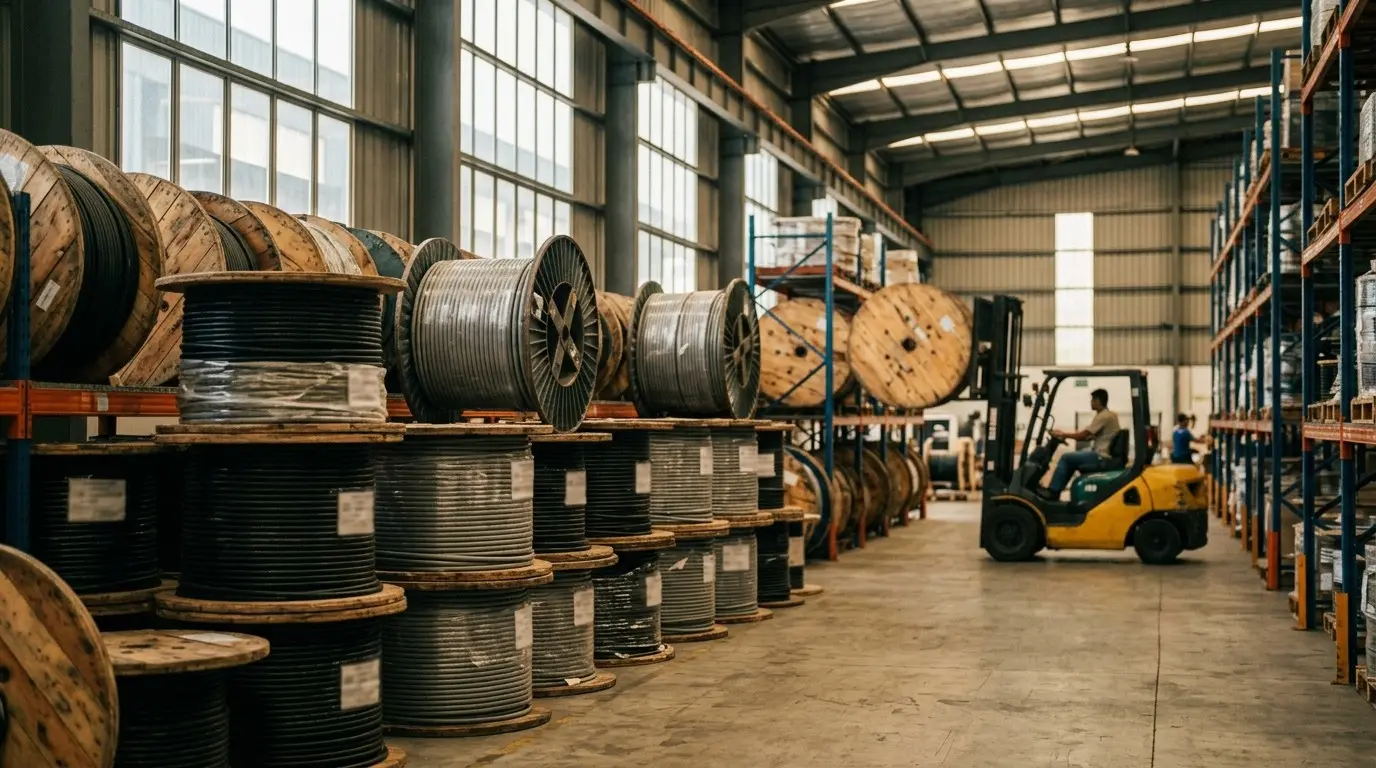
InverPower is the sole distributor of Sunkean solar cable in Malaysia. Sunkean's H1Z2Z2-K PV wire is built to EN 50618 and IEC 62930, rated 1500 V DC on a tinned copper conductor, and we hold it in local stock — so an EPCC can draw certified cable off Malaysian inventory instead of waiting on an import shipment.
Cable is the line on the bill of materials that gets specified last and causes trouble first. It is also the item most exposed to quiet substitution, because a drum that arrives with the right cross-section stencilled on the flange can still arrive with the wrong paperwork behind it. Knowing where your cable comes from, and what it is actually certified to, is procurement work worth doing once and properly.
What does sole distribution change about your supply?
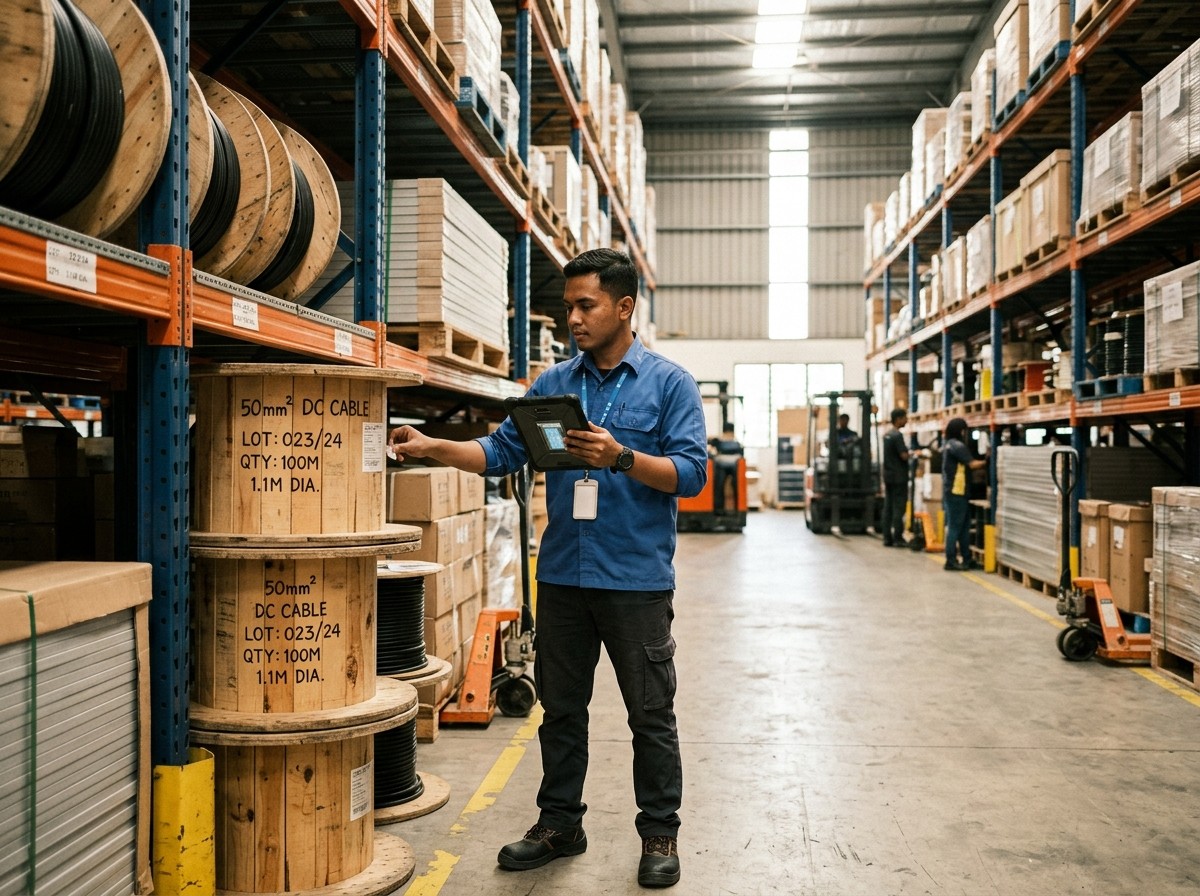
InverPower is Sunkean's sole distributor in Malaysia. In practice that means one appointed route into the country rather than a scatter of parallel importers, and it means the stock, the certification package and the after-sales conversation all sit in the same place. When a consultant queries a specific drum on a specific project, the answer does not have to cross a time zone to reach you.
It also changes the shape of your lead time. Cable ordered direct from a mill is a container-shipping problem before it is an electrical one, and a programme that budgeted six weeks finds out late that it needed twelve. Cable drawn from Malaysian stock is a delivery booking. That distinction is academic on a single-roof residential job and decisive the moment a C&I cable pull is sequenced between a roof handover and a fixed energization date.
What is Sunkean H1Z2Z2-K cable built to?
The headline figures below are Sunkean's own published specification for its 1.5 kV solar cable. Treat them as the starting point for a spec conversation rather than the end of one — the controlling document on any given order is the datasheet and test report for the exact construction you are buying.
| Parameter | Sunkean 1.5 kV solar cable | Why it matters on site |
|---|---|---|
| Standards | EN 50618, IEC 62930, UL 4703 | PV-specific cable standards, not general building wire |
| Harmonised designation | H1Z2Z2-K | The code that tells you it is DC PV wire at a glance |
| Rated voltage | 1500 V DC | Headroom for 1000 V and 1500 V string architectures |
| Test voltage | 6500 V AC | Factory dielectric proof, not a field rating |
| Conductor | Tinned copper, 2.5–35 mm² | Tinning resists corrosion at cut ends and terminations |
| Insulation and sheath | XLPO, cross-linked | Cross-linked polyolefin, halogen-free, heat-form stable |
| Rated temperature | −40 °C to 90 °C | Comfortably inside Malaysian rooftop ambient swings |
Two entries there carry more weight than the rest. EN 50618 and IEC 62930 are the photovoltaic cable standards specifically — a cable meeting them has been assessed for the things a DC string run actually does to a jacket over twenty-five years, which is a different test programme from the one behind ordinary building cable. And the conductor line matters because the failure it rules out is the expensive one.
Why does the designation matter more than the brand name?
H1Z2Z2-K is not decoration. It is the harmonised designation for a single-core, cross-linked, halogen-free flexible PV cable, and it is the shortest reliable way to tell a compliant DC cable from something that merely looks like one on a drum. A quotation that names a brand but not a designation has told you who made it and nothing about what it is.
The conductor is where substitution usually hides. A PV wire should be flexible stranded copper — tinned, in Sunkean's case, which is what keeps a cut end from going green at a termination in a coastal or humid installation. Copper-clad aluminium priced as copper is the classic swap, and it is not a like-for-like part: the current rating, the termination behaviour under a crimp and the long-term joint resistance are all different. Ask for the conductor material in writing and the question resolves itself.
Fire class is the other place a datasheet can be technically true and practically misleading, and it deserves more room than a paragraph here — we covered how the IEC 60332 tests and the CPR Euroclass ladder actually relate in a separate post, linked below.
What should you have ready when you place a cable order?
Most cable orders that go wrong go wrong at the request stage, not the supply stage. The information below turns a general enquiry into something that can be picked, cut and delivered without a second round of questions:
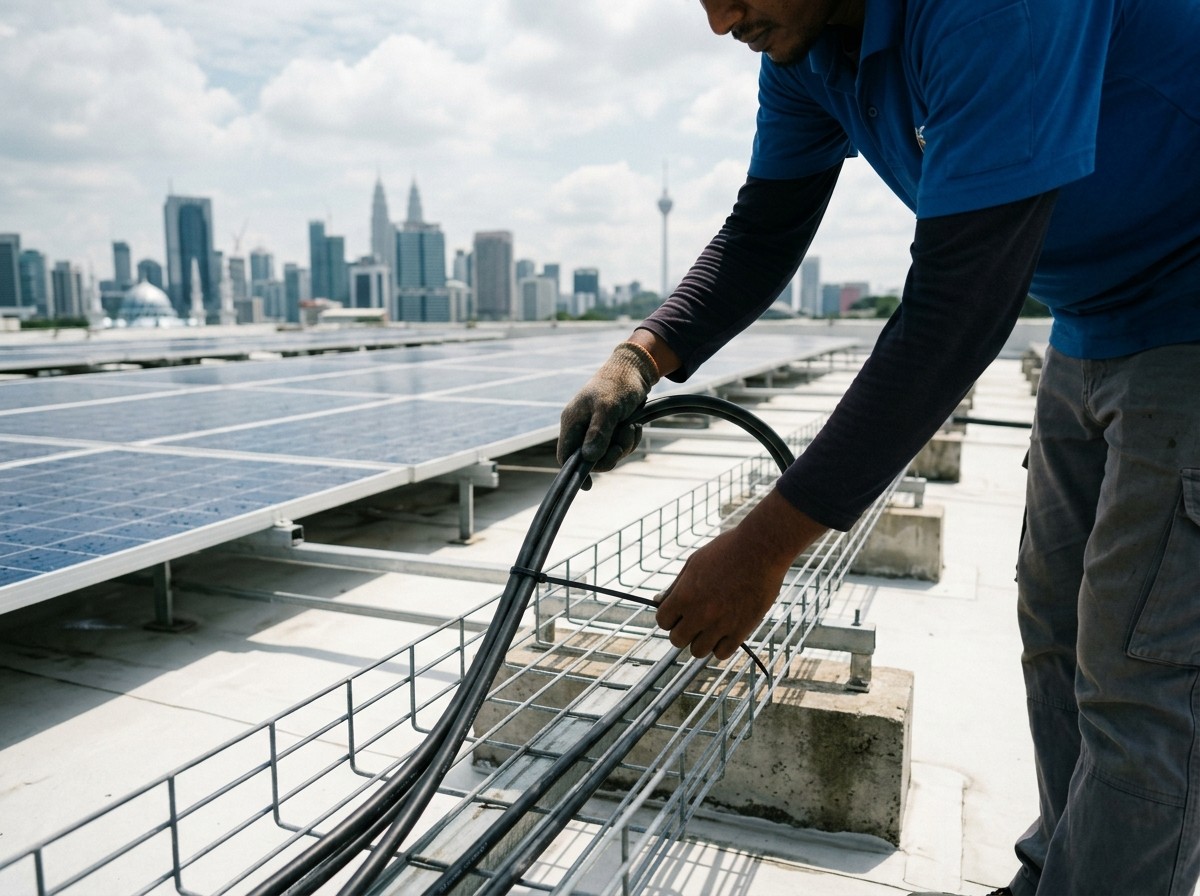
- Cross-section and total length per colour — DC runs are ordered as a pair, and splitting the order across two conversations is how one colour ends up short.
- Drum length versus continuous run length, so the cut plan matches the pull plan and you are not jointing a run that should never have been jointed.
- Where the cable sits on the system: string wiring, array-to-combiner, or the AC side. They are not the same cable and should not be ordered as one.
- Termination and connector type at each end, so cable and connectors are specified against each other rather than sourced separately and mated on the roof.
- The certification evidence your consultant or authority will ask for — name it up front and it ships with the delivery rather than chasing it afterwards.
- Delivery date and site access, including whether the drum sizes can physically reach the pull location.
None of that is exotic. It is the same information an experienced procurement engineer already holds in their head — writing it into the enquiry simply moves the whole exchange forward by a week.
How does InverPower support your cable spec?
We hold Sunkean cable as its sole distributor in Malaysia, with the certification package documented and available on request — the standard, the designation, the conductor material, the test evidence. We supply the trade and we do not bid against it: the cable goes to the EPCC or installer who owns the project, and the design decisions stay with the engineer who signs for them. If a spec question comes up mid-tender, ask it before the drum ships rather than after.
Frequently Asked Questions
Is Sunkean solar cable TÜV certified?
Sunkean publishes its 1.5 kV solar cable against EN 50618, IEC 62930 and UL 4703. Certification marks and certificate numbers are construction- and batch-specific, so ask for the certificate covering the exact cable you are buying rather than relying on a general claim.
What cross-sections does InverPower hold in Malaysia?
Sunkean's H1Z2Z2-K range runs 2.5 mm² to 35 mm² in tinned copper, which covers string wiring through to larger array and combiner runs. What is physically on the racks changes with demand, so confirm current availability and drum lengths against your cut plan.
Can I use ordinary building cable on the DC side of a solar array?
No. DC string wiring is specified to the photovoltaic cable standards — EN 50618 and IEC 62930 — because it lives outdoors under UV, heat and constant DC stress for the life of the array. General building wire is not assessed for that duty.
How much lead time should an EPCC plan for a large cable order?
Cable drawn from local stock is a delivery booking rather than a shipping problem, which is the main reason to source domestically. Volume orders beyond held stock still depend on production and freight, so raise the requirement as early in the programme as you can.
Sources
- SUNKEAN — 1.5 kV solar cable, EN 50618 H1Z2Z2-K / UL 4703 / IEC 62930 product specification — https://www.sunkean.com/pid18474354/1-5kV-Solar-Cable-EN-50618-H1Z2Z2-K-UL4703-IEC62930.htm
- Eland Cables — EN 50618 H1Z2Z2-K photovoltaic cable standard reference — https://www.elandcables.com/cables/photovoltaic-solar-h1z2z2-k-cable
- SUNKEAN — TÜV certified solar cable range — https://www.sunkean.com/products2136767/T-V-Solar-Cable.htm
About InverPower
InverPower is Malaysia's A–Z solar component distributor — Sungrow Preferred Distributor and Sunkean Sole Distributor — supplying EPCCs, installers, and government projects nationwide.
Explore the InverPower resource hub at inverpower.com.my
Related InverPower posts:
- Solar DC Cables in Malaysia: What Specs & Certs Do EPCCs Need?
- Cable Fire Ratings Decoded: Why Isn’t ‘Eca’ the Standard to Specify?
- Where Do EPCCs Source Solar PV Components in Malaysia?