
MPPT Explained: How Do Solar Inverters Track Maximum Power?
Published by Quinn Lai | By InverPower Technical Team
Published 14 August 2026 · Last updated 14 August 2026
DIRECT ANSWER
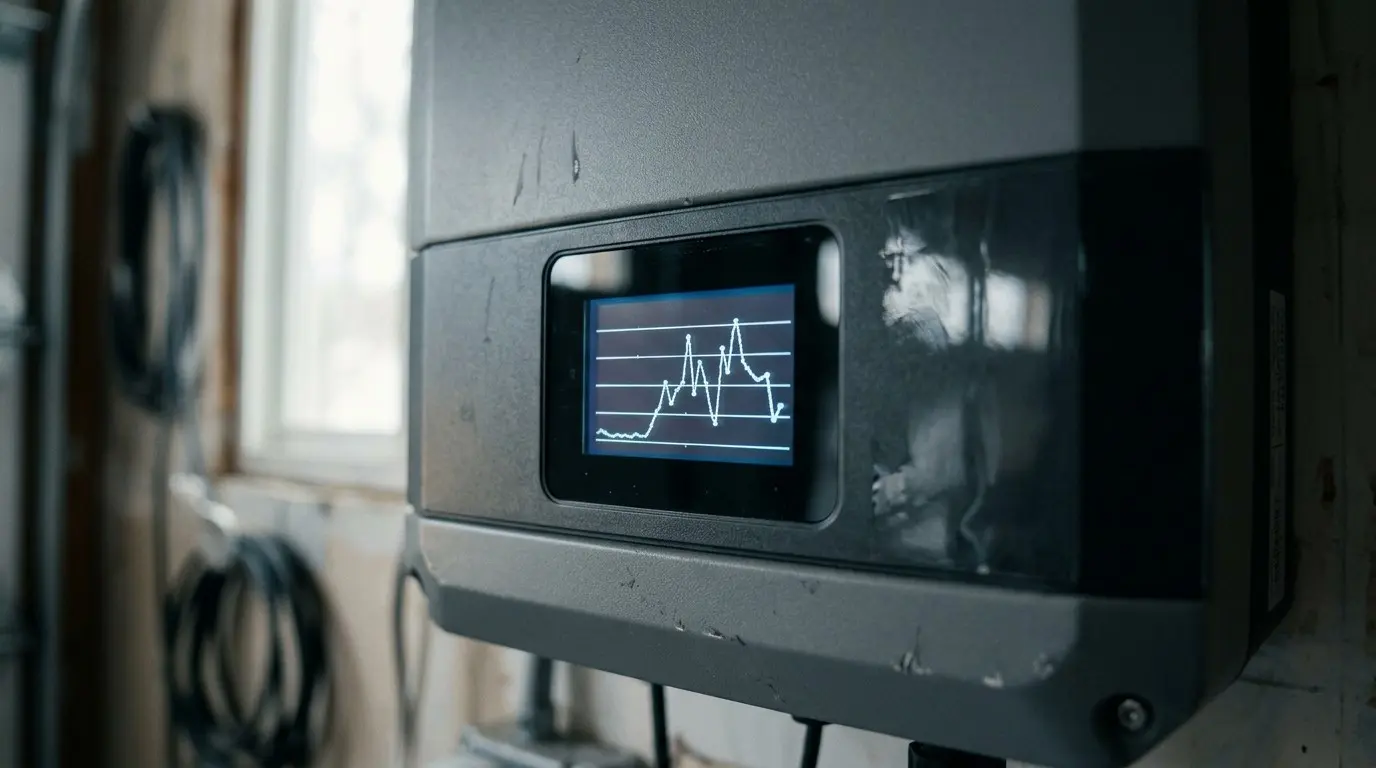
MPPT — maximum power point tracking — is the inverter continuously adjusting the voltage it pulls a string at, so the array sits on the point of its power curve that yields the most watts. That point moves constantly with irradiance and cell temperature, so tracking is a live control loop, not a one-time setting.
MPPT is one of those specifications that everyone recognises on a datasheet and comparatively few people can explain from first principles. It matters commercially because the number of independent MPPT channels on an inverter is a design constraint on how you lay out a roof, and getting it wrong is a yield problem you cannot fix after commissioning without re-pulling cable.
Why is there a single best operating point on a string?
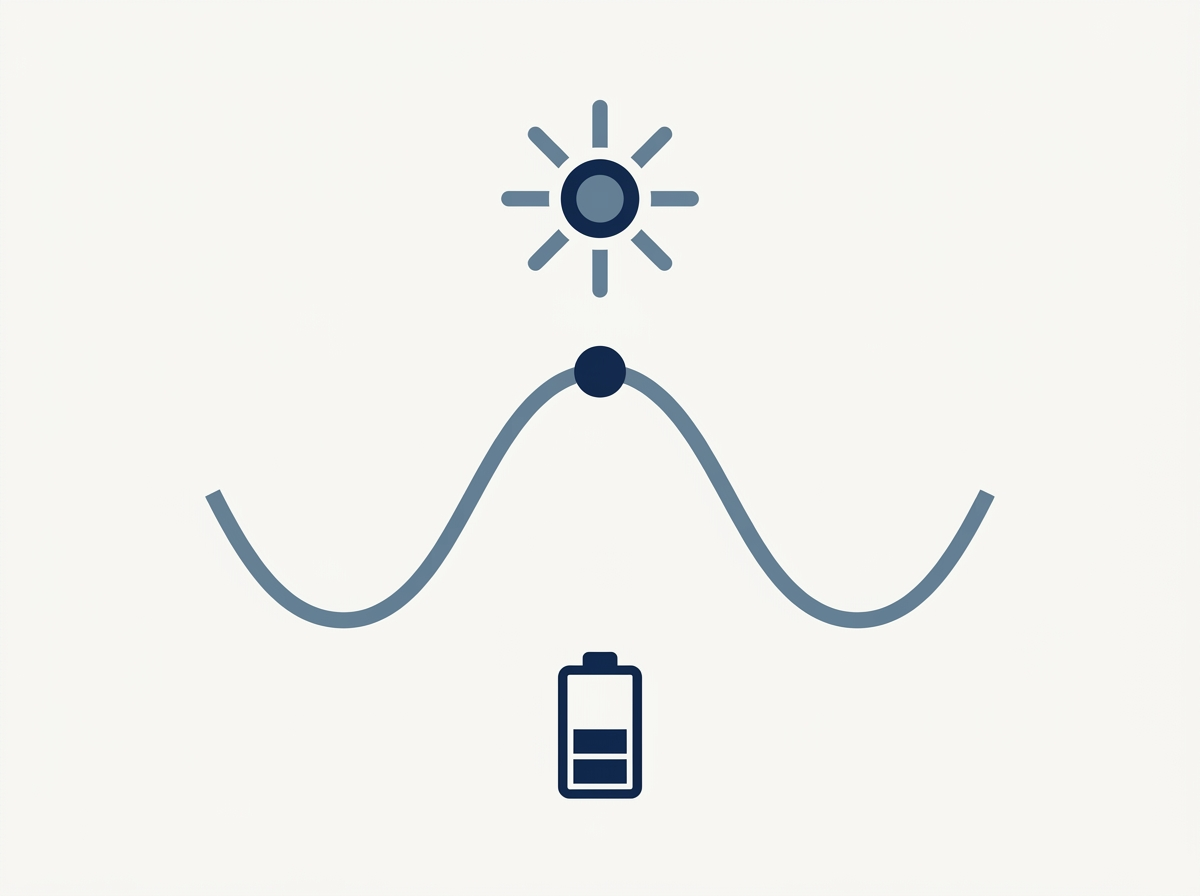
A PV module is not a battery. It does not hold a fixed voltage and hand over whatever current you ask for. Its current and voltage are locked together in a relationship set by physics and lighting conditions: pull the voltage down toward zero and you get close to the module's short-circuit current at almost no voltage, so almost no power. Let the voltage rise to its open-circuit value and current collapses to nothing, so again no power. Power is the product of the two, which means it is zero at both ends and peaks somewhere in between.
That peak is the maximum power point. Sitting even slightly off it costs real energy, and the cost is not symmetric or intuitive — the curve is fairly flat near the top and falls away sharply past the knee, so drifting toward open-circuit voltage is punished harder than drifting the other way.
Why does the point keep moving?
Two variables move it, and in Malaysia both move constantly. Irradiance sets how much current the cells can produce, so a cloud crossing the array drops the whole curve within a second. Cell temperature sets the voltage, and it works against you: as a module heats up, its open-circuit voltage falls, which drags the maximum power point down the voltage axis. A rooftop module at midday is running far above ambient air temperature, which is exactly why a string sized on nameplate voltage alone tends to disappoint.
So the inverter cannot be configured with a target voltage and left there. It has to hunt — nudge the operating voltage, observe whether power went up or down, and move again. Perturb-and-observe is the classic implementation of that idea and remains the backbone of most commercial trackers, refined to react quickly to a real change in conditions without oscillating pointlessly in steady sun.
This is also why two inverters with identical conversion efficiency can return different annual yields on the same array. Conversion efficiency describes how much of the DC power reaching the inverter survives the trip to AC. Tracking efficiency describes how much of the available DC power the inverter managed to reach in the first place. EN 50530, the European standard for grid-connected inverter efficiency, treats those separately and splits tracking further into static MPPT efficiency — accuracy on a fixed curve — and dynamic MPPT efficiency, measured against defined irradiance ramps. Under Malaysian cloud cover, the dynamic figure is the one describing your Tuesday afternoon.
What does an independent MPPT channel actually buy you?
One tracker can only hold one operating point. Every string wired into that tracker is forced to the same voltage, so if those strings are not producing identically, the tracker settles on a compromise that is optimal for none of them. Strings differ for ordinary reasons: a different roof pitch, a different azimuth, a shadow from a stair core that lands on one row at four o'clock, or simply a different string length.
Independent MPPT inputs let the inverter hold a separate operating point per group, which is why channel count is a roof-layout decision rather than a spec-sheet nicety. On a complex C&I roof — plant rooms, service risers, multiple orientations — the practical question at design stage is whether the inverter has enough independent trackers to keep each electrically-distinct group on its own point.
The Sungrow SG125CX-P2 is a useful illustration because the tracking specification is doing visible work:
| Datasheet line | SG125CX-P2 | What it constrains |
|---|---|---|
| MPP voltage range | 180 – 1000 V | The window your string must stay inside, hot and cold |
| Independent MPP inputs | 12 | How many electrically-distinct groups you can serve |
| PV strings per MPPT | 2 | Strings sharing a tracker must be matched to each other |
| Max. PV input voltage | 1100 V | Absolute ceiling — coldest-day open-circuit voltage |
| Max. efficiency | 98.5% | Conversion efficiency, not tracking accuracy |
| European efficiency | 98.3% | Weighted across part-load, closer to real operation |
Read those two voltage lines together, because they are the pair that catches people out. The MPP range is where the inverter can track; the maximum input voltage is where the hardware stops being safe. A string sized so its cold-morning open-circuit voltage brushes 1100 V is a hazard, and a string whose hot-afternoon operating voltage drops below 180 V has left the tracking window and is producing nothing useful. Both failure modes come from the same omission — sizing on nameplate figures instead of on the module's temperature coefficients at real Malaysian roof temperatures.
Where does MPPT stop being the answer?
String-level tracking has a floor set by its own granularity. If a single module in a string is shaded, the tracker is still optimising the whole string, and the best available operating point for that string is worse than it would be if the shaded module were not dragging on it. More trackers narrows the problem; it does not eliminate it.
That is the boundary where module-level electronics start to earn their cost — optimisers or microinverters that track per module rather than per string. The honest framing is that this is a shading and layout question, not a general upgrade: on an unshaded, uniform roof, module-level tracking is solving a problem you do not have. We have compared the two approaches for Malaysian C&I roofs in a separate post, linked below.
How does InverPower support the sizing conversation?
We distribute Sungrow as a preferred distributor and stock the datasheets, MPPT windows and temperature data that string sizing actually depends on, so your design team is working from the manufacturer's numbers rather than a summary of them. The string design and the yield modelling belong to the EPCC — but if you need the type-test evidence or a specification point confirmed before it goes into a tender, ask early rather than at commissioning.
Frequently Asked Questions
What does MPPT stand for on a solar inverter?
Maximum power point tracking. It is the control function that continuously adjusts the voltage the inverter draws a PV string at, so the array operates at the point on its power curve that delivers the most watts under current irradiance and temperature.
Do all inverters track equally well?
No. Conversion efficiency and tracking efficiency are different properties. EN 50530 measures static MPPT efficiency on a fixed curve and dynamic MPPT efficiency against defined irradiance ramps, and a headline conversion efficiency figure tells you nothing about either.
Why does output dip on a partly cloudy day more than the cloud seems to justify?
Rapidly changing irradiance forces the tracker to chase a moving maximum power point, and it spends part of that time off-peak. Strings sharing one tracker make it worse, because the tracker settles on a compromise point when they stop matching each other.
How many MPPT channels does a C&I rooftop project need?
As many as there are electrically-distinct string groups — different orientations, pitches, string lengths or shading patterns. Count the groups your roof layout creates, then choose an inverter with at least that many independent MPP inputs.
Sources
- Sungrow — SG125CX-P2 inverter datasheet, Version 13 (MPPT range, 12 independent MPP inputs, 98.5% max efficiency) — https://info-support.sungrowpower.com/application/pdf/2023/02/28/DS_20230227_SG125CX-P2_Datasheet_V13_EN.pdf
- CENELEC EN 50530 — Overall efficiency of grid connected photovoltaic inverters (static and dynamic MPPT efficiency) — https://standards.iteh.ai/catalog/standards/clc/69b211c7-a706-4dfc-aa86-42d943292f76/en-50530-2010
- TNB — Technical Guidebook on Grid-interconnection of Photovoltaic Power Generation System to LV and MV Networks — https://policy.asiapacificenergy.org/sites/default/files/TNB%20Technical%20Guidebook%20on%20Grid-interconnection%20of%20Photovoltaic%20Power%20Generation.pdf
About InverPower
InverPower is Malaysia's A–Z solar component distributor — Sungrow Preferred Distributor and Sunkean Sole Distributor — supplying EPCCs, installers, and government projects nationwide.
Explore the InverPower resource hub at inverpower.com.my
Related InverPower posts:
- String Inverters vs MLPE: How to Decide for Malaysian C&I?
- Sungrow SG125CX-P2 vs SG110CX: Which Fits Your C&I Rooftop?
- Who Is the Sungrow Distributor in Malaysia?