
Enertrack Mounting Systems: Which One Suits the Roof You Are Surveying?
Published by Quinn Lai | By InverPower Technical Team
Published 22 August 2026 · Last updated 22 August 2026
DIRECT ANSWER
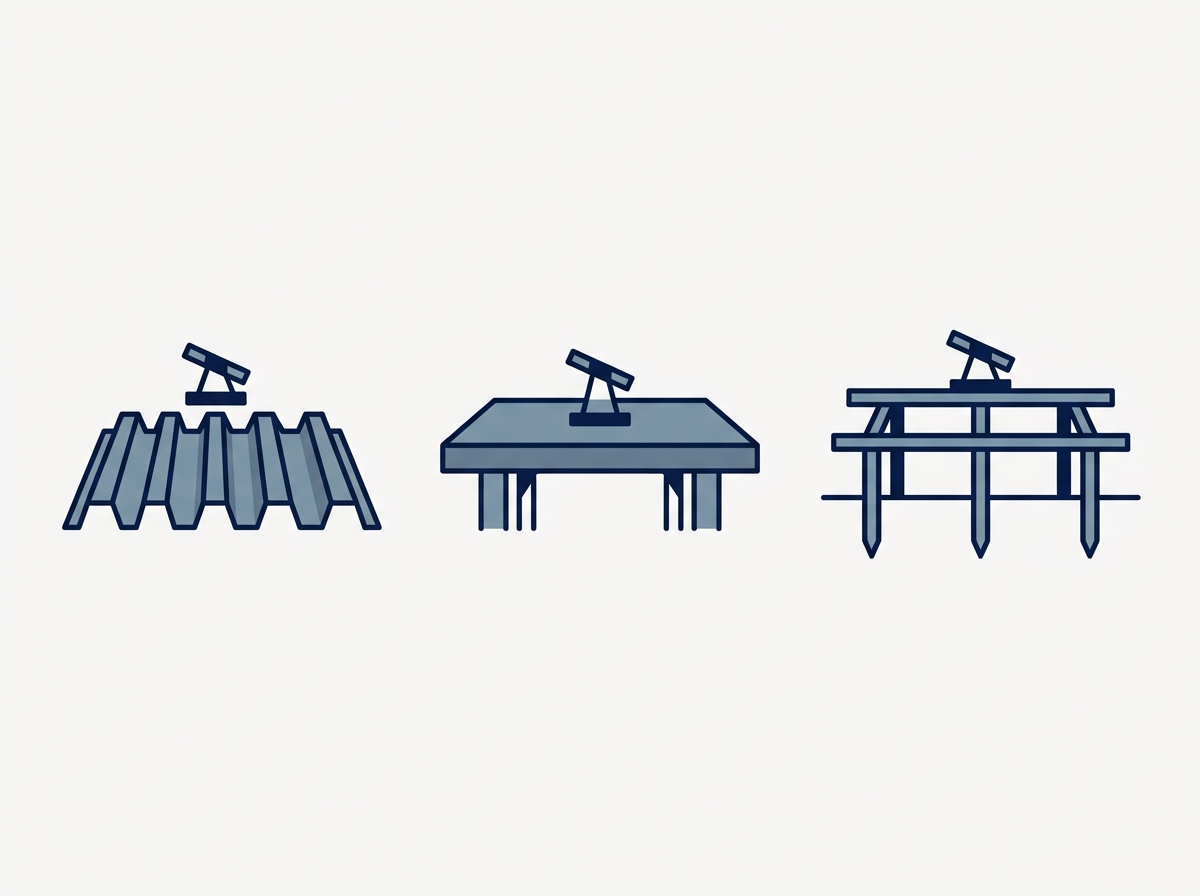
Three families cover almost every Malaysian job: clamp-based systems for profiled metal deck, ballasted or penetrating frames for reinforced concrete flat roofs, and post-and-rail structures for ground mounts. The survey decides which one, and the findings that decide it are the roof profile, its structural capacity, its remaining life and its warranty.
Mounting is the part of the bill of materials that never gets touched again for twenty-five years and the part that decides whether the roof leaks in year three. It is also the one item that cannot be chosen from a catalogue without visiting the building.
Metal deck: most Malaysian C&I roofs
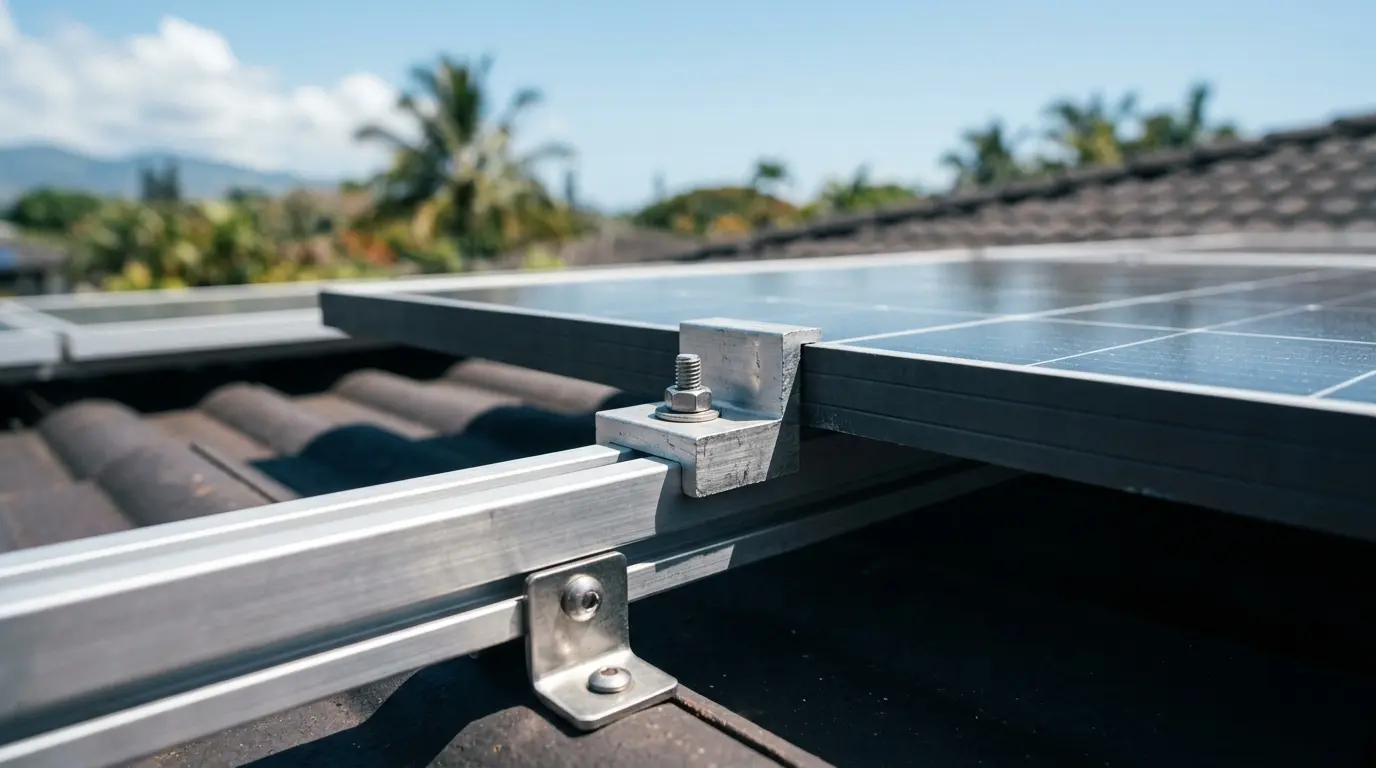
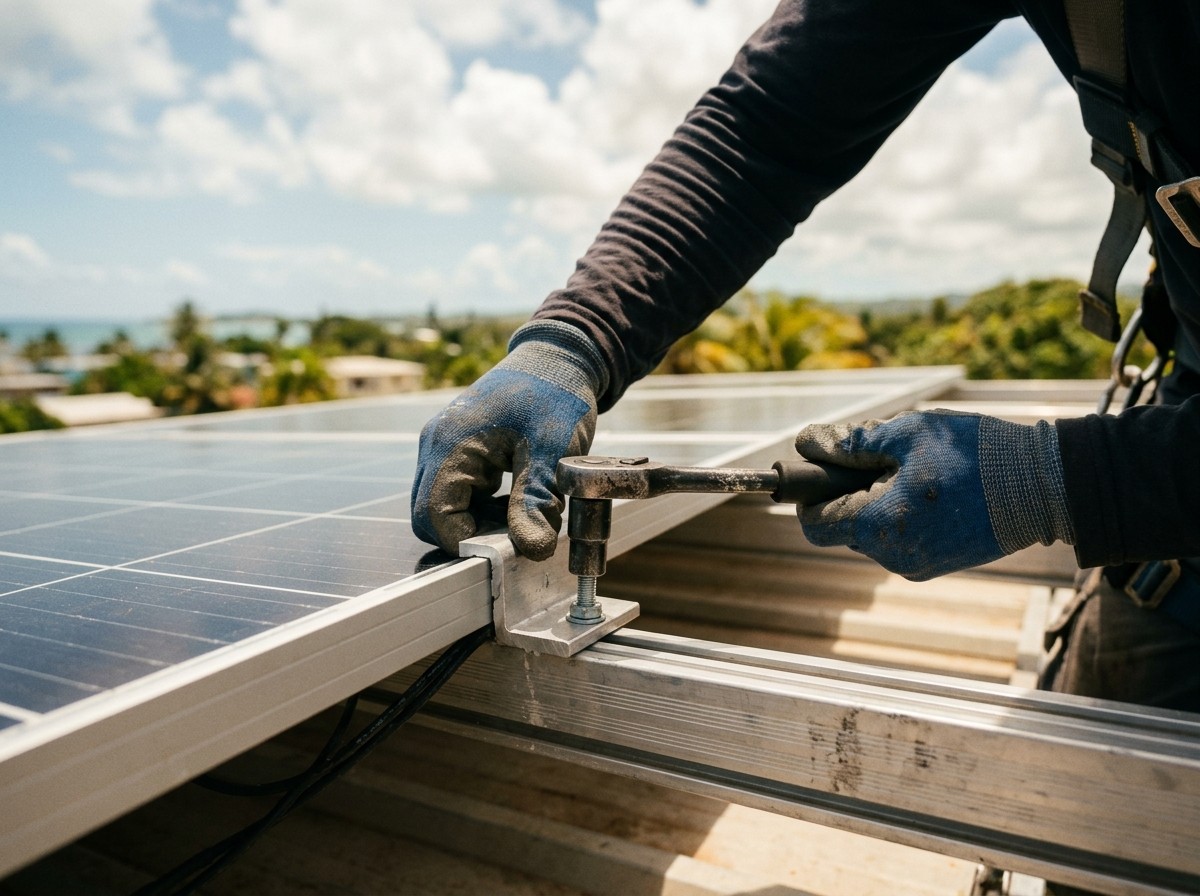
Factories, warehouses and shoplots here are overwhelmingly profiled metal sheet, and the mounting approach follows the profile. Standing-seam roofs take clamps that grip the seam without piercing anything, which is the cleanest outcome available: no penetration, no sealant to fail, and the roof's own warranty untouched. Trapezoidal and corrugated sheets need fixings through the crown of the profile with a bonded seal, positioned to land on a purlin rather than on unsupported sheet.
The survey numbers that matter are the sheet profile and gauge, the purlin spacing and span direction, and the condition of the sheet. Thin, aged sheeting with corrosion around existing fixings will not hold a new load reliably, and that finding changes the project rather than the bracket.
Reinforced concrete flat roofs
Flat roofs give freedom on orientation and tilt, and take it back on weight and waterproofing. Ballasted frames avoid penetrating the membrane, at the cost of dead load the structure has to accept — which is a structural engineer's answer, not an installer's. Penetrating bases carry less weight but put fixings through the waterproofing, and each one has to be detailed and flashed by someone who does that for a living.
Two Malaysian details recur. Membranes age faster under this sun than a temperate specification assumes, so the roof's remaining life should be compared with the system's design life before anything is fixed to it. And ponding is common on older slabs, so a frame whose feet sit in standing water for weeks after a monsoon downpour needs a different foot and a different material spec.
Ground mounts
Post-and-rail structures move the design question into the soil. Foundation type — driven pile, ground screw or concrete footing — follows from the ground conditions and from a pull-out test rather than from a catalogue table. Depth follows from the same investigation. On Malaysian sites the two additional considerations are flood level, which sets the minimum clearance under the modules, and buried corrosion, which sets the material and coating specification below grade.
Row spacing, tilt and clearance are all part of the mounting decision on a ground mount rather than givens, because they interact with shading, maintenance access, vegetation management and, on a bifacial array, with yield.
Access is the part that gets designed last and lived with longest. Rows tight enough to maximise capacity are rows nobody can walk between with a module in their hands, and on a ground mount they are also rows a mower cannot reach. Leaving a maintenance route through the array costs a little capacity once and saves labour every year after.
The survey findings that decide it
| Finding | What it decides | Why it matters |
|---|---|---|
| Roof profile and material | Clamp type or fixing type | Standing seam allows a non-penetrating clamp |
| Purlin spacing and span | Bracket positions and rail span | Fixings have to land on structure |
| Sheet gauge and condition | Whether the roof takes the load at all | Corroded thin sheet will not hold |
| Structural capacity | Ballast weight the slab can accept | Ballasted frames are heavy |
| Membrane type and age | Penetrating or non-penetrating | Remaining roof life against system life |
| Wind exposure and height | Load case and fixing density | Design to MS 1553 |
| Corrosion environment | Material and coating specification | Coastal and industrial air is aggressive |
| Soil and flood level | Foundation type and clearance | Ground mounts only |
The failures that keep repeating
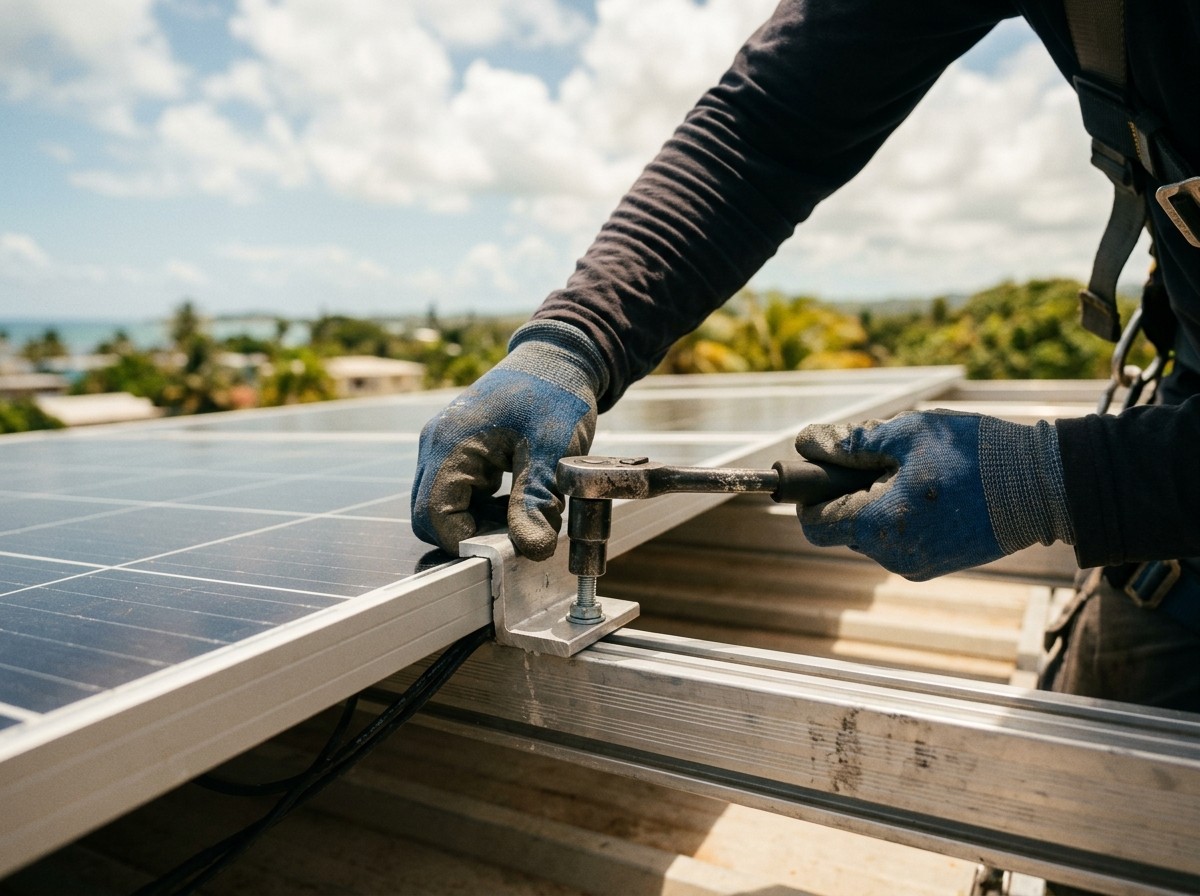
The recurring failures are dull and preventable. Fixings into unsupported sheet between purlins, which pull through under uplift. Penetrations sealed with a general-purpose silicone instead of a bonded washer and a proper flashing detail. Ballast quantities taken from a generic table rather than from the wind calculation for the site and building height. Dissimilar metals in contact without an isolator, which corrode at the joint in coastal air. Clamps tightened by feel rather than to the manufacturer's torque, which is both a mechanical and a warranty problem.
Roof warranty is the one that gets discovered late. On a building still inside its roofing warranty, penetrating the sheet or the membrane without the roofing manufacturer's agreement can void it, and the customer will find that out from their roofer rather than from you. Ask the question during the survey, in writing.
Specifying and ordering
Bring the survey to the specification: profile photographs, purlin spacing, sheet gauge, building height and exposure, and the corrosion environment. InverPower distributes Enertrack mounting systems in Malaysia for metal deck, flat roof and ground mount, held locally alongside the modules and the balance of system. Send the survey and the array layout and we will tell you which system fits, what the fixing schedule looks like and what is in stock.
Frequently Asked Questions
Does the mounting choice affect the roof warranty?
It can. Penetrating a metal sheet or a waterproofing membrane on a roof that is still under warranty may void it unless the roofing manufacturer agrees the detail. Ask during the survey and get the answer in writing — non-penetrating clamps on a standing seam roof avoid the question entirely.
What wind load standard applies in Malaysia?
MS 1553, the Malaysian code of practice on wind loading for building structure. It sets the design wind speed and the factors for height, terrain and exposure that a racking calculation has to be based on. A racking datasheet's wind rating means nothing until it is checked against the site's calculated load.
Can a ballasted system be used on any flat roof?
Only where the structure can take the added dead load, which is a structural engineer's assessment of that specific building. Ballast quantities also have to come from the wind calculation for the site rather than from a generic table, because uplift is what the ballast is resisting.
Does aluminium racking need a different fixing specification near the coast?
The fixings and any dissimilar-metal contacts do. Stainless fixings of an appropriate grade, and isolation where aluminium meets steel or copper, are what stop the joints corroding first. The corrosion environment belongs in the specification, not in the assumptions.
Sources
- Department of Standards Malaysia — MS 1553, Code of practice on wind loading for building structure — https://www.jsm.gov.my
- Department of Standards Malaysia — MS 1837:2018, Installation of grid-connected photovoltaic (PV) system — https://www.jsm.gov.my
- Enertrack — mounting system datasheets and installation manuals (clamp types, span tables, torque specifications) — https://www.enertrack.com
- ISO — ISO 9223, Corrosion of metals and alloys: corrosivity of atmospheres, classification — https://www.iso.org
- IEC — IEC 61215 series, mechanical load testing of modules, which mounting arrangements must respect — https://webstore.iec.ch
About InverPower
InverPower is Malaysia's A–Z solar component distributor — Sungrow Preferred Distributor and Sunkean Sole Distributor — supplying EPCCs, installers, and government projects nationwide.
Explore the InverPower resource hub at inverpower.com.my
Related InverPower posts:
- Where Do EPCCs Source Solar PV Components in Malaysia?
- Where Do You Source Trinasolar PV Modules in Malaysia?
- How Do You Size a Solar String for a Malaysian Rooftop?