
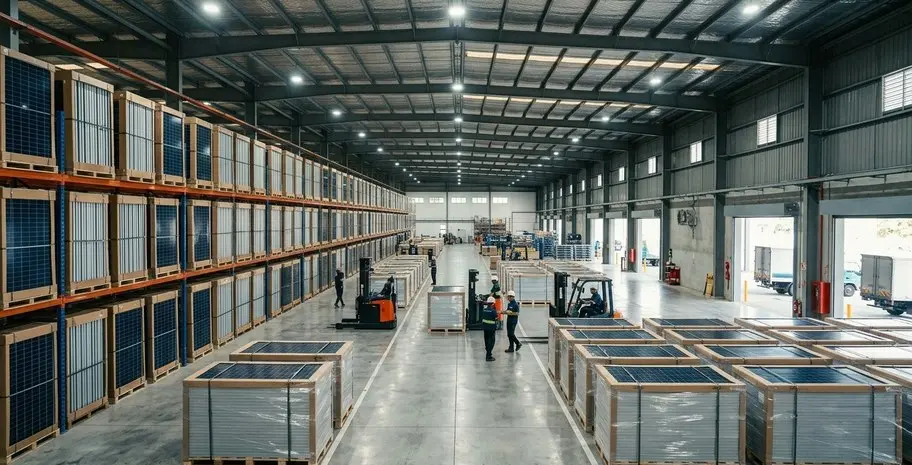
Where Do You Source Trinasolar PV Modules in Malaysia?
Published by Quinn Lai | By InverPower Technical Team
Published 20 August 2026 · Last updated 20 August 2026
DIRECT ANSWER
InverPower distributes Trinasolar PV modules in Malaysia — the N-type i-TOPCon dual-glass range, from 440 W residential modules up to 740 W utility modules. They are certified to IEC 61215 and IEC 61730, MyHIJAU certified for Malaysian green procurement, and carry a 30-year performance warranty holding 87.4% of rated power at year 30.
Modules are the largest line on almost every solar BOM and the one most often specified by a single number. A tender asks for 650 W and a quantity, the roof gets filled, and nobody looks at the module again until year eight, when somebody wants to know why the yield curve is sitting below the model. Almost everything that determines that answer is printed on the datasheet at specification stage.
Who is Trinasolar?
Trina Solar was founded in 1997 in Changzhou, listed on the New York Stock Exchange in 2006, and became the world's largest PV module supplier in 2014. Its corporate materials put the company at more than 2,000 granted patents by the first quarter of 2024, with participation in the IEC standards work that governs the products it sells — a detail worth more than it sounds, because a manufacturer that helps write a test standard has usually built its production line to pass it.
The current range is N-type i-TOPCon on the 210 mm cell platform, dual-glass throughout. For an EPCC the practical consequence of N-type is a lower temperature coefficient and lower first-year degradation than the P-type modules most Malaysian roofs were built with a few years ago — which, on a roof that runs hot from ten in the morning, is where the yield difference actually comes from.
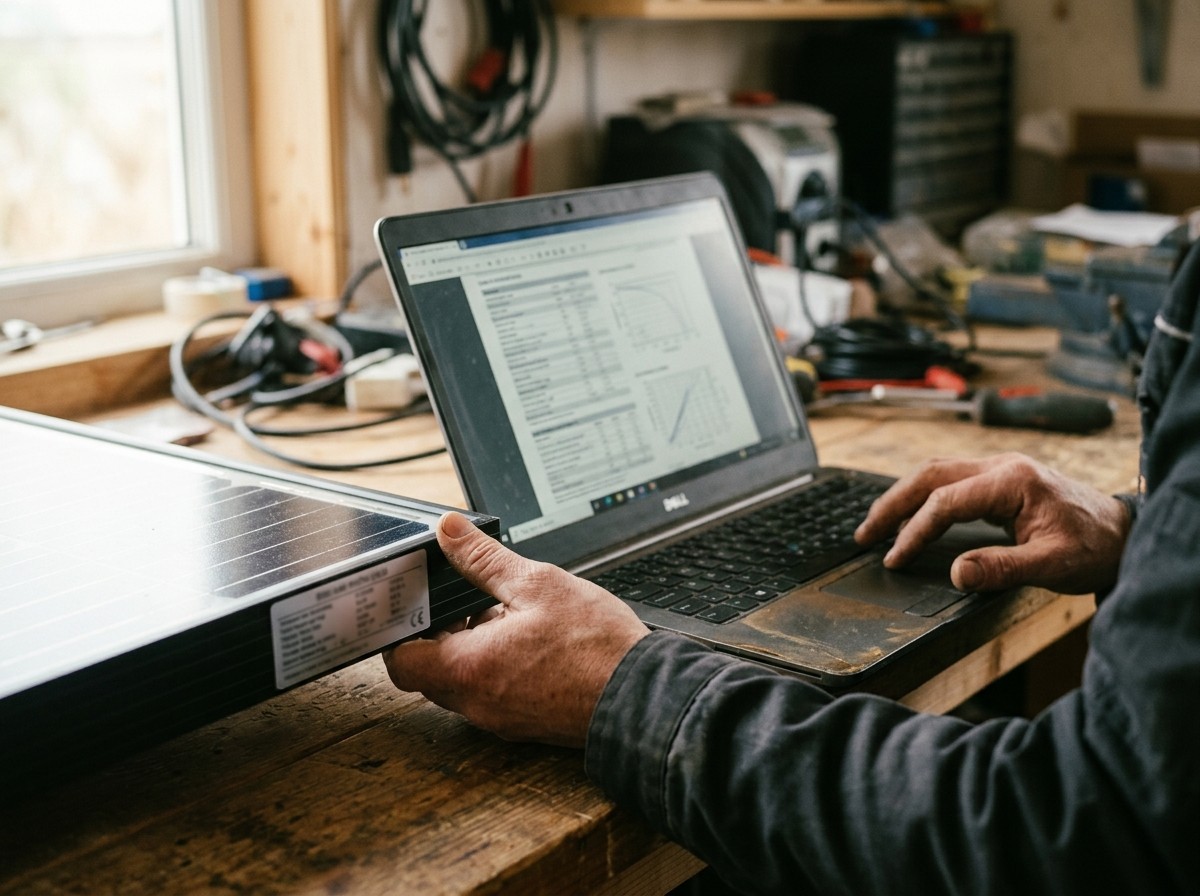
Which Trinasolar modules are current in Malaysia?
Five families cover the range from a terrace-house roof to a utility site. The figures below are from Trinasolar's May 2026 product overview for this market.
| Model | Scenario | Power bin | Efficiency | Product / performance warranty |
|---|---|---|---|---|
| NEG9R.28 | Residential | 440–470 W | 22–23.5% | 15 years / 30 years |
| NEG18R.20/28 | Residential & commercial | 490–520 W | 22.0–23.9% | 15 years / 30 years |
| NEG19RC.20 | Commercial | 625–650 W | 23.1–24.1% | 12 years / 30 years |
| NED19RC.20 (Class A) | Commercial | 620–645 W | 23–23.9% | 12 years / 30 years |
| NEG21C.20 | Big commercial & utility | 715–740 W | 23.0–23.8% | 12 years / 30 years |
The warranty column is the one that gets skimmed. Product warranty covers the module itself — materials, workmanship, the thing physically failing. Performance warranty covers output against a declared degradation curve, and it is a different promise with a different claims process. Across this range the performance term is 30 years, while the product term is 15 years on the monofacial dual-glass families and 12 on the bifacial ones. An EPCC quoting "30-year warranty" without that distinction is setting up an argument in year fourteen.
What do the certifications actually cover?
IEC 61215 is design qualification and type approval — the module is put through thermal cycling, humidity-freeze, damp heat, mechanical load and hail, and has to come out within a defined power loss. IEC 61730 is the safety qualification: construction requirements and the fire, electrical and mechanical safety tests. They are not interchangeable, and a module needs both. The current Trinasolar datasheets also carry IEC 61701 for salt-mist corrosion and IEC 62716 for ammonia corrosion, which are the two that matter on coastal sites and on agricultural or livestock rooftops.
Then there is MyHIJAU. The MyHIJAU Mark is administered by the Malaysian Green Technology and Climate Change Corporation, and a listing on the MyHIJAU Directory is what green-procurement schemes and government-linked tenders check against. The current Trinasolar N-type families are MyHIJAU certified, which is the difference between a module being eligible for a government or GTFS-linked project and being ruled out at submission. Quote the exact model number in the submission — the listing is granted model by model, not brand-wide.
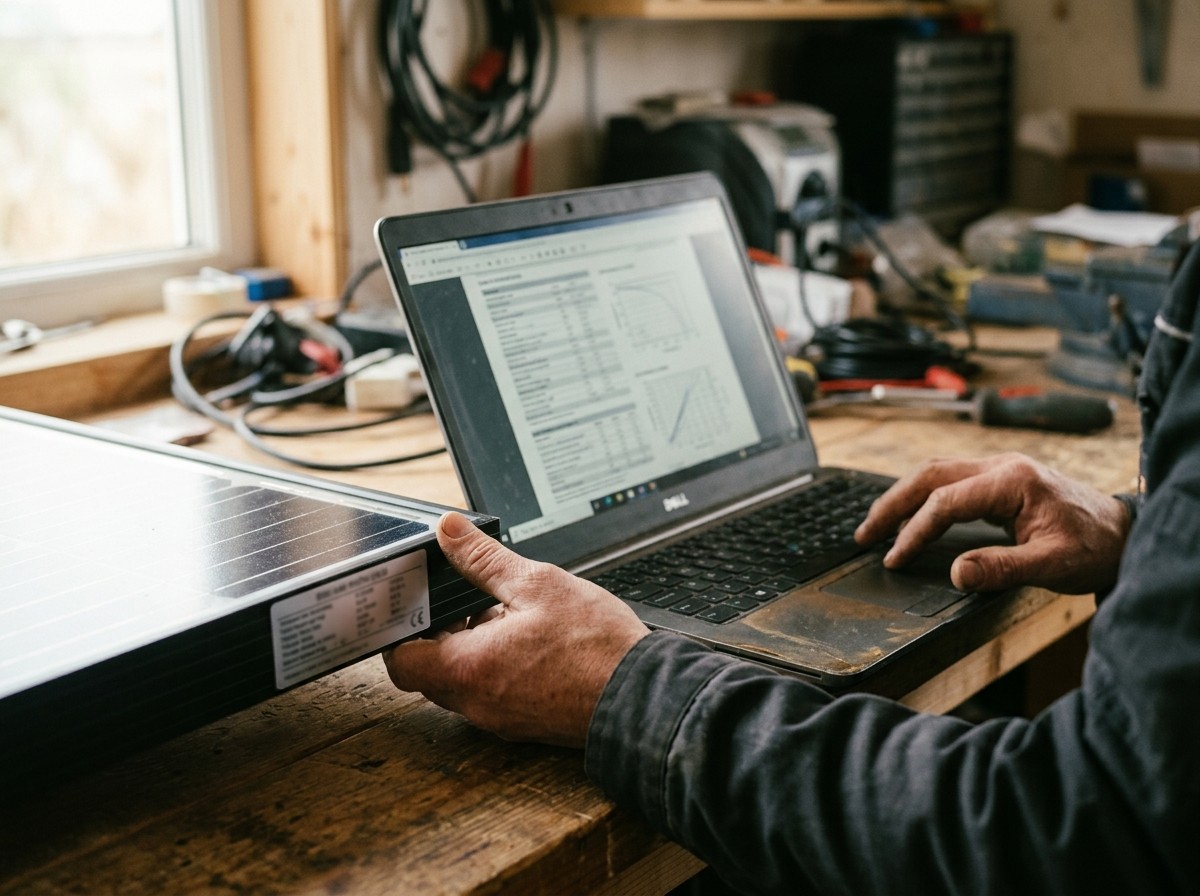
What should you check before specifying?
Four lines, in the order they cost you money. First, the degradation curve: the current range declares 1.0% loss in the first year and 0.4% a year after that, ending at 87.4% of rated power in year 30. That is the curve your financial model should use, not a round 80% at year 25 borrowed from an older datasheet.
Second, the temperature coefficient. The Vertex NEG19RC.20 datasheet gives −0.29%/°C for maximum power, against a nominal operating cell temperature of 43 °C. On a Malaysian roof the module spends its productive hours well above the 25 °C at which its nameplate was measured, so this coefficient — not the headline watt figure — decides how much of the nameplate you actually collect at two in the afternoon.
Third, bifaciality, quoted at 80 ± 5% with a rear-side gain of 10–20% depending on albedo. That gain is real on a light-coloured or elevated surface and close to nothing on a dark membrane roof with modules mounted flat and low. Specify the gain you can justify from the actual roof, and let the yield model carry the rest.
Fourth, the mechanical reality. A 625–650 W module is 2,382 × 1,134 × 30 mm and 33 kg, rated to 1500 V DC maximum system voltage with a 35 A maximum series fuse. Those numbers set your string length, your mounting spans, your crew size and whether the module fits up the stairwell of the building you are working on. They are also the numbers most likely to change between one power bin and the next, so read the datasheet for the bin you are actually buying.
Where does InverPower fit?
We distribute Trinasolar modules in Malaysia and hold them here, which converts a container lead time into a delivery date your programme can rely on. We hold the datasheets, the IEC and MyHIJAU certificates and the installation manuals for the specific bins in stock, so a tender submission can be built on the document rather than a summary of it. The design, the yield model and the installation stay with you — ask us for the paperwork at BOM stage rather than at commissioning.
Frequently Asked Questions
What does "Tier 1" actually mean for a solar module?
It is a bankability ranking, not a quality one — it reflects whether banks have financed projects using that manufacturer's modules, not how the module performs. For the engineering question, read the IEC certificates, the degradation curve and the warranty terms instead.
What warranty do Trinasolar modules carry?
A 30-year performance warranty across the current range, with a 12-year product warranty on the bifacial dual-glass families and 15 years on the monofacial ones. The declared curve is 1.0% loss in year one and 0.4% a year after, ending at 87.4% in year 30.
Are Trinasolar modules MyHIJAU certified?
Yes — the current N-type dual-glass families are MyHIJAU certified, which is what government-linked and GTFS-linked procurement checks against. Listings are granted model by model, so quote the exact model number in the submission rather than the brand.
Is a bifacial module worth it on a Malaysian factory roof?
Only where the rear side can see reflected light. Bifaciality is quoted at 80 ± 5% with a 10–20% rear gain depending on albedo, so a flat, low-mounted array on a dark roof membrane will collect very little of it. Model the gain from the real surface.
Sources
- Trinasolar — Vertex TSM-NEG19RC.20 625–650 W datasheet, TSM_EN_2025_PD1 (temperature coefficients, bifaciality, mechanical data) — https://www.trinasolar.com
- Trinasolar — Overview of Trina Modules, May 2026 update (model range, power bins, warranty terms, degradation) — https://www.trinasolar.com
- Trinasolar — Global Limited Warranty for Trina Solar PV Modules, PS-M-0135 Rev. Z, March 2025 — https://www.trinasolar.com
- IEC — IEC 61215 (design qualification and type approval) and IEC 61730 (safety qualification) for PV modules — https://webstore.iec.ch
- MGTC — MyHIJAU Mark and MyHIJAU Directory, Malaysian Green Technology and Climate Change Corporation — https://www.myhijau.my
About InverPower
InverPower is Malaysia's A–Z solar component distributor — Sungrow Preferred Distributor and Sunkean Sole Distributor — supplying EPCCs, installers, and government projects nationwide.
Explore the InverPower resource hub at inverpower.com.my
Related InverPower posts:
- Where Do EPCCs Source Solar PV Components in Malaysia?
- Why Do Solar Panels Lose Power in Malaysia's Heat?
- How Do You Size a Solar String for a Malaysian Rooftop?