Solar DC Cables in Malaysia: What Specs and Certs Do EPCCs Need?
Published by Quinn Lai | By InverPower Technical Team
Published · Last updated
DIRECT ANSWER
For a grid-connected solar project in Malaysia, DC wiring must use UV-rated PV cable certified to TÜV 2 PfG 1169 or the equivalent EN 50618 / IEC 62930 standard (cable type H1Z2Z2-K) — single-core, double-insulated cross-linked (XLPO) insulation over a tinned-copper conductor, rated 1500V DC, with a 90°C continuous temperature rating and a 25-year design life. All wiring must also comply with the Electricity Regulations 1994 and the MS IEC 60364 series. Common C&I string sizes are 4mm², 6mm² and 10mm². The most important rule for EPCCs: use genuine tinned-copper certified cable — never copper-clad-aluminium (CCA) substitutes, which raise resistance, heat and fire risk.
What makes a solar DC cable different from ordinary wire?
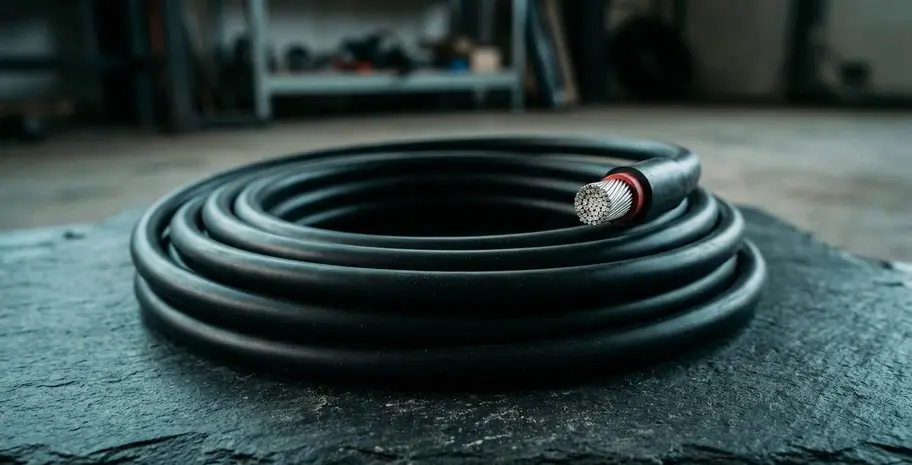
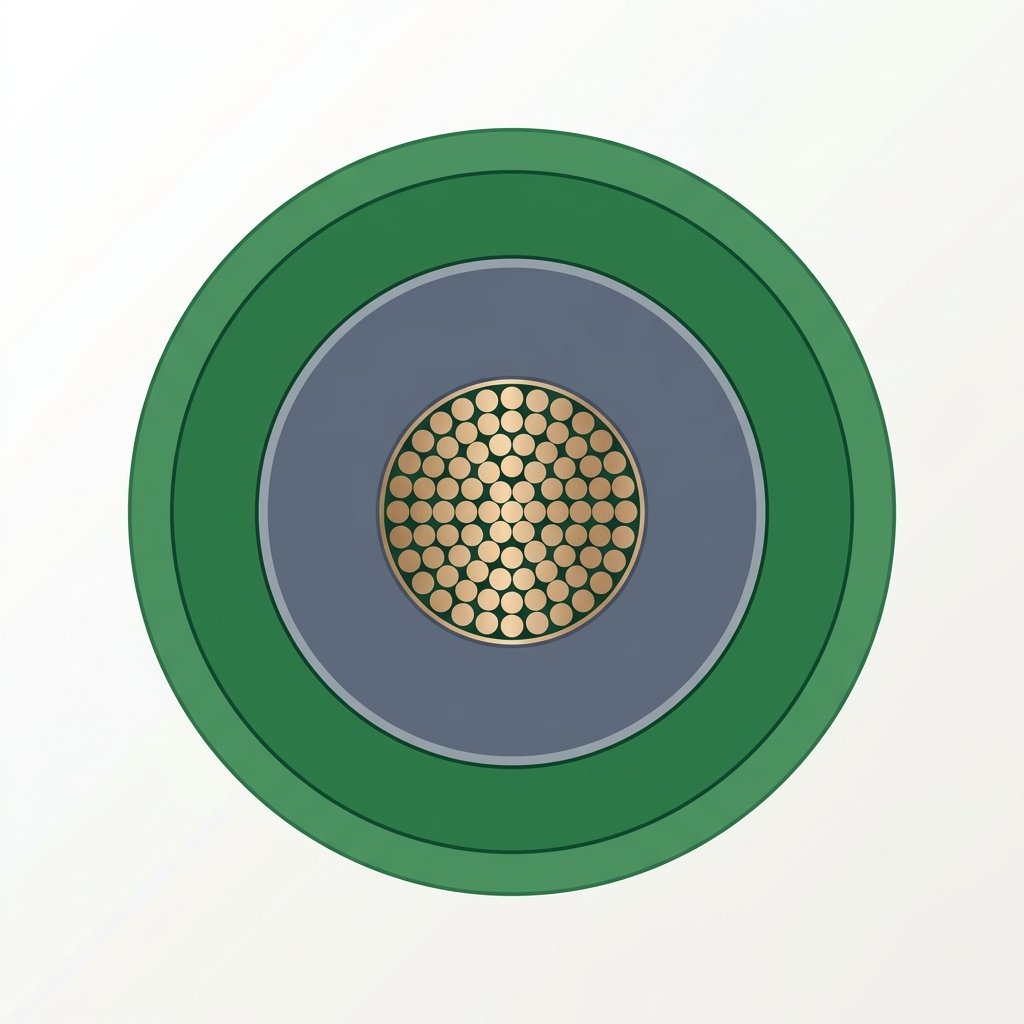
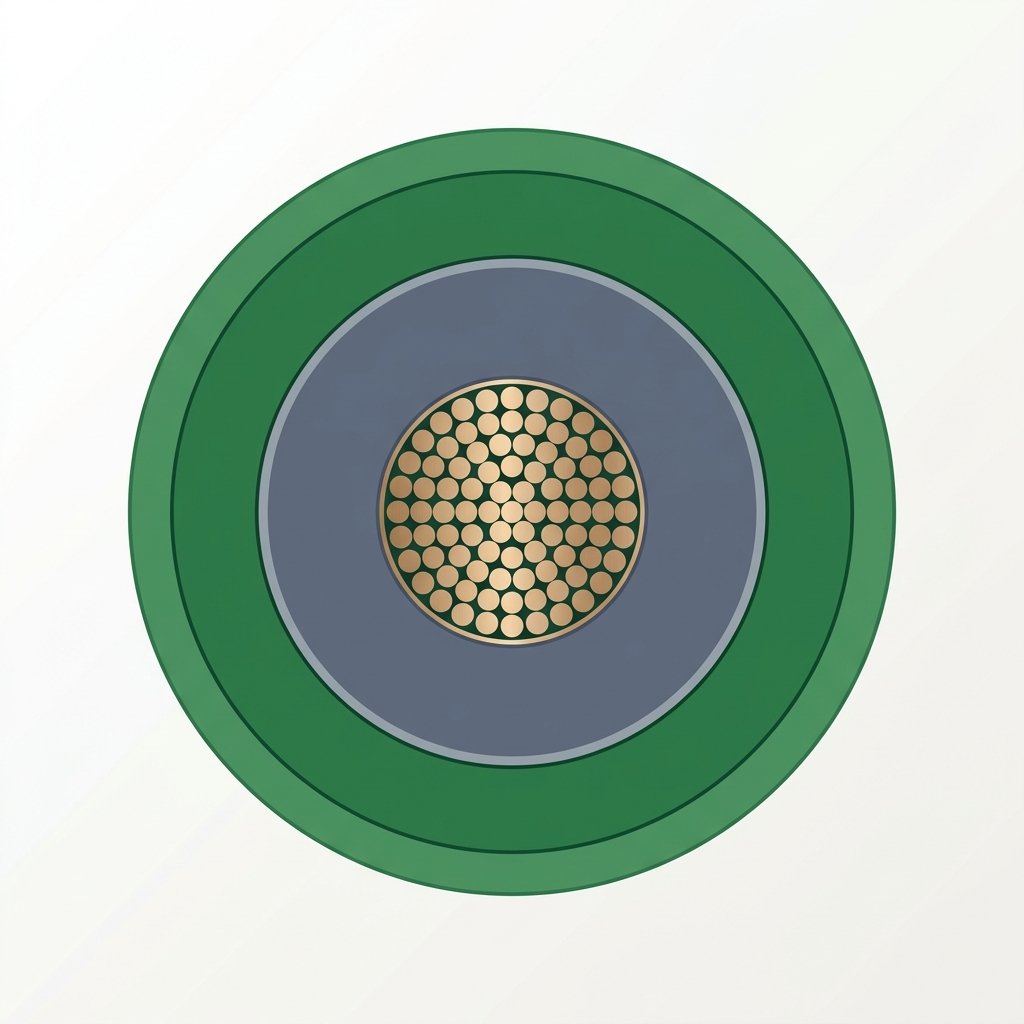
A solar DC cable is not building wire in a black jacket. It is a single-core, double-insulated cable engineered to survive years of outdoor UV, heat and weather that would crack ordinary cable — the standard PV type known as H1Z2Z2-K (to EN 50618) or PV1-F. Its insulation and sheath are cross-linked polyolefin (XLPO), it is halogen-free (low-smoke, zero-halogen), and the conductor is tinned copper: the tin coating resists the oxidation and corrosion that humid, hot Malaysian rooftops accelerate. The result is a cable rated for a 25-year service life, matching the design life of the plant it wires.
| Property | Genuine PV DC cable | Why it matters in Malaysia |
|---|---|---|
| Construction | Single-core, double-insulated XLPO | Survives UV, heat and weather outdoors |
| Conductor | Tinned (stranded) copper | Resists oxidation in humid tropical air |
| Voltage rating | 1500V DC (modern); 1000V DC legacy | 1500V DC cuts current & losses on C&I/utility |
| Temperature | 90°C continuous (peaks to ~120°C) | Handles hot rooftop cable runs |
| Common sizes | 4mm², 6mm², 10mm² | Sized to current & voltage-drop limits |
| Design life | ~25 years | Matches PV plant lifespan |
Cross-section of a solar PV DC cable showing tinned-copper conductor, insulation and outer sheath
EN 50618 vs IEC 62930 vs TÜV 2 PfG 1169 — which do I actually need?
These names get used interchangeably, but they are not the same kind of thing. EN 50618 and IEC 62930 are written standards that define what a PV cable must be; TÜV 2 PfG 1169 is a third-party testing certification proving a specific cable meets that bar. In practice a bankable Malaysian project wants cable that is certified — most commonly TÜV-certified — to EN 50618 / IEC 62930, in the H1Z2Z2-K construction, rated 1500V DC over tinned copper. Malaysian compliance guidance references "UV-rated solar cable (TÜV 2 PfG 1169 or equivalent)," so that certification mark is the one to look for on the datasheet.
| Standard / cert | What it is | Notes |
|---|---|---|
| EN 50618 | European PV cable standard (H1Z2Z2-K) | 1500V DC, 90°C/120°C, LSZH materials |
| IEC 62930 | International PV cable standard | The global benchmark most relevant to Malaysia |
| TÜV 2 PfG 1169 | TÜV Rheinland test certification | Third-party proof of UV, thermal & water testing |
| UL 4703 | North American PV wire standard | 600/1000/2000V DC variants; NA scope |
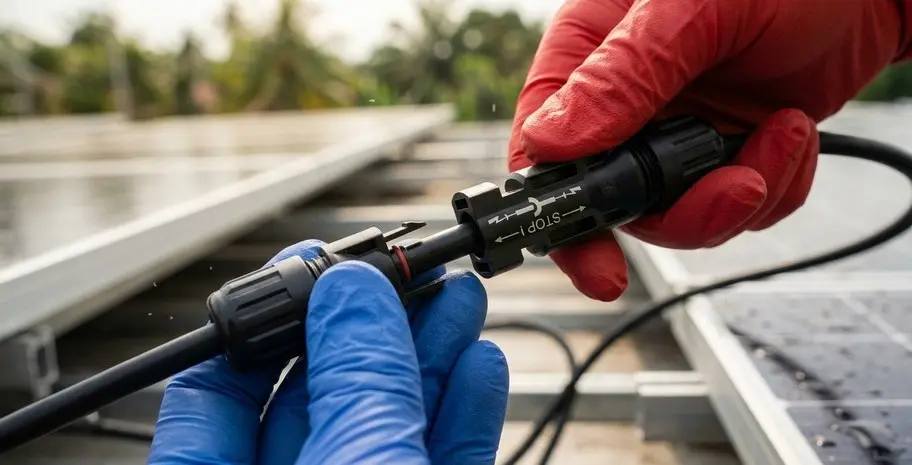
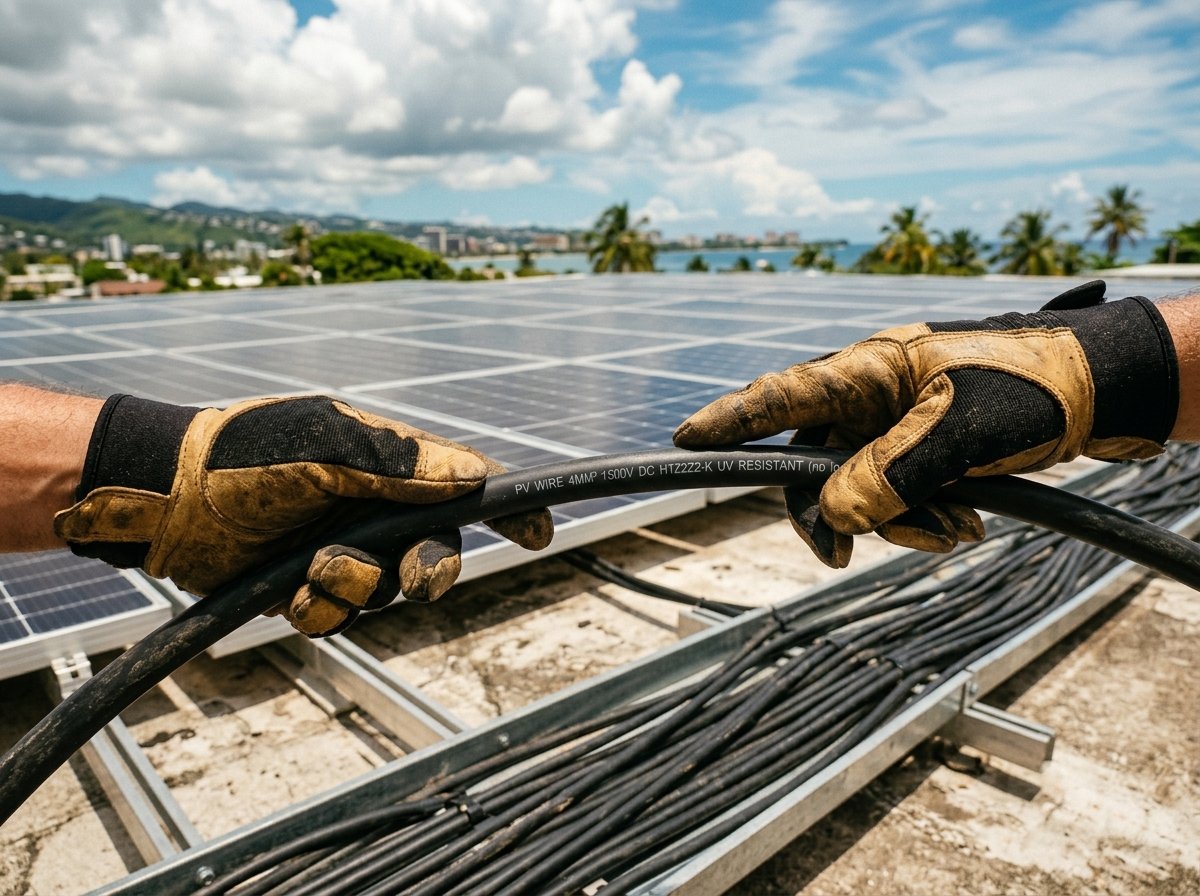
Installer inspecting solar DC cable jacket markings and certification print on a Malaysian rooftop
Why does cable spec matter so much for EPCCs?
Because the cheapest reel can quietly become the most expensive mistake. Undersized cable — too small for the current or the run length — causes voltage drop that bleeds yield and heat that ages the system and raises fire risk, which is why correct DC sizing to ampacity and voltage-drop limits is a core design step, not an afterthought. The bigger trap is counterfeit conductor: copper-clad-aluminium (CCA) is aluminium with a thin copper skin, sold as "copper" but with markedly higher resistance — more voltage drop, more heat, more fire risk in a DC circuit. Genuine PV cable uses tinned copper for corrosion resistance and reliable connector contact over decades. On a hot, UV-soaked Malaysian rooftop, the difference between certified tinned-copper cable and a cheap substitute is the difference between a 25-year asset and an early failure.
Genuine tinned-copper solar cable conductor next to a dull copper-clad-aluminium counterfeit
What does Sunkean bring, and who supplies it in Malaysia?
Sunkean is an established solar-cable manufacturer founded in 2013 and headquartered in Wuxi, China, with international operations and a certification portfolio that includes TÜV, UL, ETL, CQC and more, backed by ISO 9001, ISO 14001 and IATF 16949 quality systems. Its solar range covers TÜV 2 PfG 1169-certified PV1-F cable and 1.5kV H1Z2Z2-K cable to EN 50618 / IEC 62930 / UL 4703 — XLPO insulation over tinned copper, rated 1500V DC across a -40°C to 90°C range. InverPower is the Sole Distributor of Sunkean solar cable in Malaysia, which means EPCCs can source certified, genuine cable locally rather than gambling on an unverified import.
Always match the exact size and certification on the product datasheet to your design before ordering — confirm the certified size range for the gauge you need.
Frequently Asked Questions
What DC cable spec does Malaysia actually require for a grid-connected PV job?
UV-rated solar cable certified to TÜV 2 PfG 1169 or the equivalent EN 50618 / IEC 62930 (H1Z2Z2-K), single-core double-insulated XLPO over tinned copper, typically rated 1500V DC. All wiring must also comply with the Electricity Regulations 1994 and MS IEC 60364, with a PE-stamped single-line diagram for TNB.
EN 50618 vs IEC 62930 vs TÜV 2 PfG 1169 — are they the same?
Not quite. EN 50618 and IEC 62930 are the written standards defining the cable; TÜV 2 PfG 1169 is a third-party certification proving a specific cable meets that bar. For a bankable Malaysian project, look for cable certified (commonly TÜV) to EN 50618 / IEC 62930.
How do I tell genuine tinned-copper cable from CCA counterfeit, and what goes wrong if I don't?
Genuine PV cable has bright silvery tinned-copper strands; copper-clad-aluminium (CCA) looks dull and is aluminium under a thin copper skin. CCA has higher resistance, causing more voltage drop, more heat and higher fire risk, and it fails long before the 25-year design life. Check the cut end and the datasheet, and buy certified cable from a known supplier.
What size DC cable should I use, and why does 1500V DC matter?
Common C&I string sizes are 4mm², 6mm² and 10mm², sized to the current and voltage-drop limit of each run. A 1500V DC system rating (vs legacy 1000V DC) lets you move the same power at lower current, cutting losses — which is why modern C&I and utility projects standardise on 1500V DC cable.
Will the cable really last 25 years on a hot Malaysian rooftop?
Genuine PV cable certified to EN 50618 / IEC 62930 / TÜV 2 PfG 1169 is tested for UV resistance, thermal cycling and water immersion for a 25-year life, rated 90°C continuous with peaks toward 120°C. That testing is exactly what a tropical rooftop demands — provided the cable is genuine and correctly sized.
Sources
- Sunkean — 1.5kV Solar Cable EN 50618 H1Z2Z2-K / UL 4703 / IEC 62930 — https://www.sunkean.com/pid18474354/1-5kV-Solar-Cable-EN-50618-H1Z2Z2-K-UL4703-IEC62930.htm
- Sunkean — TÜV 2 PfG 1169 PV1-F certificate — https://www.sunkean.com/certificate/cid1769061/T-V-2PfG-1169-PV1-F-Certificate.htm
- Sunkean company profile (ENF Solar) — https://www.enfsolar.com/sunkean
- UL4703 vs IEC 62930 vs EN 50618 — solar cable standards compared — https://www.fr-cable.com/post/ul4703-vs-iec-62930-vs-en-50618-what-s-the-real-difference-in-solar-cable-standards
- Solar cable certification standards explainer — https://www.jianyuncable.com/a/blog/solar-cable-certification-standards.html
- Malaysia solar compliance summary (DC cable requirement) — https://www.surgepv.com/solar-compliance/malaysia
About InverPower
InverPower is Malaysia's A–Z solar component distributor — Sungrow Preferred Distributor and Sunkean Sole Distributor — supplying EPCCs, installers, and government projects nationwide.
Explore the InverPower resource hub at inverpower.com.my
Related InverPower posts:
- Where to Source Solar PV Components in Malaysia: An EPCC's Supply Checklist
- Which Solar Inverters Are SEDA-Registered in Malaysia (2026)?
- Who Is the Sungrow Distributor in Malaysia?