
Sungrow SBH Battery in Malaysia: How Do You Size and Source It?
Published by Quinn Lai | By InverPower Technical Team
Published 20 August 2026 · Last updated 20 August 2026
DIRECT ANSWER
The Sungrow SBH is a high-voltage lithium iron phosphate battery built from stackable 5 kWh modules — 10 kWh to 40 kWh in one rack, and up to four racks in parallel for 160 kWh. It is IP55, floor-standing indoors or outdoors, pairs with Sungrow's SH hybrid inverters, and InverPower stocks it in Malaysia as Sungrow Preferred Distributor.
Storage has stopped being the part of the proposal that gets cut. What has not caught up is the sizing conversation: clients ask for a battery in kilowatt-hours the way they ask for an array in kilowatts, and the two numbers answer different questions. The SBH is a good product to think that through with, because its modular structure makes every sizing decision explicit — and because since May 2026 the compliance side has teeth.
What is the SBH, exactly?
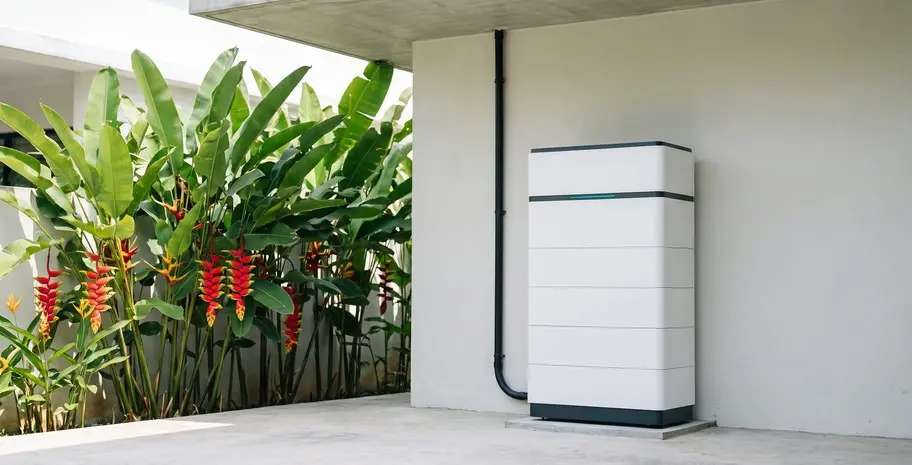
It is a high-voltage LFP battery system assembled from 5 kWh prismatic-cell modules weighing 45 kg each. Two to eight modules stack into one rack, and the modules connect by seating on each other — plug and play, no cables between them — which is the difference between a two-hour job and an afternoon. Up to four racks can be cascaded in parallel, giving a ceiling of 160 kWh.
The electrical headline is 50 A continuous charge and discharge with maximum power above 25 kW, and depth of discharge settable up to 100%. Protection is built in — over and under voltage, over current, over and under temperature, and a DC breaker on the rack — with CAN communication to the hybrid inverter. Certification covers IEC 62619, IEC 62040, IEC 63056, IEC 62477, UN 38.3, VDE 2510-50, CE and CEC, and the warranty is 10 years subject to the warranty letter.

What does the range look like?
Seven sizes, one module apart, from the datasheet:
| Model | Modules | Usable energy | Operating voltage | Dimensions (W×H×D) / weight |
|---|---|---|---|---|
| SBH100 | 2 | 10.0 kWh | 118.8 – 160.6 V | 675 × 580 × 350 mm / 106 kg |
| SBH150 | 3 | 15.0 kWh | 178.2 – 240.9 V | 675 × 740 × 350 mm / 151 kg |
| SBH200 | 4 | 20.0 kWh | 237.6 – 321.2 V | 675 × 900 × 350 mm / 196 kg |
| SBH250 | 5 | 25.0 kWh | 297.0 – 401.5 V | 675 × 1060 × 350 mm / 241 kg |
| SBH300 | 6 | 30.0 kWh | 356.4 – 481.8 V | 675 × 1220 × 350 mm / 286 kg |
| SBH350 | 7 | 35.0 kWh | 415.8 – 562.1 V | 675 × 1380 × 350 mm / 331 kg |
| SBH400 | 8 | 40.0 kWh | 475.2 – 642.4 V | 675 × 1540 × 350 mm / 376 kg |
Two things fall out of that table that a capacity figure alone hides. Voltage climbs with module count, from under 161 V at two modules to over 642 V at eight, so the number of modules is not a free choice — it has to sit inside the hybrid inverter's battery voltage window. And an SBH400 puts 376 kg on a footprint of 675 by 350 mm. On a ground-floor slab that is nothing; on a suspended floor or a light steel platform it is a structural question worth asking before delivery day.
Which inverter does each size pair with?
The SBH is the high-voltage battery for Sungrow's SH hybrid range — the low-voltage MG-RL inverters take a different class of battery entirely. Within the SH range, the pairing is decided by one line on each datasheet: the inverter's battery voltage window against the rack's operating voltage above.
| Hybrid inverter | Battery voltage window | Max. charge / discharge | SBH sizes that fit inside the window |
|---|---|---|---|
| SH3.0 – 6.0RS (single phase) | 80 – 460 V | 30 A / 30 A | SBH100 to SBH250 |
| SH5.0 – 10RT (three phase) | 150 – 600 V | 30 A / 30 A | SBH150 to SBH350 |
| SH15 / 20 / 25T (three phase) | 100 – 700 V | 50 A / 50 A | SBH100 to SBH400 |
Read the current column alongside it. The rack will take 50 A continuous, but an RS or RT inverter will only push 30 A, so on those pairings the inverter sets the charge and discharge rate, not the battery. That is a design decision rather than a fault: a client who wants a large reserve for overnight backup is well served by a big rack on a modest inverter, while a client who wants to shave a sharp evening peak needs the current, and that lives on the inverter side.
What does a Malaysian installation have to respect?
The SBH is rated IP55 and listed for indoor or outdoor installation, and that pairing is the most misread line on the datasheet. IP55 describes dust and water ingress. It says nothing about heat, and Sungrow's manual is direct about the rest: avoid direct exposure to sun and rain, keep the battery away from heat sources including a sun-exposed wall, and expect the system to derate above 40 °C ambient. In this climate that turns "outdoor-rated" into a siting instruction rather than a permission — a west-facing wall in the afternoon sun will hold a battery above 40 °C for hours, and a derating battery quietly fails to deliver the evening discharge the client was sold.
The physical install follows the same logic. The rack is floor-standing: footpads level the base, the base sits a few centimetres off the wall so the fixing bracket can be installed, the modules stack from the bottom up, and the bracket then anchors the top module to the wall so the stack cannot tip. The supporting structure must be non-flammable and solid enough for the loaded weight. Cooling is natural convection, so the clearances are doing real work — Sungrow asks for at least 600 mm above and in front, 350 mm to each side, and 350 mm between racks where more than one is installed.

What do the 2026 BESS safety rules require?
Malaysia's battery energy storage safety guidelines took effect on 15 May 2026 and apply to new installations commencing after that date, grid-connected and off-grid alike. The compliance chain is the familiar one: a competent person prepares the plans, drawings and specifications under Regulation 65 and is appointed for design, installation, operation and maintenance; a registered electrical contractor carries out the electrical work; activities under subsection 9(1) of Act 447 require the relevant licence; and the project still has to satisfy local authority fire safety, transportation and zoning requirements on top of that.
On the equipment side the guidelines name the standards rather than the brands — IEC 62619 and IEC 63056 for the battery system, IEC 62477-1 for the power conversion stage, IEC 62116 for anti-islanding, UN 38.3 for transport, UL 9540A for thermal runaway testing, and a minimum of IP54 for outdoor enclosures. They also require earthing and lightning protection, permanent signage identifying the BESS, and a system that can be safely isolated for maintenance. An SBH paired with an SH inverter meets those equipment lines on paper — IP55 clears the IP54 floor, and the battery's certification list already carries IEC 62619, 62040, 62477 and UN 38.3 — but the installation clauses are yours to satisfy, not the product's.
Operations carry obligations too. A permit to work under Regulation 113 must state the scope, isolation measures, precautions and validity period before maintenance begins, with daily checks on alarms, ventilation and smells, periodic testing of protection and earthing, and routine cleaning and firmware updates. Worth writing into the O&M schedule at handover rather than discovering at the first inspection.
How do you size it?
Size the battery against the load it has to serve and the job it has to do, not against the array. Self-consumption asks how much surplus the site exports on a typical day and how much of the evening load that surplus should cover. Backup asks a different question — which circuits must stay live, drawing what, for how long — and usually lands on a different capacity. A site can want both, and then the honest answer is that one objective sets the size and the other is a bonus.
The expansion path deserves the same discipline. Adding modules to a rack later is straightforward, but cascaded racks must all hold the same usable energy. A 20 kWh rack installed now cannot be paired with a 40 kWh rack in two years and left that way, so if the client plans to grow, the growth step has to be decided while the first rack is specified.
Where does InverPower fit?
We are Sungrow's preferred distributor in Malaysia and we hold the SBH range here, along with the datasheets, manuals and certificates a submission needs. Batteries are stock that ages: Sungrow requires cells in storage to be recharged to 40% state of charge every six months, with twelve months as the outside limit, which is housekeeping a warehouse does so an EPCC never has to think about it. Bring us the load profile and the inverter model at design stage and we will confirm what fits; the system design and the installation stay yours.
Frequently Asked Questions
Can SBH units be expanded later?
Yes, in two ways — more modules in a rack, up to eight, and up to four racks cascaded in parallel. The constraint is that cascaded racks must all hold the same usable energy, so the expansion step has to be planned when the first rack is specified.
Is the SBH indoor or outdoor rated?
Both, at IP55, which clears the IP54 minimum the Malaysian BESS guidelines set for outdoor enclosures. The manual still says avoid direct sun and rain and warns of derating above 40 °C, so outdoors here means genuine shade and airflow — under a roof overhang on a shaded elevation, not on a west-facing wall.
Which Sungrow inverter does the SBH work with?
The SH hybrid range. Match the rack's operating voltage to the inverter's battery window: 80–460 V on the SH-RS single-phase units, 150–600 V on the SH-RT three-phase units, and 100–700 V on the SH15/20/25T, which is the only family that covers the whole SBH range.
Does an SBH installation need a competent person?
Yes. Under the BESS safety guidelines effective 15 May 2026, a competent person prepares the plans and specifications under Regulation 65 and is appointed for design, installation, operation and maintenance, and the electrical work goes through a registered electrical contractor.
Sources
- Sungrow — SBH100/150/200/250/300/350/400 High Voltage LFP Battery datasheet, Version 1.1 — https://www.sungrowpower.com
- Sungrow — SBH100–400 user manual (installation clearances, mounting, derating above 40 °C, rack cascading, storage state of charge) — https://www.sungrowpower.com
- Sungrow — SH3.0–6.0RS, SH5.0–10RT and SH15/20/25T hybrid inverter datasheets (battery voltage windows and charge currents) — https://www.sungrowpower.com
- Electricity Supply Act 1990 (Act 447) and the Electricity Regulations 1994 — competent person, registered electrical contractor, permit to work — https://lom.agc.gov.my
- IEC — IEC 62619 and IEC 63056 (battery safety), IEC 62477-1 (power conversion), IEC 62116 (anti-islanding), IEC 60529 (IP ratings) — https://webstore.iec.ch
About InverPower
InverPower is Malaysia's A–Z solar component distributor — Sungrow Preferred Distributor and Sunkean Sole Distributor — supplying EPCCs, installers, and government projects nationwide.
Explore the InverPower resource hub at inverpower.com.my
Related InverPower posts:
- Who Is the Sungrow Distributor in Malaysia?
- Where Do EPCCs Source Solar PV Components in Malaysia?
- TNB Grid Code for Solar: What Must EPCCs Do Before Energization?