
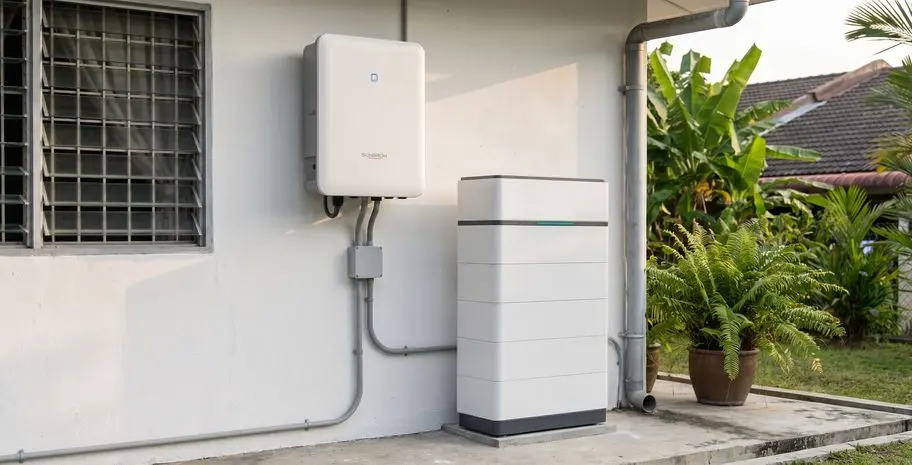
AC-Coupled vs DC-Coupled BESS: Which Retrofit Path Fits Your Project?
Published by Quinn Lai | By InverPower Technical Team
Published 22 August 2026 · Last updated 22 August 2026
DIRECT ANSWER
On a retrofit, AC-coupled is the default: the battery gets its own inverter, the existing solar inverter and its approved connection stay untouched, and capacity can be added later. DC-coupled shares one hybrid inverter with the panels, recovers solar the old inverter was clipping and loses less energy in the round trip, but the existing inverter comes out and the installation is submitted again.
Storage requests now arrive on systems that are already built. The panels are up, the inverter has been running for three or four years, the connection is approved, and the customer has decided they want a battery. The first question an EPCC has to answer is not which battery — it is where the battery joins the system.
What does coupling actually mean?
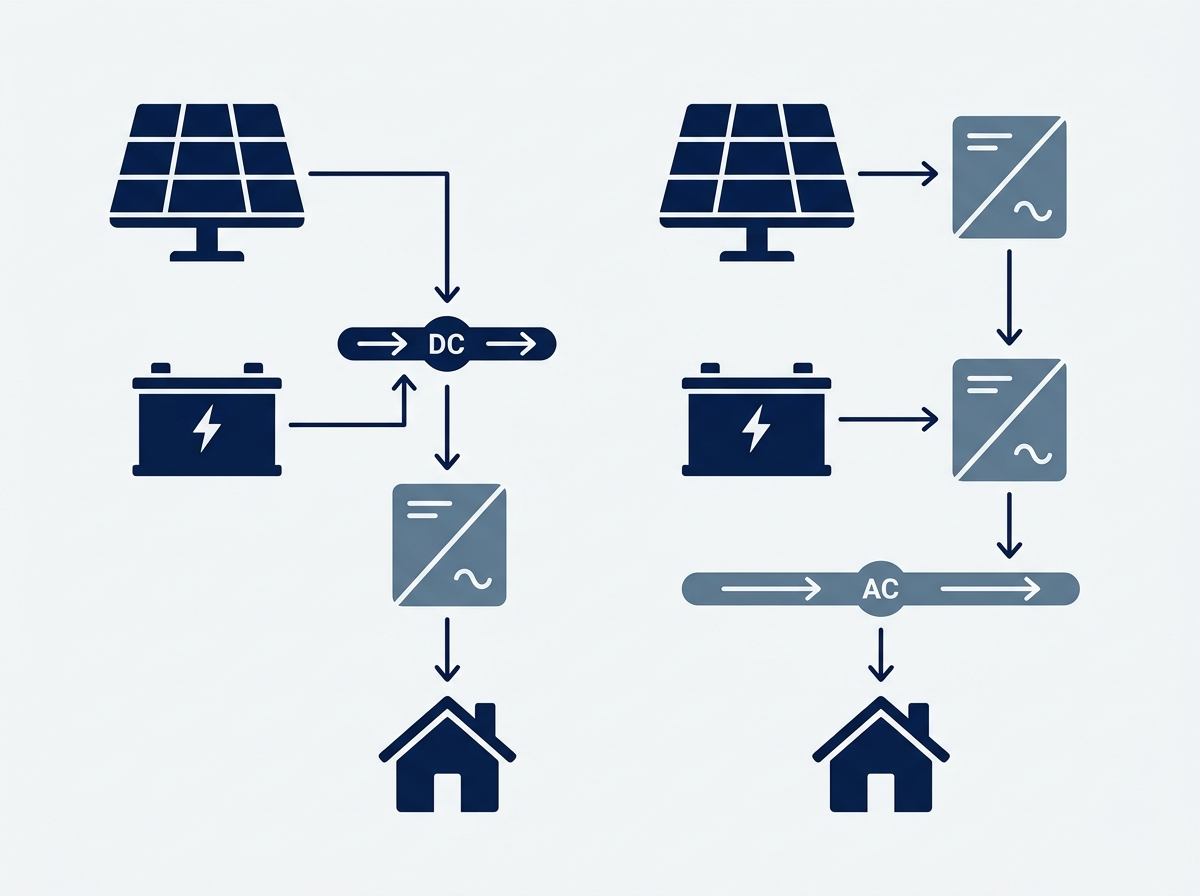
Coupling describes which side of the inverter the battery sits on. A DC-coupled battery joins the system before the inverter, sharing the same DC bus as the array. An AC-coupled battery joins after it, through an inverter of its own, meeting the solar at the AC board. Every difference that follows — cost, losses, expansion room, paperwork — comes out of that one wiring decision.
On a new build, both options are genuinely open and the design can be optimised either way. On a retrofit, the existing equipment usually decides for you before the battery datasheet is opened.
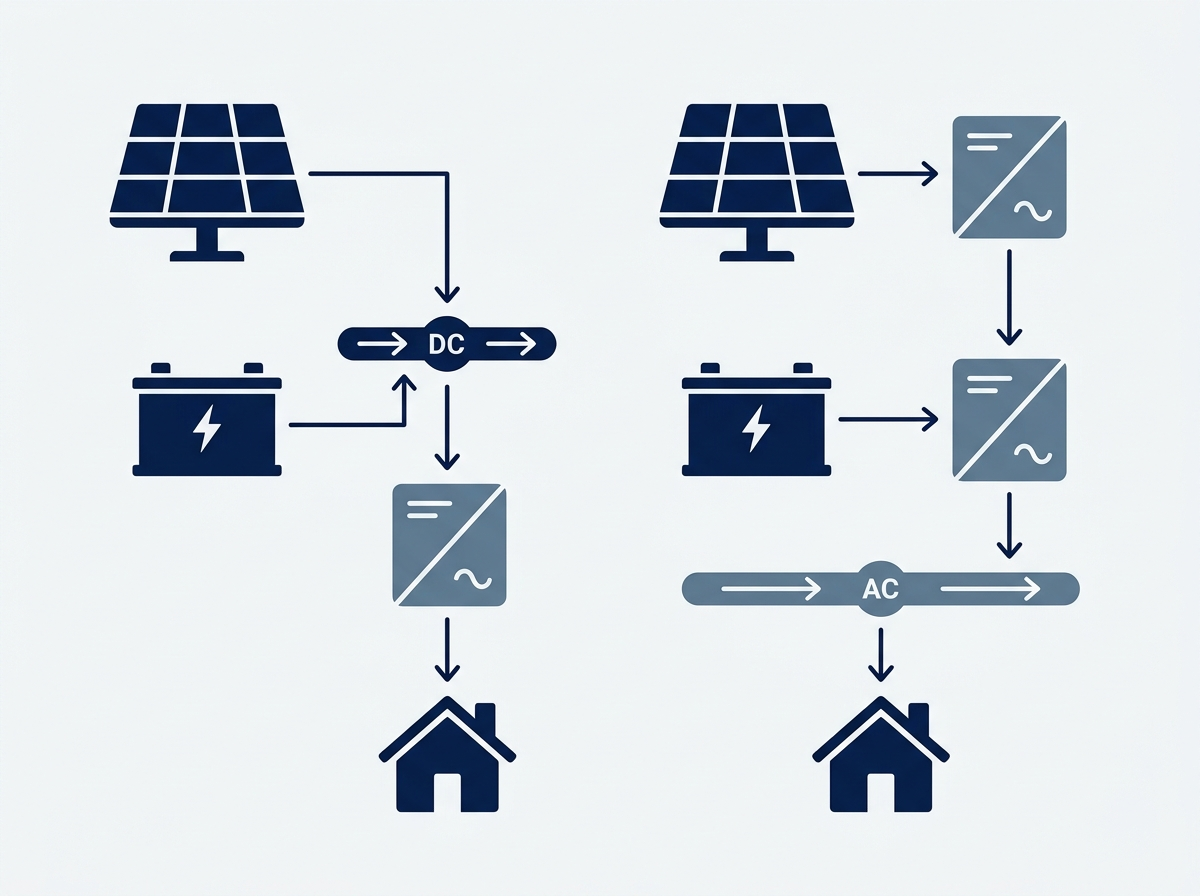
DC-coupled: one inverter for the panels and the battery
In a DC-coupled system, the array and the battery share a single hybrid inverter. Solar charges the battery through a DC-to-DC stage, so nothing is converted to AC and back on the way in. NREL's work on DC-coupled PV-plus-battery hybrids sets out the two structural advantages: a higher round-trip efficiency when the battery is charged from the coupled array, and the ability to capture energy that the inverter would otherwise clip.
Clipping is the part worth checking on a Malaysian rooftop. Arrays here are routinely specified above the inverter's AC rating, so on a clear midday the inverter is already at its ceiling and the surplus is thrown away. On a DC-coupled system that surplus charges the battery instead. The bigger the gap between array size and inverter size, the more that argument is worth.
The catch on a retrofit is the existing inverter. A string inverter cannot take a battery on its DC side, so it comes off the wall and a hybrid goes up in its place. That is a second inverter bought for a system that already had one, an inverter possibly still inside its warranty term taken out of service, and a commissioned installation that no longer matches what was submitted.
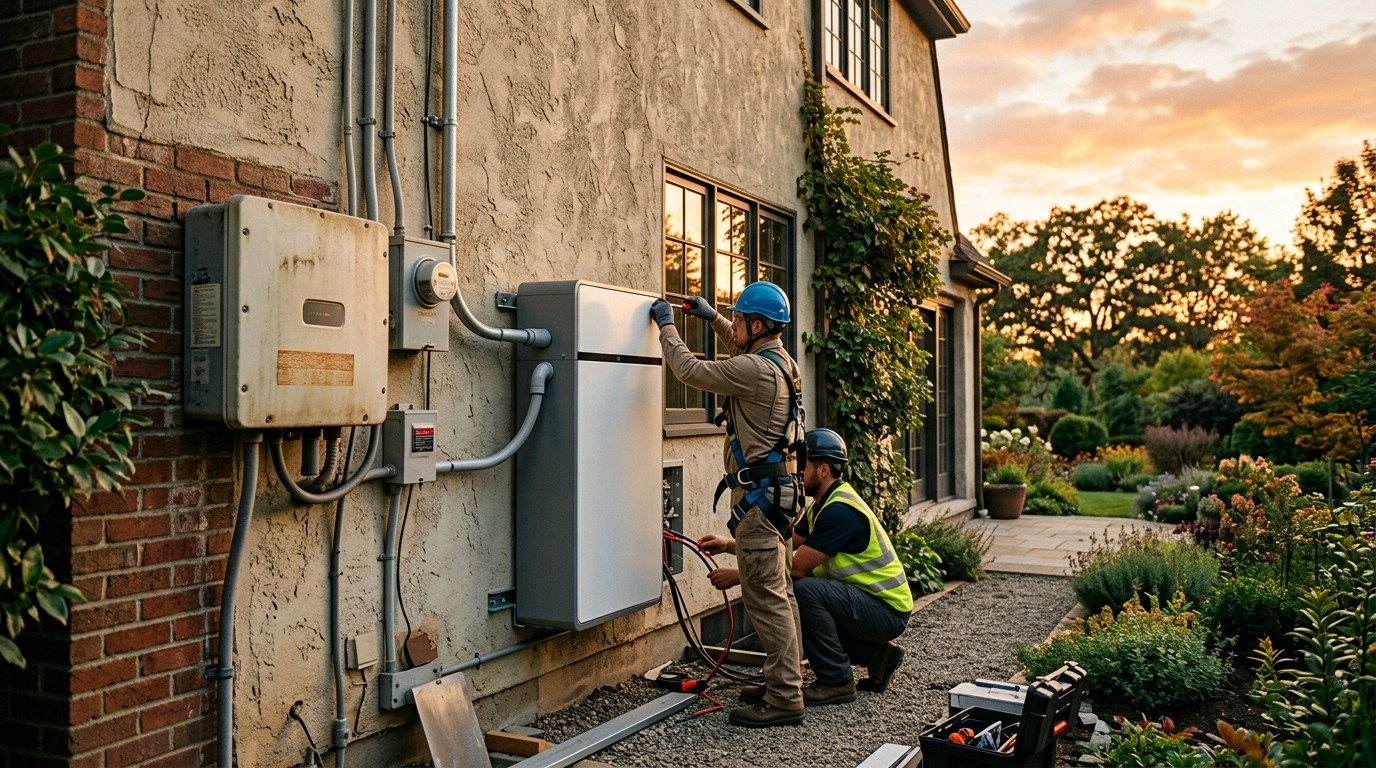
AC-coupled: the solar side stays where it is
An AC-coupled battery has its own inverter, and the two systems meet at the AC board. The solar inverter, its strings, its settings and its commissioning paperwork are all left alone. On site this is the shorter job: the solar keeps running while the battery is installed, and the array is never touched.
The cost is conversion. Solar that ends up in the battery is converted from DC to AC by the solar inverter, back to DC by the battery inverter, then to AC again when it is discharged. Each pass loses a little, and any solar above the existing inverter's limit is still lost, because the battery never sees the DC side.
What you get for that is flexibility. The battery inverter is sized for the battery rather than the array, another one can be added later without disturbing the solar, and none of it depends on the brand or age of the existing inverter — which matters when the system is five years old and the original model is out of production.
Side by side
| DC-coupled | AC-coupled | |
|---|---|---|
| Existing solar inverter | Replaced with a hybrid | Stays in place |
| Charging path from solar | DC to DC, one stage | DC to AC to DC |
| Solar above the inverter limit | Charges the battery | Still lost |
| Round-trip losses | Lower | Higher, two extra conversions |
| Adding capacity later | Bounded by the hybrid inverter | Add another battery inverter |
| Effect on the approved system | Registered equipment changes | Solar side unchanged |
| Best fit | New builds, oversized arrays, inverter due for replacement | Working systems already approved and running |
Which one fits the retrofit in front of you?
Four checks, in the order they usually settle it:
- Is the system approved and running? A live installation under Solar ATAP or an earlier NEM contract has paperwork behind it. Changing the inverter changes the equipment that was registered, and that goes back through the appointed service provider. Leaving the solar side untouched avoids the question entirely.
- How oversized is the array against the inverter? Pull a year of generation data and look for the flat tops on clear days. Visible clipping is what makes the DC-coupled case; a modestly sized array does not produce enough surplus to pay for a new inverter.
- How old is the existing inverter, and where is it in its warranty? An inverter near the end of its service life is a replacement you were going to make anyway, and that is the moment DC-coupled becomes cheap rather than expensive.
- Is the customer likely to add more storage? If the plan is one battery now and more after the next tariff review, AC-coupled leaves that door open without a second inverter swap.
The short version, for a system that is already working: go AC-coupled unless something specific overrules it. The efficiency gain from DC coupling is real, but on a running installation it rarely covers a new inverter plus the time to get the change through.
Building the BOM for either path
Either path has to be built out of equipment that is registered for use here — the inverter model on the SEDA register, the battery certified to the relevant IEC standards, and the work done by a competent person under the Electricity Supply Act 1990 and the Electricity Regulations 1994. Specify the inverter first and the battery second: on the DC-coupled path the hybrid sets the battery voltage window and the charge current, and on the AC-coupled path the battery inverter sets the usable power.
InverPower holds Sungrow hybrid and storage inverters and Sungrow batteries in Malaysia. Send us the bill of materials for either path and we will tell you what is in stock today, and what the lead time looks like on the rest.
Frequently Asked Questions
Can you retrofit a battery onto any existing solar system?
Almost always, on the AC side. An AC-coupled battery brings its own inverter and connects at the AC board, so it does not care what brand or vintage the solar inverter is. DC-coupled retrofits are the constrained ones, because the existing inverter has to be replaced with a hybrid.
Which retrofit path is cheaper?
AC-coupled is usually cheaper on a working system, because nothing on the solar side is bought twice. DC-coupled turns cheaper when the existing inverter is due for replacement anyway, or when the array is oversized enough that the recovered clipping is worth the swap.
Does adding a battery need a new submission?
Adding an AC-coupled battery does not change the registered solar equipment, but the modified installation still has to be notified through the appointed service provider. Replacing the inverter for a DC-coupled retrofit changes what was approved, so treat that as a resubmission and check the current requirement before quoting.
How much energy does DC coupling actually save?
The gain comes from two places: one conversion stage instead of three on the way into the battery, and solar above the inverter's AC limit that would otherwise be clipped. On an array that is not oversized, the second half of that is close to nothing, which is why the answer is site-specific.
Sources
- SEDA Malaysia — Solar ATAP programme portal and guidelines (programme implemented 1 January 2026, applications through a registered PV service provider) — https://www.seda.gov.my/reportal/atap/
- NREL — Representing DC-Coupled PV+Battery Hybrids in Capacity Expansion Models, NREL/TP-6A20-77917 (round-trip efficiency and clipping recapture) — https://docs.nrel.gov/docs/fy21osti/77917.pdf
- Sungrow — SH hybrid inverter and SBH battery datasheets (battery voltage window, charge current, cascading) — https://www.sungrowpower.com
- Electricity Supply Act 1990 (Act 447) and the Electricity Regulations 1994 — competent person and registered electrical contractor requirements — https://lom.agc.gov.my
- SEDA Malaysia — register of approved solar PV inverters — https://www.seda.gov.my
About InverPower
InverPower is Malaysia's A–Z solar component distributor — Sungrow Preferred Distributor and Sunkean Sole Distributor — supplying EPCCs, installers, and government projects nationwide.
Explore the InverPower resource hub at inverpower.com.my
Related InverPower posts:
- String Inverters vs MLPE: How to Decide for Malaysian C&I?
- TNB Grid Code for Solar: What Must EPCCs Do Before Energization?
- Who Is the Sungrow Distributor in Malaysia?