
Solar and EV Charging: Why Quote Them Together?
Published by Quinn Lai | By InverPower Technical Team
Published 22 August 2026 · Last updated 22 August 2026
DIRECT ANSWER
Because a vehicle is the largest controllable load most buildings have, and it is often parked exactly when the array is generating. Charging from surplus generation turns exported units — which are now credited at less than they cost to buy — into self-consumption, and it uses the connection capacity that has already been assessed.
The two products arrive at the same customer from different directions. Someone buying an electric car asks about a charger; someone with a roof asks about solar. Quoting both is not a bundling exercise — it is the same electrical design problem, and it is cheaper to solve once.
The load and the generation line up
A home charger draws a substantial, steady load for hours at a time. A rooftop array produces a substantial, variable output for hours at a time. Where the vehicle is at home during the day — a household with someone working from home, a second car, a company vehicle between site visits — those two curves overlap, and the charging draws from the array instead of the grid.
That matters more than it used to. Under the current on-site generation programme, exported energy is credited at less than the retail rate for non-domestic consumers and is worth less than a unit consumed on site in general. Anything that converts export into self-consumption improves the economics of the array that is already there, and a vehicle is the largest single opportunity most households have.
The electrical design changes
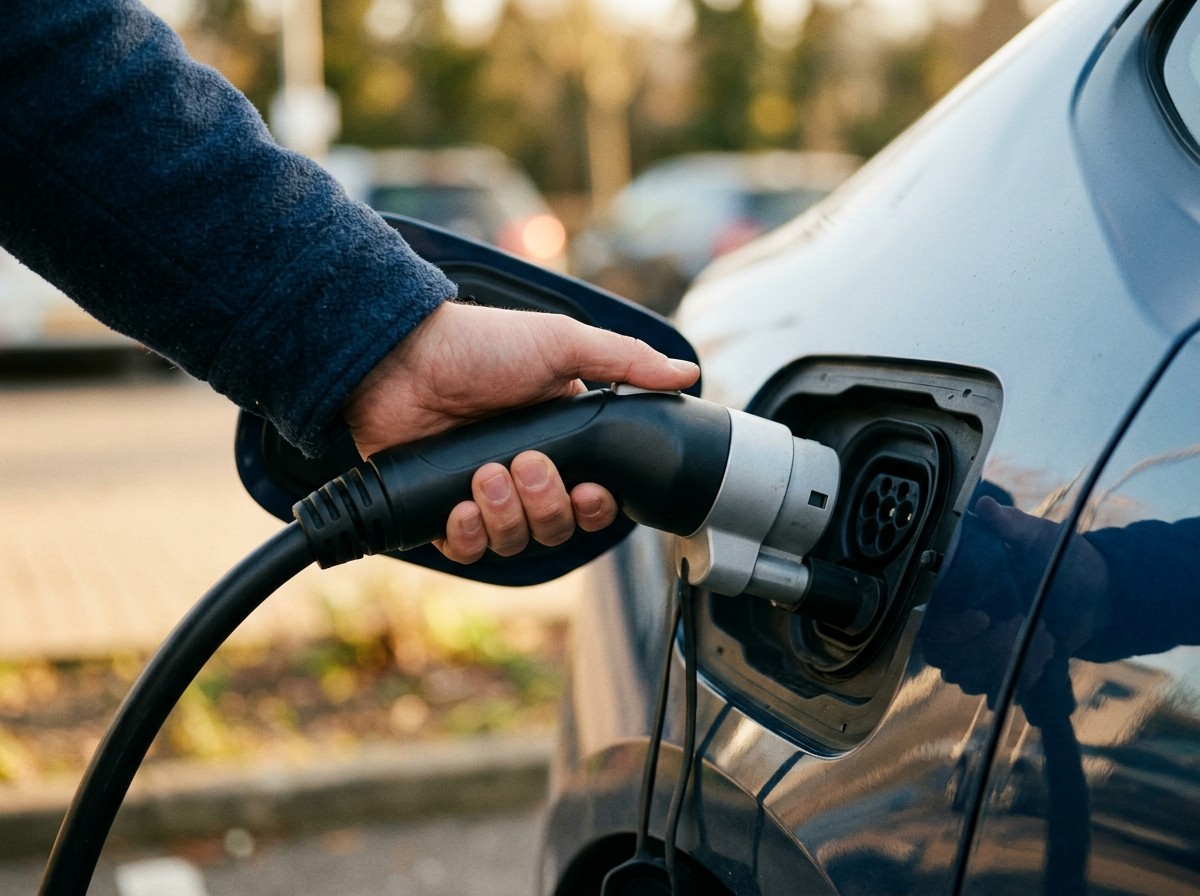
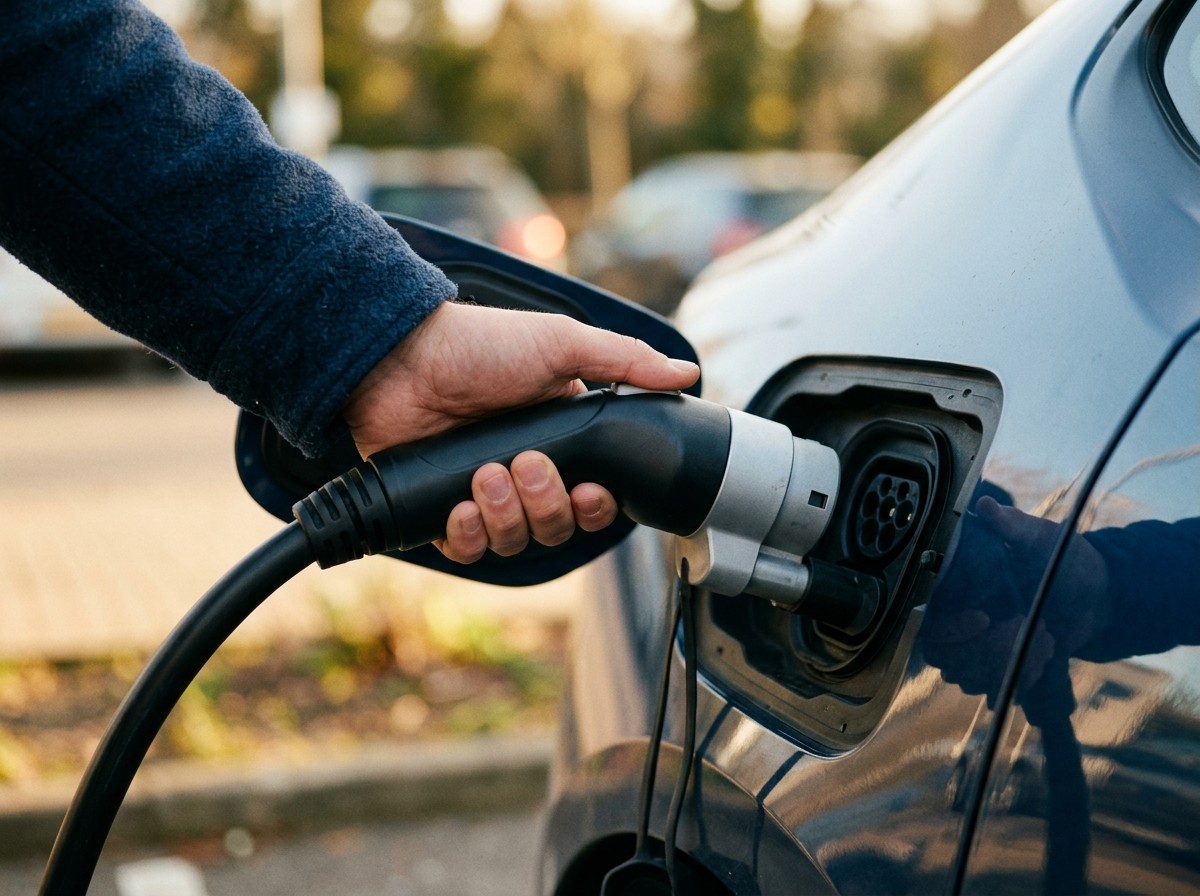
A charger is not a socket. It is a fixed appliance with its own dedicated circuit, its own protective device, and specific earthing and protection requirements — including residual current protection appropriate to the DC leakage a vehicle charger can produce. Sizing the circuit is straightforward; getting the protection arrangement right is where installations go wrong.
Then capacity. Adding a charger to a house already close to its supply limit can require load management rather than a bigger supply, and the same is true on a commercial board that has just taken a solar connection. A charger that can be limited dynamically against the incomer is often what makes the installation possible without an upgrade.
Charging from the array, not just alongside it
The useful version of solar and charging together is a system that modulates charging against generation — starting when there is surplus, tapering when a cloud passes, and drawing from the grid only when the customer has told it to. That requires the charger and the inverter to be part of one system rather than two products on the same wall: shared metering at the incomer, a control link, and a monitoring platform that can see both.
This is the practical argument for taking both from the same manufacturer. Cross-brand integration is often possible and occasionally straightforward, but a single ecosystem means one platform for the customer, one support route when something does not talk to something else, and one set of firmware to keep current.
Storage completes the picture on a house where the car is out during the day. The array charges the battery, the battery charges the car in the evening, and the grid supplies whatever is left. It is a more expensive system and it suits a narrower set of customers, but it is the honest answer when someone asks whether their solar can charge a car that is never home at noon.
Establish these before quoting
| Question | Why it matters | Check |
|---|---|---|
| Supply type and capacity | Decides charger rating and whether a limit is needed | Incoming board and supply details |
| Existing or planned solar | Whether charging can follow generation | Inverter model and monitoring platform |
| Where the vehicle parks | Cable route and mounting position | Site visit, not a description |
| When the vehicle is there | Whether daytime charging is realistic | Ask about the household's pattern |
| Protection arrangement | Charger-specific earthing and RCD requirements | The manufacturer's installation manual |
| Load management | Avoids a supply upgrade | Charger's dynamic limiting capability |
| Future second charger | Cheaper to allow for now | Spare ways and cable route |
| Who installs and certifies | Competent person requirements apply | Contractor's registration |
Residential and light commercial are different jobs
At a house, the work is one circuit, one unit and a conversation about where the car parks. At a shoplot, an office or a small fleet depot, it becomes a load management exercise: several points, a shared supply, and a decision about whether vehicles charge simultaneously at a lower rate or in sequence at a higher one. That question is answered from the site's demand profile, which is the same document the solar design was sized from.
Commercial charging also brings access, billing and user management into scope, none of which appear on a domestic job. Those are worth scoping explicitly rather than being absorbed into an installation price.
Quoting it as one system
InverPower supplies Sungrow EV chargers alongside Sungrow inverters and storage, held in Malaysia, so the solar, the storage and the charging can come from one distributor and one platform. Send the supply details, the array design and where the vehicle parks, and we will tell you what pairs, what the protection arrangement needs to be, and what is in stock.
Frequently Asked Questions
Can the charger be load-managed against solar production automatically?
Where the charger and the inverter are part of one system with metering at the incomer and a control link between them, yes — charging can follow surplus generation and taper as it falls. Two unconnected products on the same wall cannot do this, which is the practical argument for a single ecosystem.
Does an EV charger need a separate circuit?
Yes. It is a fixed appliance requiring its own dedicated circuit with its own protective device, and the earthing and residual current protection have to suit the DC leakage a vehicle charger can produce. Take the arrangement from the manufacturer's manual rather than from a general lighting-and-power habit.
Will adding a charger mean upgrading the supply?
Not necessarily. A charger that can limit its draw dynamically against the incomer will often fit within an existing supply, which is cheaper and faster than an upgrade. Whether that works depends on the site's measured demand rather than its rating.
Is it worth charging from solar if the car is away all day?
Less so, and it is worth being honest about it. If the vehicle is only home at night, charging draws from the grid and the array's contribution is indirect. Storage changes that picture; a charger on its own does not.
Sources
- Sungrow — EV charger datasheets, installation manuals and monitoring platform documentation — https://www.sungrowpower.com
- IEC — IEC 61851 series, electric vehicle conductive charging system requirements — https://webstore.iec.ch
- IEC — IEC 60364 series, low-voltage electrical installations, including circuits for vehicle charging — https://webstore.iec.ch
- SEDA Malaysia — Solar ATAP programme and self-consumption arrangements — https://www.seda.gov.my/reportal/atap/
- Electricity Supply Act 1990 (Act 447) and the Electricity Regulations 1994 — competent person and contractor requirements — https://lom.agc.gov.my
About InverPower
InverPower is Malaysia's A–Z solar component distributor — Sungrow Preferred Distributor and Sunkean Sole Distributor — supplying EPCCs, installers, and government projects nationwide.
Explore the InverPower resource hub at inverpower.com.my
Related InverPower posts:
- Who Is the Sungrow Distributor in Malaysia?
- Time-of-Use Tariffs and Solar: Why Does the Timing Matter More Than the Total?
- AC-Coupled vs DC-Coupled BESS: Which Retrofit Path Fits Your Project?