
Solar Inverter IP Ratings: Is IP65 Enough for Malaysia's Climate?
Published by Quinn Lai | By InverPower Technical Team
Published 22 August 2026 · Last updated 22 August 2026
DIRECT ANSWER
IP65 and IP66 are both dust-tight; they differ in the water jet the enclosure is tested against. For a Malaysian installation exposed to wind-driven monsoon rain, IP66 gives more margin, but the rating is a laboratory test rather than a guarantee — mounting position, gland discipline and the humidity and temperature specifications matter as much as the number.
IP ratings get treated as a single quality score, where a higher number means a better inverter. They are not that. They are two independent test results printed side by side, and knowing which test failed to impress you is more useful than knowing the total.
The two digits are two separate tests
Under IEC 60529, the first digit describes protection against solid objects and the second against water. A first digit of 6 means dust-tight: no ingress of dust at all after the test period, which is what any outdoor inverter should carry. Both IP65 and IP66 have it, so the first digit is not what separates them.
The second digit is the difference. A 5 means the enclosure withstands water projected from a nozzle, and a 6 means it withstands powerful jets from a larger nozzle at a much higher flow rate. Neither is an immersion test — that is a 7 or an 8, and those are different products for different situations. What the step from 5 to 6 buys is margin against water arriving with force behind it.
Why does that margin matter here?
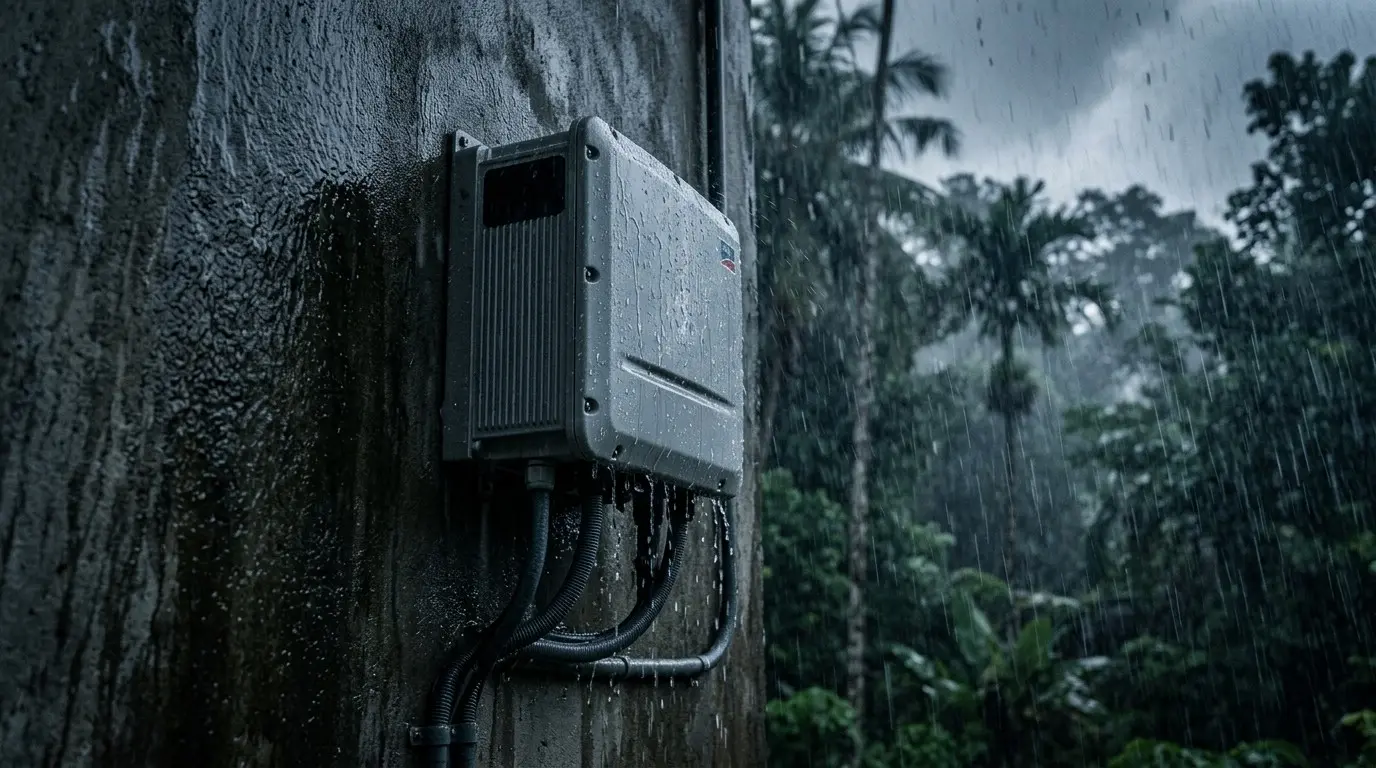
Malaysian rain does not fall straight down. Monsoon squalls drive it horizontally, roofs and walls redirect it, and an inverter mounted on an exposed elevation can take water at an angle and a velocity that a gentle vertical test never reproduces. IP66 is the sensible default for anything mounted in the open, and the extra cost is normally trivial against the cost of a warranty claim and a site visit.
What no IP digit covers is humidity. The test is conducted with liquid water, and vapour is not liquid water. An enclosure sealed against jets still breathes as it heats and cools each day, drawing in humid air that condenses inside overnight. That is why the datasheet's relative humidity range and the manufacturer's conformal coating and drainage design matter alongside the IP figure, and why an inverter that has never seen rain can still fail from moisture.
The rating is lost at the glands
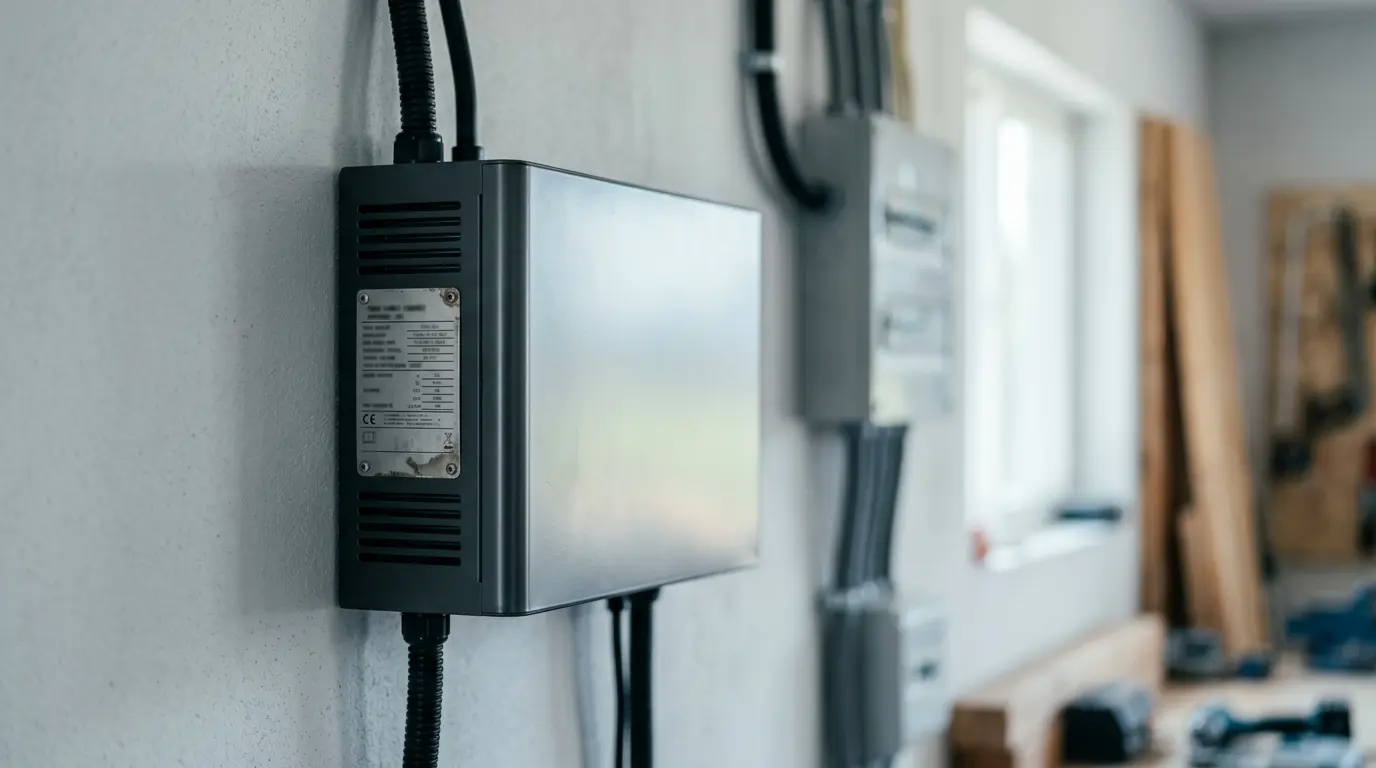
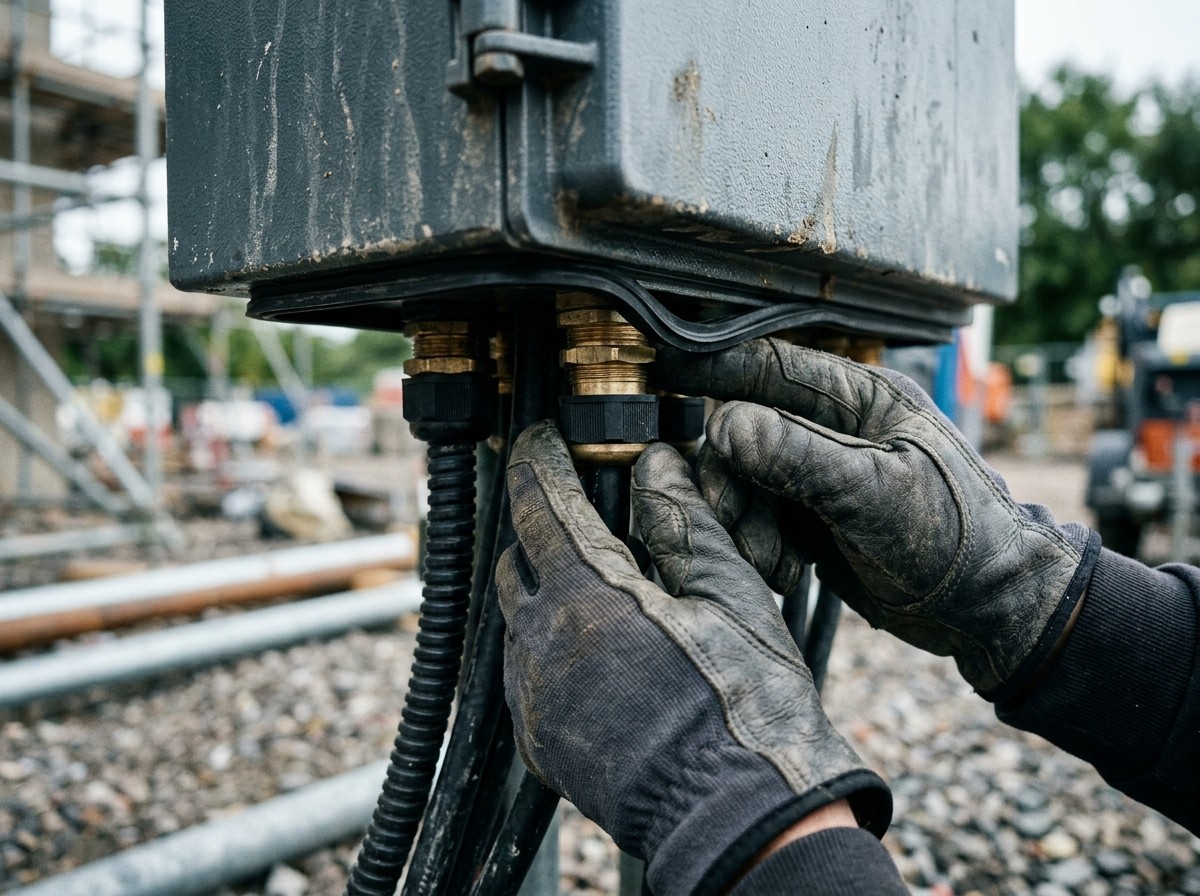
An enclosure is rated as tested, with the entries the manufacturer specifies, correctly fitted. Every practical failure comes back to that sentence. Cables entered through the top or the side rather than the bottom. Glands the wrong size for the cable, so the seal never grips. A spare entry left open under a blanking plug that was never fitted. A lid gasket pinched at reassembly after a service visit.
Orientation counts too: many enclosures hold their rating only in the mounting position shown in the manual, and the drainage path assumes that position. An inverter hung sideways to fit a wall is outside its own test conditions before it is switched on.
Servicing is where a good installation quietly loses its rating. A gasket that has been compressed for three years does not reseat like a new one, and a lid closed on a trapped cable tail leaves a gap too small to see and large enough to matter. Where a unit has been opened, the gasket condition and the torque on the fixings belong on the service record, not in someone's memory.
Reading the rest of the datasheet
| Datasheet line | Why it matters here | What to look for |
|---|---|---|
| Ingress protection | Dust and water, as tested | IP66 for exposed positions, IP65 minimum under cover |
| Operating temperature range | Ambient plus solar gain on the housing | Headroom above the hottest wall temperature expected |
| Derating curve | Output falls once internal temperature rises | Where derating starts, and how steep it is |
| Relative humidity range | Not covered by IP at all | Rated to condensing conditions |
| Corrosion classification | Coastal and industrial air | Suitability for the site's corrosivity class |
| Cable entry specification | The rating depends on it | Gland sizes supplied, blanking plugs included |
| Mounting requirements | Rating and cooling assume a position | Orientation, clearances, shading advice |
Position beats specification
The cheapest improvement to an outdoor inverter's service life is shade. Under an overhang, on a south-facing wall shielded from driving rain, with clearance for air to move around the heatsink, an inverter runs cooler, derates less and gets wet less often. In the open on an unshaded parapet, the same unit runs hot enough to lose output on exactly the days it should be producing most.
That is worth putting in the design rather than leaving to the installation team, because it is decided by where the cable runs go and where the switchroom is. A short, shaded, well-ventilated position with a slightly longer DC run is usually the better trade.
Height matters as well. An inverter mounted low on a wall takes splash-back off the ground in heavy rain and sits in the standing water that collects on a flat roof after a squall. Getting it up the wall, on a bracket rather than flat against a damp surface, costs nothing at installation and removes a whole category of call-out.
Specifying with confidence
Match the ingress rating to the exposure, the temperature range to the wall it will hang on, and the entries to the cable you are actually using. InverPower stocks Sungrow string and hybrid inverters rated for outdoor installation in Malaysia, with the glands, enclosures and cable to go with them — send the mounting position along with the bill of materials and we will flag anything that will not like where it is going.
Frequently Asked Questions
Is IP65 enough for a sheltered installation?
Usually, yes. Under a roof or an overhang, out of driving rain, IP65 with correct bottom-entry glands is a sound specification. In the open, IP66 is the safer choice because monsoon rain arrives with force and at an angle, which is precisely what the higher second digit is tested against.
Does the IP rating cover humidity?
No. IEC 60529 tests liquid water, not vapour. Humid air is drawn into an enclosure as it heats and cools through the day and condenses inside. The relative humidity range on the datasheet, and the manufacturer's internal coating and drainage design, are what address that.
Does breaching the enclosure affect the warranty?
It can. Drilling an unspecified entry, fitting the wrong gland, or mounting the unit in an orientation the manual does not allow puts the installation outside the conditions the rating was tested under. Read the manufacturer's installation requirements as part of the warranty terms, not separately from them.
Is a higher IP rating always better?
Higher is not free, and above IP66 the ratings describe immersion, which is a different problem from rain. The useful question is whether the enclosure matches the exposure at the mounting position, and whether the temperature and humidity specifications match the site.
Sources
- IEC — IEC 60529, Degrees of protection provided by enclosures (IP Code), including the solid and water test definitions — https://webstore.iec.ch
- IEC — IEC 62109-1 and IEC 62109-2, Safety of power converters for use in photovoltaic power systems — https://webstore.iec.ch
- Sungrow — string and hybrid inverter datasheets and installation manuals (ingress protection, operating temperature, derating, mounting requirements) — https://www.sungrowpower.com
- ISO — ISO 9223, Corrosion of metals and alloys: corrosivity of atmospheres, classification — https://www.iso.org
- Department of Standards Malaysia — MS 1837:2018, Installation of grid-connected photovoltaic (PV) system — https://www.jsm.gov.my
About InverPower
InverPower is Malaysia's A–Z solar component distributor — Sungrow Preferred Distributor and Sunkean Sole Distributor — supplying EPCCs, installers, and government projects nationwide.
Explore the InverPower resource hub at inverpower.com.my
Related InverPower posts:
- Which Solar Inverters Are SEDA-Registered in Malaysia (2026)?
- Sungrow SG125CX-P2 vs SG110CX: Which Fits Your C&I Rooftop?
- Why Do Solar Panels Lose Power in Malaysia's Heat?