IEC 61215, 61730 and 62109: Which Certificate Covers What?
Published by Quinn Lai | By InverPower Technical Team
Published 22 August 2026 · Last updated 22 August 2026
DIRECT ANSWER
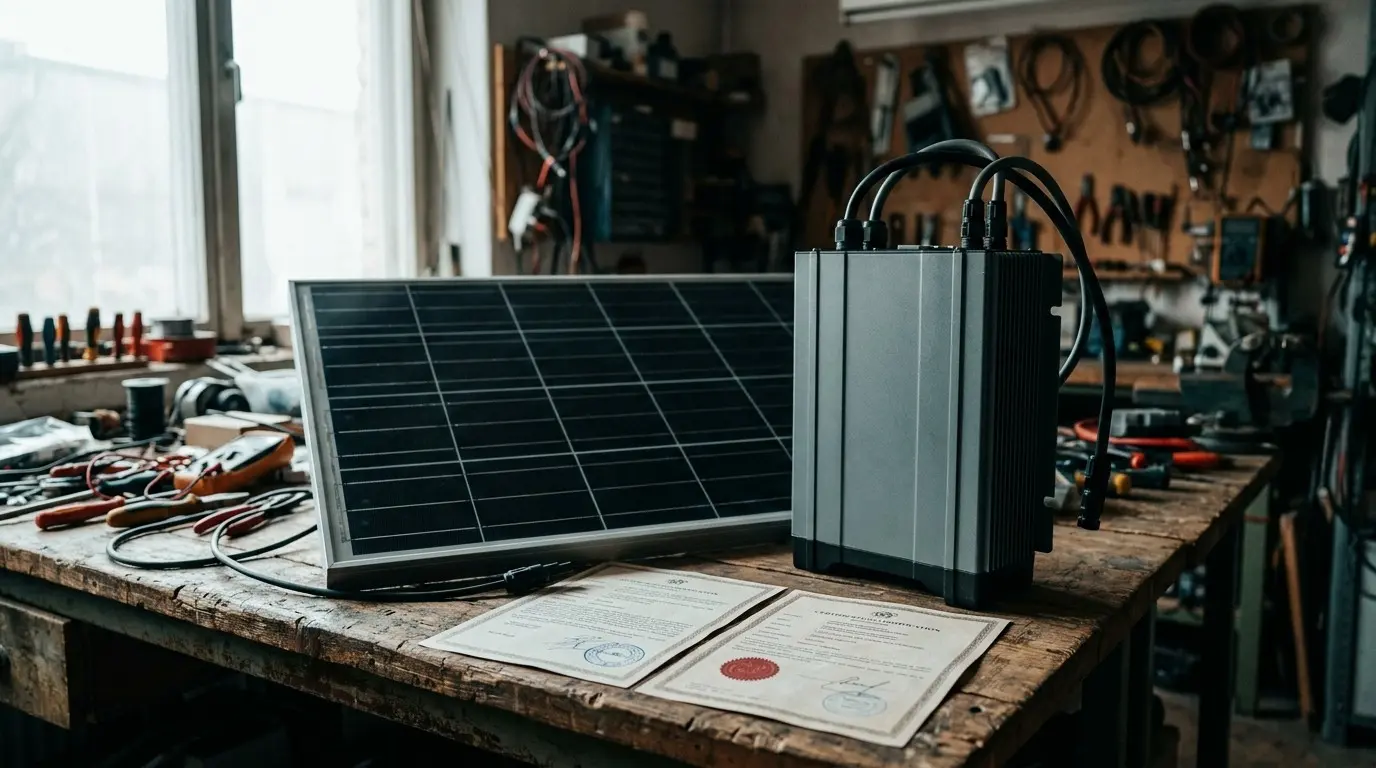
IEC 61215 tests whether a module performs and survives; IEC 61730 tests whether it is electrically and mechanically safe to build into a system; IEC 62109 covers the inverter. They apply to different equipment and answer different questions, which is why a bankable project carries all three rather than whichever one a supplier offers.
Certification gets treated as a single yes or no — either the product is certified or it is not. It is three separate exercises on two different pieces of equipment, and knowing which one answers which question is what lets an EPCC read a submittal in a minute rather than forwarding it and hoping.
IEC 61215 — does the module work, and keep working?
This is the design qualification and type approval standard for terrestrial modules. It measures performance under defined conditions and then subjects samples to a sequence of accelerated stress tests: thermal cycling between temperature extremes, damp heat, humidity-freeze, mechanical load for wind and snow, hail impact, hot-spot endurance and a bypass diode thermal test.
It is a durability argument, not a lifetime guarantee. Passing tells you the design survived a defined sequence of stresses in a laboratory; it does not tell you the module will hold up for twenty-five years on a specific roof. What it does give you is a common basis for comparing two manufacturers' claims, which is precisely why financiers ask for it.
The edition matters too. The standard has been revised, and a certificate issued against an older edition is not the same document as one issued against the current one. On a project where a technical adviser will review the submittals, check which edition the certificate names before it goes into the pack.
IEC 61730 — is the module safe to install?
Different question. IEC 61730 covers construction and safety qualification: insulation coordination, creepage and clearance distances, protection against electric shock and fire, mechanical robustness of the frame and junction box, and the marking that has to appear on the product. It is the standard behind a module's application class and its maximum system voltage rating.
This is the one that matters when a module is being installed on a building where people work underneath it. A module can be durable and still be built in a way that is unsafe at 1500 V, and 61730 is where that distinction is settled.
IEC 62109 — is the inverter safe?
Modules and inverters are different equipment with different hazards, so they have different standards. IEC 62109 covers the safety of power converters used in photovoltaic systems: the general requirements in part 1 and the particular requirements for inverters in part 2. It deals with protection against shock, thermal and fire hazards, insulation, and the safety-relevant control functions the inverter performs.
Anti-islanding is tested separately, under IEC 62116, and the distribution licensee's grid connection requirements sit on top of both. So an inverter submittal that carries 62109 alone is complete on safety and silent on grid behaviour, which is a different conversation with TNB.
Storage brings its own set. A battery system carries cell and system standards of its own, and the power conversion equipment in a hybrid or storage inverter is covered under the same converter safety family as a solar inverter. On a project with a battery, the certification pack is longer than most people expect at the point of asking for it.
The three side by side
| Standard | Applies to | Answers |
|---|---|---|
| IEC 61215 | Modules | Does it perform, and does it survive accelerated stress? |
| IEC 61730 | Modules | Is it constructed to be electrically and mechanically safe? |
| IEC 62109 | Inverters and converters | Is the equipment safe against shock, fire and thermal hazards? |
| IEC 62116 | Grid-connected inverters | Does it stop exporting when the grid goes away? |
| IEC 62790 | Module junction boxes | Is the box and its diodes fit for purpose? |
| IEC 62548 | The array as designed | Is the system design itself compliant? |
Financiers and insurers want all of them
A lender is underwriting twenty-five years of production from equipment they will never see. Certification is the only common language available: it converts a manufacturer's claim into a test result issued by an accredited laboratory. One certificate answers one question, so a set that covers module performance, module safety and inverter safety is what a technical adviser will ask for, and an incomplete set is a finding rather than an oversight.
Insurers come at it from the other end. Their interest is in fire and liability, which puts 61730 and 62109 at the centre, plus evidence that what was installed is what was certified. That last part is where submittals most often fail: a certificate for a model number that is not the one on the delivery note.
Reading a certificate properly
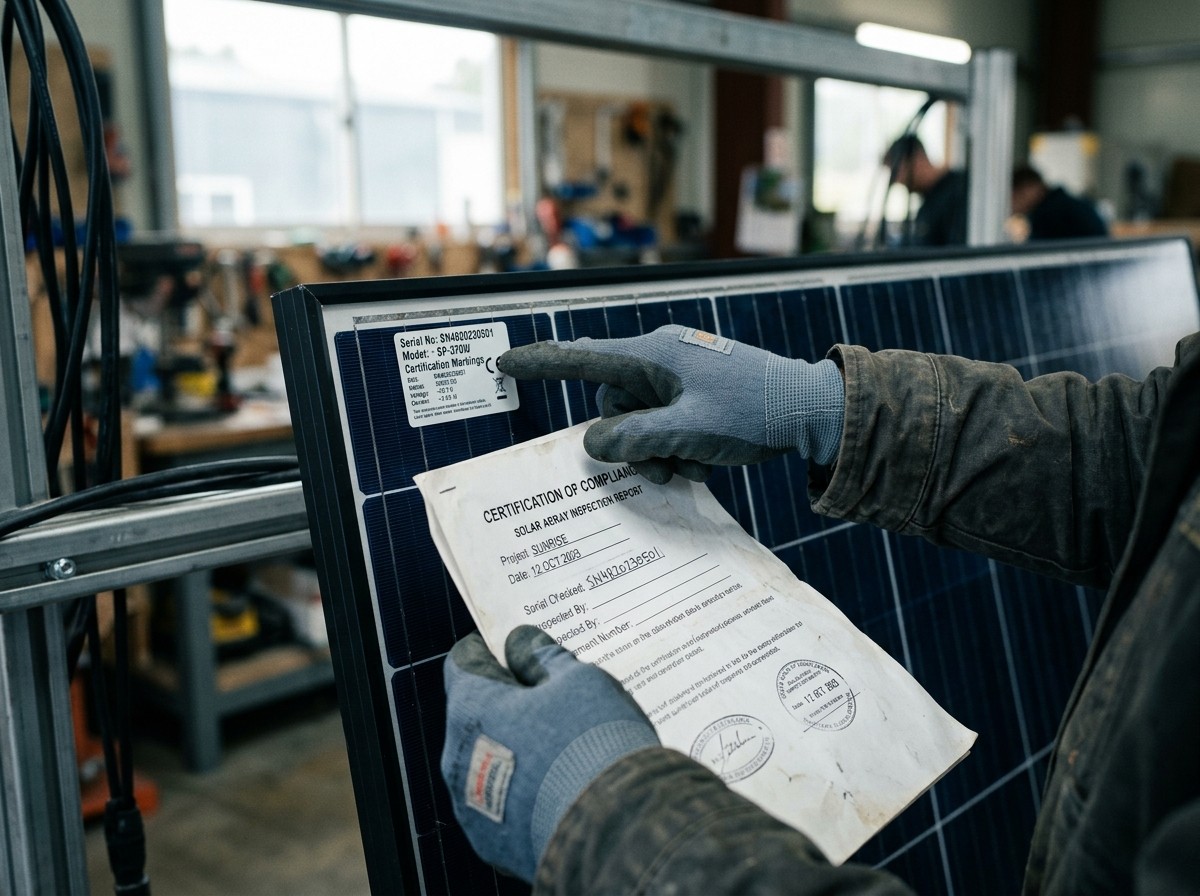
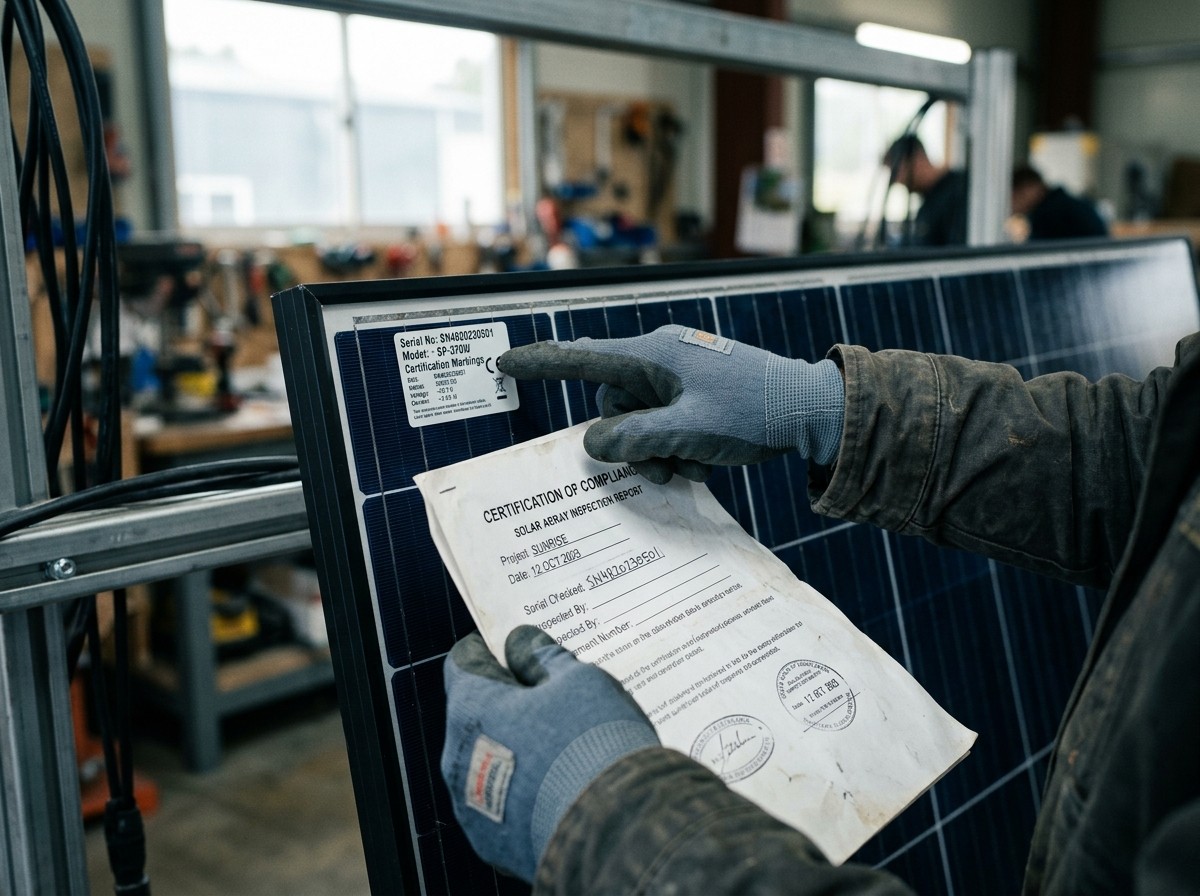
Four checks take a minute each. That the model number on the certificate matches the model being supplied, including any suffix. That the issuing body is accredited and the certificate is current rather than expired. That the scope covers the variant — power class, frame, glass thickness, system voltage — actually being delivered. And that the marking on the product matches, which is a warehouse check rather than a paperwork one.
InverPower supplies Trinasolar modules, Sungrow inverters and the balance of system from stock in Malaysia, with the certification for the models we hold. Send the specification and we will send the documentation with the quotation rather than after it.
Frequently Asked Questions
Which certificate covers fire safety?
For modules, IEC 61730, which addresses construction, insulation and fire hazards along with the module's application class. For inverters, IEC 62109. Cable fire performance is separate again and is specified through the cable's own standards.
Do these standards apply to both modules and inverters?
No, and that is the point of the question. IEC 61215 and IEC 61730 are module standards; IEC 62109 is an inverter standard. A project needs the module pair and the inverter standard, and a submittal that offers only one of them is incomplete.
Is a certificate enough on its own?
Only if it matches what is delivered. Check the model number and variant on the certificate against the model being supplied, that the certificate is current, and that the marking on the product agrees. A valid certificate for a different variant proves nothing about the goods on site.
Do Malaysian projects require these specifically?
Malaysian practice works through MS 1837 for installation and through SEDA's register for eligible inverters, both of which sit on the IEC framework. In practice the certificates are what lenders, insurers and technical advisers ask for, so they are a commercial requirement as well as a technical one.
Sources
- IEC — IEC 61215 series, Terrestrial photovoltaic modules: design qualification and type approval — https://webstore.iec.ch
- IEC — IEC 61730-1 and IEC 61730-2, Photovoltaic module safety qualification: construction and testing requirements — https://webstore.iec.ch
- IEC — IEC 62109-1 and IEC 62109-2, Safety of power converters for use in photovoltaic power systems — https://webstore.iec.ch
- IEC — IEC 62116, Utility-interconnected photovoltaic inverters: test procedure of islanding prevention measures — https://webstore.iec.ch
- Department of Standards Malaysia — MS 1837:2018, Installation of grid-connected photovoltaic (PV) system — https://www.jsm.gov.my
About InverPower
InverPower is Malaysia's A–Z solar component distributor — Sungrow Preferred Distributor and Sunkean Sole Distributor — supplying EPCCs, installers, and government projects nationwide.
Explore the InverPower resource hub at inverpower.com.my
Related InverPower posts:
- Which Solar Inverters Are SEDA-Registered in Malaysia (2026)?
- Cable Fire Ratings Decoded: Why Isn't 'Eca' the Standard to Specify?
- Where Do EPCCs Source Solar PV Components in Malaysia?