
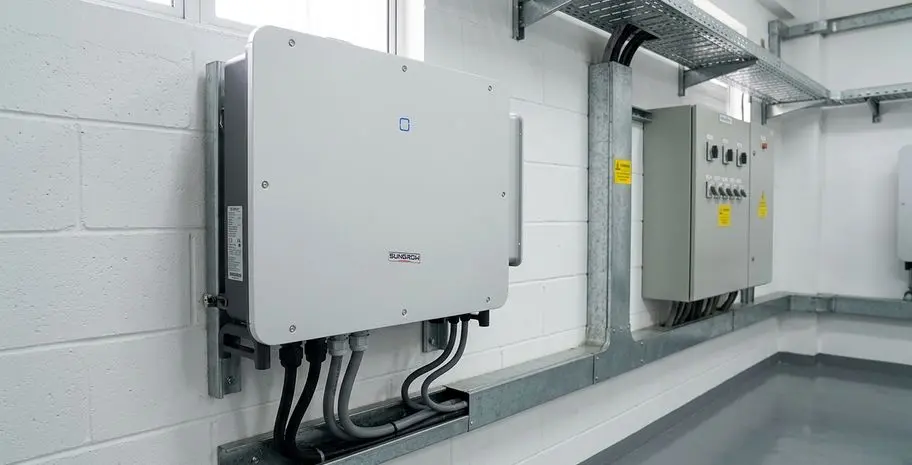
Single-Phase vs Three-Phase Solar Inverters: Which Does Your Project Need?
Published by Quinn Lai | By InverPower Technical Team
Published 22 August 2026 · Last updated 22 August 2026
DIRECT ANSWER
The building's existing supply decides it, not the designer. A single-phase premises takes a single-phase inverter; a three-phase premises normally takes a three-phase one. System size then sets the practical limit, because a single-phase inverter loading one phase of a three-phase supply creates an imbalance the distribution licensee will not accept beyond a modest rating.
This is one of the few specification questions where the answer is usually already fixed before the site visit. What the designer controls is the inverter count and how the generation is distributed across the phases — not whether the building is single-phase or three-phase.
What do single-phase and three-phase mean on site?
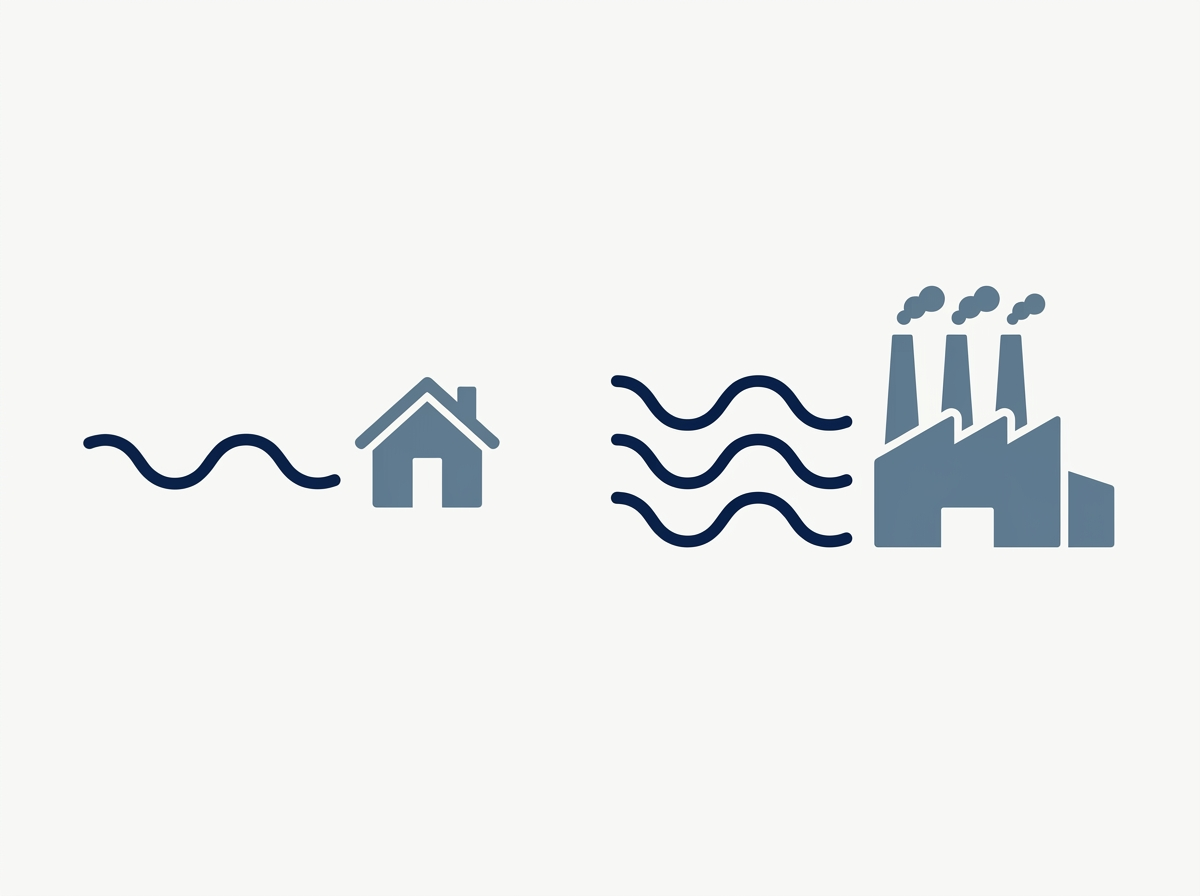
A single-phase supply delivers one live conductor and a neutral: one alternating waveform, nominally 240 volts at 50 hertz here. A three-phase supply delivers three live conductors carrying the same waveform offset from each other by a third of a cycle, nominally 415 volts between any two of them. Most Malaysian houses have the first. Most factories, warehouses, offices and shoplots of any size have the second, because motors, chillers and lifts need it.
For a solar inverter the difference is which of those it synchronises to and feeds. A single-phase inverter puts all of its output onto one live conductor. A three-phase inverter splits its output evenly across all three, which is why it can be much larger without upsetting anything.
The supply decides, and imbalance is why
Put a large single-phase inverter on one phase of a three-phase premises and the building exports heavily on that phase while the other two carry load as normal. That imbalance shows up as voltage rise on the loaded phase, and it is the network's problem as much as the customer's, which is why distribution licensees cap how much single-phase generation may be connected to a three-phase supply. The cap is in the connection requirements, and it belongs in the design conversation before a product is chosen rather than after the application comes back.
Balance is also the reason multiple small inverters are not a free workaround. Three single-phase inverters, one per phase, can work and is done — but they have to be balanced deliberately, they multiply the commissioning and monitoring points, and the application still has to describe what is connected where.
Where does the crossover sit in Malaysia?
The programme rules give a useful marker. Under Solar ATAP, domestic single-phase installations are eligible up to 5 kW and domestic three-phase up to 15 kW, with anything above that going through a TNB connection confirmation check. Those numbers are not an inverter specification, but they tell you where the ordinary residential job stops and where the paperwork changes shape.
In practice the residential market sits comfortably in single-phase territory, larger bungalows and small commercial premises with three-phase supply move to a three-phase inverter as a matter of course, and every C&I rooftop is three-phase. The exception worth watching is the older house with a three-phase supply and a modest array: it is eligible for a three-phase inverter and usually better off with one, because it keeps the phases balanced and leaves room to grow.
Side by side
| Single-phase inverter | Three-phase inverter | |
|---|---|---|
| Connects to | One live conductor and neutral | Three live conductors |
| Nominal voltage | 240 V | 415 V between phases |
| Typical premises | Houses on a single-phase supply | Three-phase houses, shoplots, C&I |
| Practical size range | Small residential systems | From small three-phase homes to C&I rooftops |
| Phase balance | Loads one phase — the limiting factor | Splits output evenly across three |
| Battery-ready options | Hybrid models available | Hybrid and dedicated storage models available |
| Application | Standard domestic route | Route and checks depend on size and supply |
The specification knock-ons
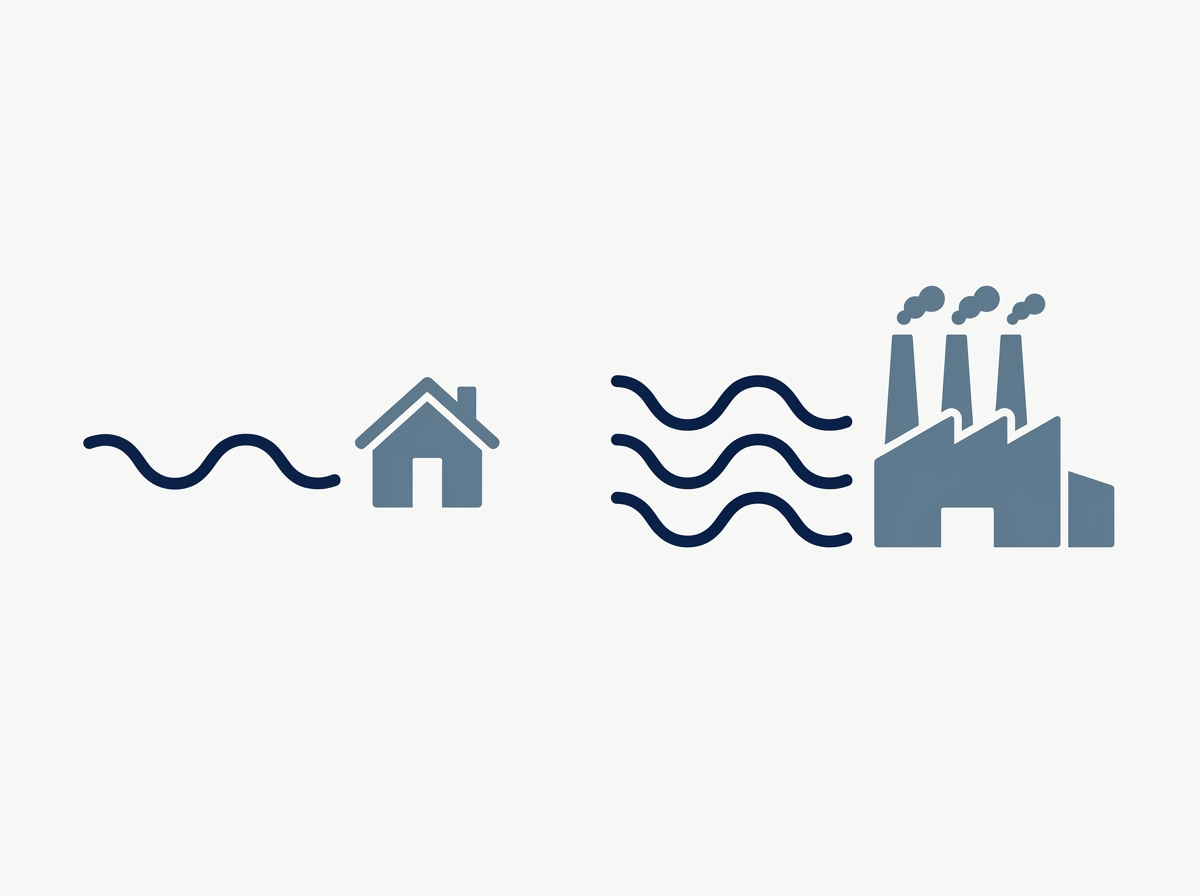
Beyond the phase count itself, three things move. Protection and isolation are sized for the connection, and a three-phase installation brings a four-pole isolation and earthing arrangement rather than a two-pole one. Cable sizing changes with the current per conductor, which is lower for the same power on three phases — one of the quiet advantages on a long run from a rooftop to a switchroom. And the anti-islanding and grid-protection settings have to match what the licensee requires for the connection type, tested and recorded at commissioning.
The one thing that does not change is the DC side. String sizing, isolation and cable specification on the array are the same exercise either way, governed by the inverter's voltage window rather than by its phase count.
Monitoring is worth deciding at the same time. A three-phase inverter reports per-phase figures, and on a site with a mix of generation and heavy motor load those numbers are what tell you whether the phases are balanced in service rather than only on the drawing. On a single-phase installation there is nothing to compare, so voltage rise at the point of connection becomes the number to watch instead.
Choosing the model
Confirm the supply from the incoming board rather than from the customer's description, then match the inverter to it and to the array. Whichever way it lands, the model has to be on the SEDA register for the installation to be eligible, and the work is a competent person's under the Electricity Supply Act 1990. InverPower stocks Sungrow single-phase and three-phase string and hybrid inverters in Malaysia — send the supply details and the array layout, and we will tell you what fits and what is on the shelf.
Frequently Asked Questions
Can a single-phase inverter be used on a three-phase building?
Up to a point, and within the distribution licensee's limit on single-phase generation. Beyond that the imbalance between the loaded phase and the other two becomes the network's problem, and the connection will not be approved. Check the limit before you quote, not after.
Can three single-phase inverters be used instead of one three-phase inverter?
Yes, one per phase, and it is sometimes the practical answer where the array splits naturally into three roof faces. It has to be balanced deliberately, and it adds commissioning and monitoring points, so compare it against a single three-phase unit on total installed cost and on service life, not just on the hardware.
Does phase type change the application to TNB?
It changes what has to be declared and which checks apply. Under Solar ATAP, domestic single-phase runs to 5 kW and three-phase to 15 kW before a connection confirmation check is triggered, so the phase type and the system size together decide the route.
Is a three-phase inverter more efficient?
Not inherently. The advantage is in the balance and the current: the same power spread across three conductors means lower current per conductor, which eases cable sizing and voltage drop on long runs. Conversion efficiency is a property of the model, not of the phase count.
Sources
- SEDA Malaysia — Solar ATAP programme guidelines, including domestic single-phase and three-phase capacity limits and the TNB connection confirmation check — https://www.seda.gov.my/reportal/atap/
- SEDA Malaysia — register of approved solar PV inverters — https://www.seda.gov.my
- TNB — technical guidelines and grid connection requirements for distributed generation — https://www.tnb.com.my
- IEC — IEC 62116 (anti-islanding test procedure) and IEC 62109 (safety of power converters for PV) — https://webstore.iec.ch
- Electricity Supply Act 1990 (Act 447) and the Electricity Regulations 1994 — competent person and registered electrical contractor requirements — https://lom.agc.gov.my
About InverPower
InverPower is Malaysia's A–Z solar component distributor — Sungrow Preferred Distributor and Sunkean Sole Distributor — supplying EPCCs, installers, and government projects nationwide.
Explore the InverPower resource hub at inverpower.com.my
Related InverPower posts:
- String Inverters vs MLPE: How to Decide for Malaysian C&I?
- Which Solar Inverters Are SEDA-Registered in Malaysia (2026)?
- How Do You Size a Solar String for a Malaysian Rooftop?