Storage Is a Fire Question Now: Our BESS Guidelines Session at The Saujana
Published by Quinn Lai | By InverPower
Published 30 July 2026 · Last updated 14 August 2026
DIRECT ANSWER
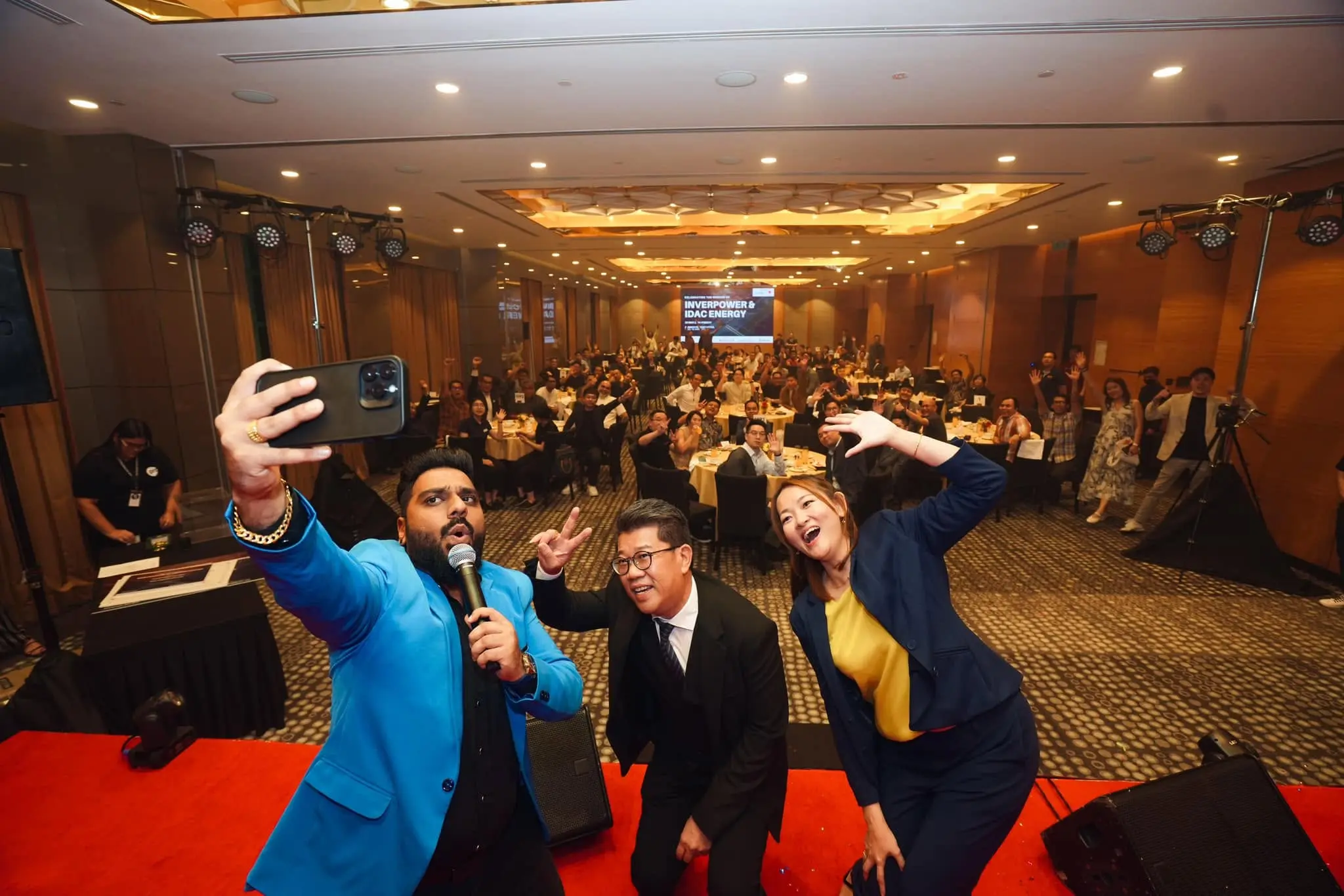
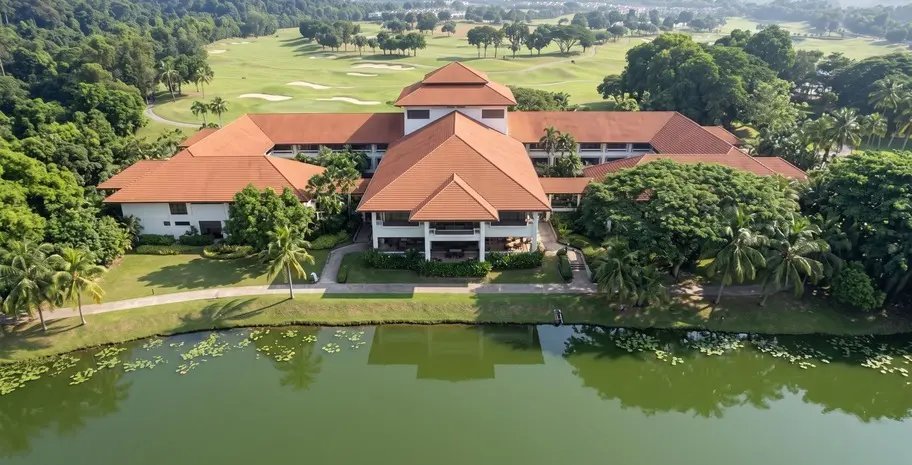
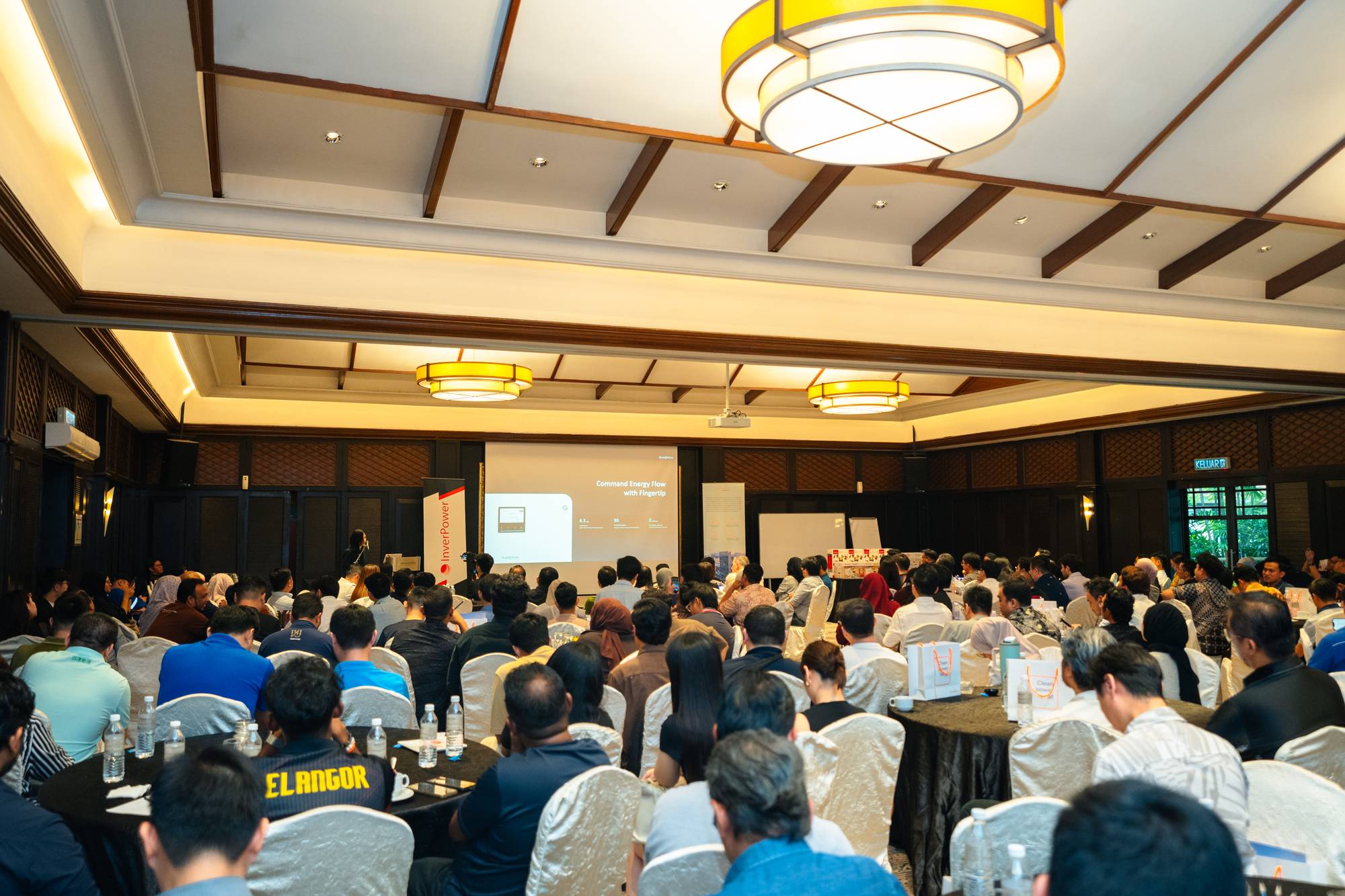
On 30 July 2026, InverPower, GSparx and Jabatan Bomba dan Penyelamat Malaysia held a session at The Saujana Hotel, Selangor, on the Energy Commission's new Battery Energy Storage System Safety Guidelines. Tuan Razali bin Mohd Nasir, Penguasa Kanan Bomba I of the Fire Safety Division, presented the department's position. The guidelines make BESS a fire-safety matter as much as an electrical one.
For most of the last two years, a battery on a Malaysian project was governed by inference — you took the inverter rules, the equipment approval regime and a manufacturer's datasheet, and you reasoned your way to something defensible. The Energy Commission's BESS Safety Guidelines end that. They are a specific document with specific clauses, and they arrived at the point where storage stopped being a pilot.
Why did the guidelines land when they did?
Three weeks before the session, Sungrow commissioned the Santong project for TNB in Terengganu — 100 MW / 400 MWh, the country's first grid-forming grid-connected battery system. Storage at that scale changes what a regulator has to write down. A framework that could be left to interpretation while the installed base was small cannot be once batteries are load-bearing infrastructure.
The guidelines are issued under section 50C of the Electricity Supply Act 1990 and cover the whole life of an installation: transport, siting, electrical protection, thermal protection, commissioning, maintenance, protective equipment and signage. They come with appendices that separate grid-connected end-user systems from utility-scale and off-grid ones — which matters, because the requirements are not identical.
Why was Bomba in the room?
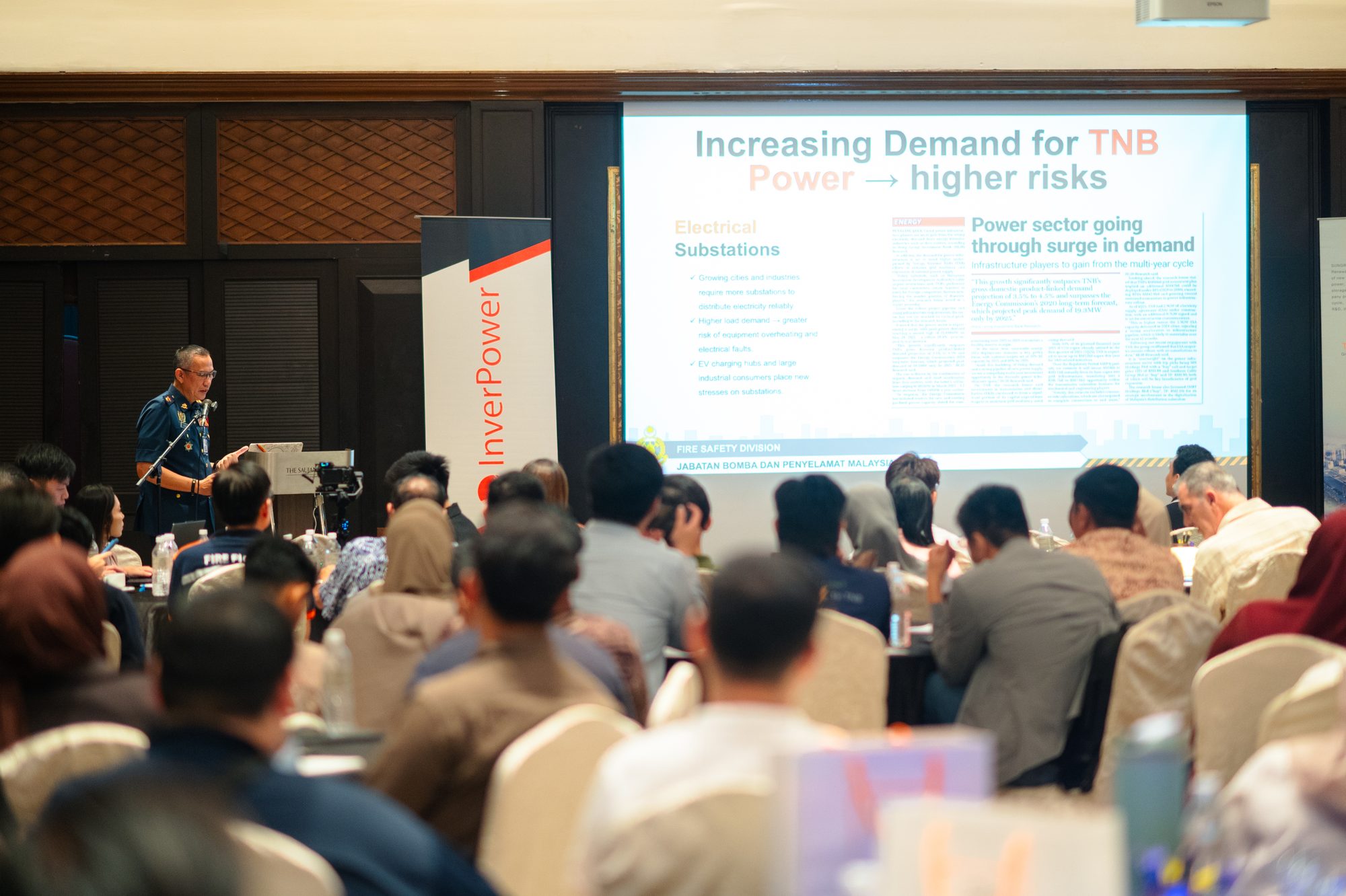
Tuan Razali bin Mohd Nasir put clause 6.3 at the centre of it, and it is short enough to quote. It recommends that BESS be installed outdoors; where indoor installation is unavoidable, appropriate fire suppression must be provided and the installation must comply with all applicable requirements of the Fire and Rescue Department.
That single sentence moves a battery out of the electrical contractor's sole domain. An indoor battery room is now a fire-authority conversation, and it is better had at design stage than at inspection. Having Tuan Razali bin Mohd Nasir, Penguasa Kanan Bomba I with the Fire Safety Division of Jabatan Bomba dan Penyelamat Malaysia Selangor, give the department's own reading of it — rather than an installer relaying it second-hand — was the reason to hold the session.
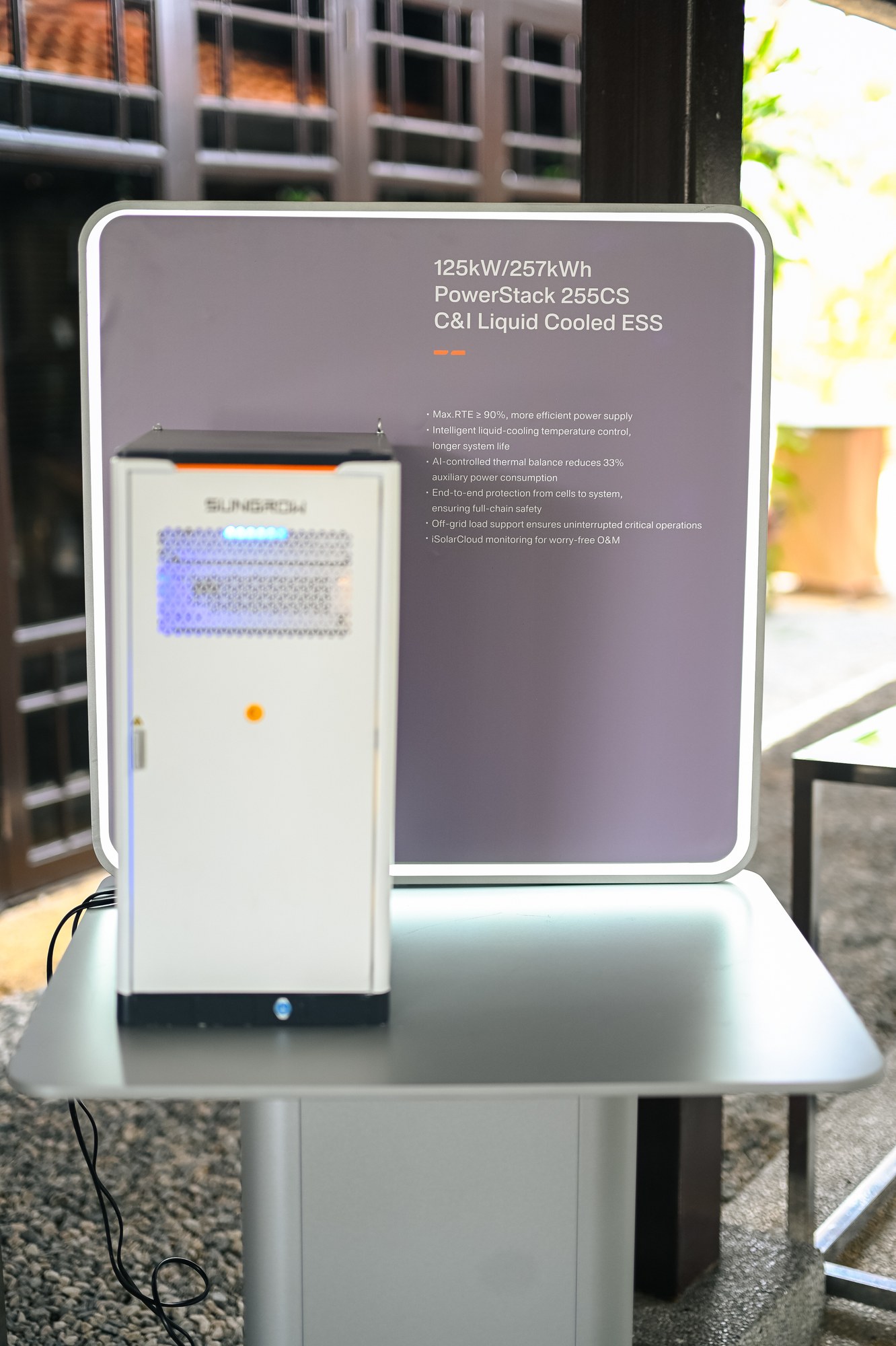
The class of product in the room made the point concrete. The unit on the display stand was a scale model of a 125 kW / 257 kWh liquid-cooled commercial and industrial cabinet — not utility-scale, not residential, but exactly the size that turns up on a factory roof or beside a plant room, and exactly the size most affected by where the guidelines say you may put it.
What changes on your next BESS job?
Most of the practical burden is evidence. The guidelines repeatedly require that a test report be made available, which in procurement terms means the paperwork has to exist before the equipment ships, not after someone asks for it:
| Requirement | Standard named | What to have on file |
|---|---|---|
| Transport | UN 38.3 | Test report, before the battery is shipped |
| Thermal runaway | UL 9540A | Fire propagation test report for the product |
| Outdoor enclosures | IEC 60529, IP54 or higher | IP rating test report |
| Electrical protection | IEC 62933-5-2 | Typical protection scheme, kept updated |
| Commissioning | FAT and SAT | Completion and Test Certificate |
| Maintenance | Permit to work | Dated, retained maintenance records |
None of it is exotic for anyone already handling inverter compliance. What is new is that the fire-side evidence — the UL 9540A report in particular — now sits alongside the electrical evidence rather than being a nice-to-have a supplier might produce on request.

Where does InverPower fit?
We are a distributor, not an EPCC, and the design decisions stay with the people who sign for them. What we can do is make sure the documents the guidelines ask for are already in the box: as Sungrow's preferred distributor we hold the certification and test evidence for the storage we supply, and we would rather hand it over at quotation stage than have you chase it during commissioning. If you are scoping a battery job against these guidelines, ask early.
Frequently Asked Questions
Do the guidelines require BESS to be installed outdoors?
They recommend it. Outdoor installation is the preferred position; where indoor installation is unavoidable, the guidelines require appropriate fire suppression and compliance with all applicable Fire and Rescue Department requirements. Treat an indoor battery room as a fire-authority conversation from design stage.
What fire test report should I ask a BESS supplier for?
A UL 9540A thermal runaway fire propagation test report for the specific product. The guidelines require thermal runaway protection designed and tested to UL 9540A, or to the requirements of the relevant fire and safety authorities, with the test report made available.
Do the guidelines apply to a small commercial battery or only to utility scale?
Both, with different requirements. The appendices separate grid-connected end-user systems — consumer-owned, for self-consumption or export — from utility-scale and off-grid standalone systems. Check which appendix your project falls under before you spec it.
Sources
- Suruhanjaya Tenaga (Energy Commission) — Guidelines on Battery Energy Storage System (BESS) Safety — https://www.st.gov.my/sites/default/files/2026-05/Guidelines-on-Battery-Energy-Storage-System-(BESS)-Safety_0.pdf
- Energy-Storage.News — TNB connects 100MW/400MWh grid-forming battery storage project to the grid — https://www.energy-storage.news/malaysian-utility-tnb-connects-100mw-400mwh-grid-forming-battery-storage-project-to-grid/
- The Saujana Hotel, Kuala Lumpur — venue — https://www.saujanahotels.com/
About InverPower
InverPower is Malaysia's A–Z solar component distributor — Sungrow Preferred Distributor and Sunkean Sole Distributor — supplying EPCCs, installers, and government projects nationwide.
Explore the InverPower resource hub at inverpower.com.my
Related InverPower posts:
- Who Is the Sungrow Distributor in Malaysia?
- Why Do Solar Projects Get Rejected at TNB Interconnection Review?
- Storage Took Over the Agenda: Our Sungrow Seminar in Penang